作者: admin

  • 49 CFR §180.209|DOT 鋼瓶再檢驗週期、Test Pressure 與 ★ 標記

    08-03|49 CFR §180.209|DOT Specification Cylinder 再檢驗週期、Test Pressure 與特殊標記

    49 CFR §180.209

    Requirements for Requalification of Specification Cylinders
    (規格鋼瓶再檢驗要求)

    是判讀:

    DOT Specification Cylinder
    (DOT 規格鋼瓶)

    Requalification Period
    (再檢驗週期)

    Minimum Test Pressure
    (最低試驗壓力)

    以及部分:

    Special Requalification Condition
    (特殊再檢驗條件)

    的重要法規條文。

    前一篇 08-02 的:

    §180.205

    主要建立:

    General Requalification Requirements
    (一般再檢驗要求)。

    而:

    §180.209

    則進一步回答:

    「不同 DOT Specification Cylinder,應適用什麼再檢驗要求?」

    因此兩條法規需要一起理解:

    §180.205
    ↓
    General Requirements
    (一般要求)

    +

    §180.209
    ↓
    Specification-specific Requirements
    (特定規格要求)

    一、§180.209 最重要的是先確認 Cylinder Specification

    判讀鋼瓶的:

    Requalification Requirement
    (再檢驗要求)

    之前,

    第一件事情不是直接看日期。

    而是確認:

    Cylinder Specification
    (鋼瓶規格)。

    例如:

    DOT-3A

    DOT-3AA

    DOT-3AL

    DOT-4B

    DOT-4BA

    DOT-4BW

    以及其他 DOT Specification。

    因為不同 Specification

    可能具有不同:

    Requalification Period
    (再檢驗週期)

    Test Pressure
    (試驗壓力)

    Test Method
    (試驗方式)

    或其他條件。

    因此:

    DOT Cylinder
    ≠
    One Universal Requalification Rule
    (所有 DOT 鋼瓶都使用同一套再檢驗規則)

    二、Table 1 是重要的判讀起點

    §180.209(a) 包含:

    Table 1 to Paragraph (a)
    —Requalification of Cylinders
    (鋼瓶再檢驗表)。

    這張表將不同:

    DOT Specification
    (DOT 規格)

    與其:

    Minimum Test Pressure
    (最低試驗壓力)

    以及:

    Requalification Period
    (再檢驗週期)

    建立對應關係。

    因此看到鋼瓶上的:

    DOT-3AA2400

    不能只讀成:

    「這是一支 2400 psi 的鋼瓶。」

    還需要進一步確認:

    Specification = DOT-3AA

    Service Pressure = 2400 psig

    然後再依:

    §180.209

    確認適用的:

    Requalification Requirement
    (再檢驗要求)。

    三、Requalification Period 是最大法規間隔,不是禁止提前檢驗

    PHMSA 對 §180.209 的正式解釋指出:

    Table 1 所列:

    Requalification Interval
    (再檢驗間隔)

    代表相應 Cylinder Specification

    允許的:

    Maximum Time Interval
    (最大時間間隔)。

    這不代表鋼瓶:

    「只能等到期限到了才能檢驗。」

    鋼瓶可以在:

    Due Month / Year
    (到期月份/年份)

    之前進行 Requalification。

    因此:

    5-year Requalification Period
    (5 年再檢驗週期)

    代表:

    不得超過適用的最大間隔,

    而不是:

    Exactly Every Five Years Only
    (只能剛好每五年檢驗一次)。

    四、DOT-3AA 的一般再檢驗概念

    DOT-3AA

    是本維修現場經常接觸的重要:

    Seamless Steel Cylinder Specification
    (無縫鋼製鋼瓶規格)。

    在一般條件下,

    DOT-3AA 的 Requalification

    需要依:

    §180.205

    與:

    §180.209

    判斷。

    §180.209 Table 1

    對 DOT-3AA 的一般週期包含:

    5-year Requalification Period
    (5 年再檢驗週期)

    的基本架構。

    但是:

    DOT-3AA

    在符合特定條件時,

    可能適用:

    10-year Requalification Period
    (10 年再檢驗週期)。

    另外在其他特定條件/適用規定下,

    也可能存在不同週期。

    因此不能把:

    DOT-3AA

    Always 5 Years

    也不能寫成:

    DOT-3AA

    Always 10 Years。

    【H2】五、10 年週期是一項 Conditional Exception

    §180.209(b)

    對部分符合條件的:

    DOT-3A

    與:

    DOT-3AA

    Cylinder

    提供:

    10-year Requalification Period
    (10 年再檢驗週期)

    的可能性。

    但這不是:

    Automatic Extension
    (自動延長)。

    鋼瓶必須符合:

    §180.209(b)

    所規定的相關條件。

    PHMSA 的正式解釋也明確指出:

    如果希望使用:

    10-year Requalification Period

    而不是一般:

    5-year Period,

    鋼瓶必須符合所有適用條件。

    因此:

    DOT-3AA
    ≠
    Automatically Eligible for 10 Years
    (自動具有 10 年資格)

    六、10 年條件與 Gas Service 有關

    §180.209(b)(1)

    的 10 年條件,

    不是所有氣體用途都可以適用。

    其中一項重要條件就是:

    Gas Service
    (氣體用途)。

    也就是鋼瓶必須符合該條款所列的:

    Authorized Gas Service
    (核准氣體用途)

    與其他適用條件。

    因此:

    Cylinder Specification Eligible
    (鋼瓶規格可能符合)
    ≠
    Current Gas Service Eligible
    (目前氣體用途一定符合)

    PHMSA 過去的正式解釋曾特別指出:

    即使某種氣體在性質上看似與條款所列氣體相近,

    如果沒有列入適用範圍,

    也不能自行擴張解釋。

    因此實際判讀必須回到:

    Current §180.209(b)
    (現行 §180.209(b))

    確認。

    七、Cylinder Size / Water Capacity 也是條件之一

    §180.209(b)

    對適用 10 年週期的鋼瓶,

    除了:

    Specification
    (規格)

    與:

    Gas Service
    (氣體用途)

    之外,

    還涉及:

    Water Capacity
    (水容積/水容量)

    等條件。

    因此不能只看:

    DOT-3AA

    +

    某種氣體

    就直接判定:

    10 Years。

    完整判斷必須確認:

    Cylinder Specification
    (鋼瓶規格)

    Gas Service
    (氣體用途)

    Water Capacity
    (水容量)

    Service Condition
    (使用條件)

    Inspection Requirement
    (檢查要求)

    以及其他 §180.209(b) 條件。

    八、★ Star Marking 代表什麼?

    符合 §180.209(b)

    10 年再檢驗條件的鋼瓶,

    會涉及:

    Five-pointed Star Mark
    (五角星標記)。

    在維修現場通常會直接稱為:

    Star Marking
    (★ 標記)。

    這個標記位於適用的:

    Test Date
    (試驗日期)

    之後,

    用來表示該鋼瓶在符合相關條件的情況下,

    允許使用:

    10-year Requalification Interval
    (10 年再檢驗週期)。

    因此:

    ★
    ≠
    Decoration
    (裝飾符號)

    也不是:

    Manufacturer Logo
    (製造商 Logo)。

    它具有:

    Requalification Meaning
    (再檢驗意義)。

    九、看到 ★ 不代表永遠都是 10 年

    這是非常重要的觀念。

    PHMSA 正式解釋指出:

    Star-marked Cylinder
    (具有 ★ 標記的鋼瓶)

    並不是從此之後:

    永久取得 10 年週期。

    如果:

    Gas Service
    (氣體用途)

    發生改變,

    或鋼瓶不再符合:

    §180.209(b)

    的其他條件,

    原本的 10 年資格可能不再適用。

    因此:

    ★ Present
    (存在 ★ 標記)
    ≠
    Always 10-year Interval
    (永久都是 10 年週期)

    真正要確認的是:

    Does the Cylinder Still Meet the Applicable Conditions?
    (鋼瓶目前是否仍符合適用條件?)

    十、★ 可能需要被取消

    如果原本符合:

    10-year Requalification Period

    的鋼瓶,

    後來不再符合 §180.209(b) 的適用條件,

    法規对:

    Star Marking

    具有相應管理要求。

    例如 Gas Service 改變,

    使鋼瓶不再符合 10 年條件時,

    不能因為舊的 ★ 還存在,

    就繼續按照 10 年週期使用。

    因此:

    Historical Mark
    (歷史標記)
    ≠
    Current Eligibility
    (目前資格)

    這也是為什麼鋼瓶刻印判讀不能只:

    「看到符號就算答案。」

    十一、★ 與 + 是完全不同的標記

    這是維修現場非常容易混淆的地方。

    Star Marking:

    ★

    主要與:

    Extended Requalification Interval
    (延長再檢驗週期)

    相關。

    Plus Marking:

    +

    則涉及:

    Authorized Filling Pressure
    (核准充填壓力)

    相關條件。

    因此:

    ★
    ≠
    +

    也就是:

    10-year Requalification Eligibility
    (10 年再檢驗資格)

    與:

    10% Overfill Authorization
    (110% 充填授權)

    是兩個不同的法規概念。

    十二、+ Marking 不代表 Service Pressure 被永久改寫

    以:

    DOT-3AA2400

    為例。

    如果鋼瓶在符合:

    49 CFR §173.302a(b)

    相關條件下,

    具有適用的:

    + Marking,

    可能允許依規定充填至:

    110% of Marked Service Pressure
    (標示工作壓力的 110%)。

    但是:

    2400 psig

    仍然是:

    Marked Service Pressure
    (標示工作壓力)。

    不能因為存在:

    +

    就把鋼瓶規格重新寫成:

    DOT-3AA2640。

    因此:

    + Mark
    ≠
    Permanent Service Pressure Change
    (永久變更工作壓力)

    這也是前面:

    01-07|DOT-3AA2400 與「+」標記

    所建立的重要觀念。

    十三、★ 與 + 可以同時出現在鋼瓶上

    因為:

    ★

    與:

    +

    代表不同的法規概念,

    所以在符合各自條件的情況下,

    兩種標記可能同時存在於同一支鋼瓶的:

    Requalification Marking
    (再檢驗標記)

    附近。

    但是兩者必須分開判讀。

    ★:

    Requalification Interval
    (再檢驗週期)

    +:

    Filling Authorization
    (充填授權)

    因此不能看到:

    ★ +

    就把兩個符號解釋成:

    「這支鋼瓶規格比較高。」

    這種說法並不精確。

    十四、失去 ★ 資格不代表 + 一定同時失效

    PHMSA 過去的正式解釋曾特別處理:

    Star Marking

    與:

    Plus Marking

    的關係。

    兩者具有不同法規基礎,

    因此:

    Star Eligibility Lost
    (失去 ★ 適用資格)

    不代表:

    Plus Mark
    (+ 標記)

    必然因相同理由同時失效。

    反過來也一樣。

    所以:

    ★ Status
    (★ 狀態)

    與:

    + Status
    (+ 狀態)

    必須:

    Evaluate Separately
    (分開判讀)。

    十五、Test Pressure 不能直接等同 Service Pressure

    §180.209 Table 1

    除了:

    Requalification Period

    之外,

    還包含:

    Minimum Test Pressure
    (最低試驗壓力)。

    因此必須分清楚:

    Service Pressure
    (工作壓力)

    與:

    Test Pressure
    (試驗壓力)。

    例如 PHMSA 在正式解釋中,

    以一支:

    DOT-3AA1800

    作為例子,

    依一般適用條件,

    其 Minimum Test Pressure

    為:

    5/3 × Service Pressure。

    1800 × 5/3

    3000 psig

    但是:

    3000 psig
    ≠
    Cylinder Service Pressure

    它是該例中的:

    Minimum Test Pressure
    (最低試驗壓力)。

    因此:

    Test Pressure
    ≠
    Service Pressure

    十六、不要把 5/3 當成所有鋼瓶的萬用公式

    雖然 DOT-3AA 的一般條件中常看到:

    5/3 × Service Pressure

    但是不能因此建立:

    「所有鋼瓶的水壓試驗壓力都是工作壓力 × 5/3」

    這種規則。

    因為不同:

    Specification
    (規格)

    Gas Service
    (氣體用途)

    Special Condition
    (特殊條件)

    Special Permit
    (特殊許可)

    可能具有不同要求。

    因此:

    One Formula
    ≠
    All Cylinder Specifications
    (一個公式不適用所有鋼瓶規格)

    實際試驗壓力必須依:

    Applicable Regulation
    (適用法規)

    判斷。

    十七、Non-corrosive Service 可能涉及不同 Test Pressure 規定

    §180.209

    除了 Table 1 的一般要求外,

    還具有其他特定條款。

    例如部分:

    Non-corrosive Service
    (非腐蝕性氣體用途)

    可能涉及不同的:

    Test Pressure Requirement
    (試驗壓力要求)。

    因此:

    Table Value
    (表列數值)

    不能脫離:

    Applicable Paragraph
    (適用條款)

    單獨使用。

    這也是為什麼正式 Requalification

    必須由:

    Authorized Requalifier
    (核准再檢驗單位)

    依完整法規與適用程序執行。

    十八、12 年週期不能套用到所有 DOT Cylinder

    部分 DOT Specification Cylinder

    在特定條件下可能具有:

    12-year Requalification Period
    (12 年再檢驗週期)。

    但是:

    12 Years

    不是所有鋼瓶的通用週期。

    同樣:

    5 Years

    與:

    10 Years

    也都不是所有 DOT Cylinder 的統一答案。

    因此網站上不應製作:

    「DOT 鋼瓶=5 年」

    或:

    「有 ★=所有鋼瓶 10 年」

    這種過度簡化的判斷方式。

    正確方式始終是:

    Specification
    ↓
    Applicable Table / Paragraph
    ↓
    Special Condition
    ↓
    Marking
    ↓
    Current Service
    ↓
    Current Qualification Status

    十九、Special Permit 的週期可能不同

    如果鋼瓶具有:

    DOT-SP
    (DOT Special Permit,DOT 特殊許可)

    就必須另外確認:

    Applicable Special Permit
    (適用特殊許可)。

    因為 Special Permit

    可能對:

    Requalification Period
    (再檢驗週期)

    Test Method
    (試驗方式)

    Inspection Interval
    (檢查週期)

    或:

    Cylinder Configuration
    (鋼瓶配置)

    訂定特別條件。

    PHMSA 目前仍有有效 Special Permit

    對部分 DOT-3A、3AA、3AX、3AAX、3T 等 Cylinder / Tube

    規定不同於一般條文的再檢驗方式或條件。

    因此:

    General §180.209 Rule
    (一般 §180.209 規則)
    ≠
    Every Special Permit Cylinder
    (所有特殊許可鋼瓶的完整要求)

    二十、較頻繁的公司檢查並不違反最大週期概念

    PHMSA 已正式說明:

    §180.209 所列週期是:

    Maximum Interval
    (最大間隔)。

    HMR 並不禁止:

    More Frequent Requalification
    (更頻繁的再檢驗)。

    因此如果:

    Manufacturer Requirement
    (製造商要求)

    Customer Requirement
    (客戶要求)

    Company Practice
    (公司實務)

    或:

    Risk Assessment
    (風險評估)

    要求比法規最大間隔更頻繁的檢查,

    不能因為:

    「DOT 還沒到期。」

    就認為較短週期不允許。

    但是必須區分:

    Company Inspection
    (公司檢查)

    與:

    Formal DOT Requalification
    (正式 DOT 再檢驗)。

    兩者名稱與紀錄不能混用。

    二十一、Requalification Marking 要與歷史紀錄一起看

    判讀一支使用多年的鋼瓶時,

    可能看到多組:

    Month / Year
    (月/年)

    RIN

    ★

    +

    以及其他合法標記。

    這些資訊形成:

    Requalification History
    (再檢驗歷史)。

    因此不能只看:

    Newest Date
    (最新日期)

    而完全忽略:

    Cylinder Specification
    (鋼瓶規格)

    Previous Service
    (先前用途)

    Special Permit
    (特殊許可,如適用)

    Current Gas Service
    (目前氣體用途)

    與:

    Current Physical Condition
    (目前實體狀態)。

    二十二、實務上的判讀順序

    面對一支 DOT Cylinder,

    比較安全的資料判讀順序是:

    Step 1

    Identify DOT Specification
    (確認 DOT 規格)

    Step 2

    Identify Service Pressure
    (確認工作壓力)

    Step 3

    Identify Manufacture / Requalification Marking
    (確認製造/再檢驗標記)

    Step 4

    Identify ★ / + or Other Applicable Marking
    (確認 ★/+ 或其他適用標記)

    Step 5

    Check Applicable §180.209 Requirement
    (確認適用 §180.209 要求)

    Step 6

    Check Special Permit
    (確認特殊許可,如適用)

    Step 7

    Check Current Gas Service
    (確認目前氣體用途)

    Step 8

    Check Current Physical Condition
    (確認目前鋼瓶狀態)

    最後才判斷:

    Current Requalification Status
    (目前再檢驗狀態)。

    二十三、本篇的重要判斷觀念

    DOT Specification
    (DOT 規格)
    ≠
    Requalification Period
    (再檢驗週期)

    DOT-3AA
    ≠
    Automatically 10 Years
    (自動 10 年)

    5 Years
    (5 年)
    ≠
    Every DOT Cylinder
    (所有 DOT 鋼瓶)

    10 Years
    (10 年)
    ≠
    Every DOT-3AA Cylinder
    (所有 DOT-3AA 鋼瓶)

    12 Years
    (12 年)
    ≠
    Every DOT Cylinder
    (所有 DOT 鋼瓶)

    ★ Present
    (具有 ★)
    ≠
    Permanent 10-year Eligibility
    (永久具有 10 年資格)

    ★
    ≠
    +

    ★

    Conditional Requalification Interval Marking
    (有條件的延長再檢驗週期標記)

    +

    Conditional Filling Authorization Marking
    (有條件的充填授權標記)

    + Present
    (具有 +)
    ≠
    Service Pressure Permanently Changed
    (工作壓力永久改變)

    Test Pressure
    (試驗壓力)
    ≠
    Service Pressure
    (工作壓力)

    5/3 Formula
    ≠
    Universal Cylinder Formula
    (所有鋼瓶的萬用公式)

    Special Permit Cylinder
    (特殊許可鋼瓶)
    ≠
    General Table Only
    (只看一般表格即可)

    Requalification Date Valid
    (再檢驗日期有效)
    ≠
    Current Physical Condition Acceptable
    (目前實體狀態一定正常)

    真正的判讀方式是:

    Cylinder Specification
    (鋼瓶規格)
    +
    Service Pressure
    (工作壓力)
    +
    Requalification Marking
    (再檢驗標記)
    +
    Special Marking
    (特殊標記)
    +
    Current Gas Service
    (目前氣體用途)
    +
    Special Permit
    (特殊許可,如適用)
    +
    Current Physical Condition
    (目前實體狀態)

    二十四、相關文章

    ・01-06|DOT Specification 鋼瓶標記判讀

    ・01-07|DOT-3AA2400 與「+」標記

    ・01-08|Requalification Date 與「★」標記

    ・03-01|Hydrostatic Test 基本概念

    ・03-03|Water Jacket Hydrostatic Test

    ・03-04|Hydrostatic Test Accept / Reject / Condemn

    ・08-01|DOT / 49 CFR 鋼瓶法規架構

    ・08-02|49 CFR §180.205 再檢驗一般要求

    ・08-04|Repair、Rebuild 與 Maintenance 的法規界線

    注意事項

    本文為 49 CFR §180.209 的技術性整理,用於協助理解 DOT Specification Cylinder(DOT 規格鋼瓶)的 Requalification Period(再檢驗週期)、Test Pressure(試驗壓力)及相關特殊標記。

    本文不應作為特定鋼瓶 Requalification Due Date(再檢驗到期日)的唯一判定依據。

    實際鋼瓶必須依當時有效的 49 CFR、Cylinder Specification、Current Gas Service、Requalification Marking、Special Permit(如適用)及 Current Physical Condition 進行判斷。

    ★ Star Marking 的 10 年週期屬於 Conditional Provision(有條件規定),並不是所有 DOT-3A 或 DOT-3AA 鋼瓶的通用週期。

    + Plus Marking 與 ★ Star Marking 屬於不同法規概念。+ 主要涉及符合特定條件時的 Filling Authorization(充填授權),不代表 Marked Service Pressure(標示工作壓力)被永久修改。

    本維修廠目前不自行執行 DOT Hydrostatic Requalification(水壓再檢驗)。本篇內容主要用於理解鋼瓶標記、外部再檢驗資料及維修判斷。

    正式 Requalification 應由具有適用核准範圍的 Authorized Requalifier(核准再檢驗單位)依現行法規執行。

    法規查核:

    49 CFR §180.205
    General Requirements for Requalification of Specification Cylinders

    49 CFR §180.209
    Requirements for Requalification of Specification Cylinders

    49 CFR §173.302a
    Additional Requirements for Shipment of Nonliquefied (Permanent) Compressed Gases in Specification Cylinders

    PHMSA
    Pipeline and Hazardous Materials Safety Administration

    最後法規查核:2026-09-29
    最後更新:2026-09-29
  • 49 CFR §180.205|DOT 規格鋼瓶再檢驗的一般要求

    08-02|49 CFR §180.205|Specification Cylinder 再檢驗的一般要求

    49 CFR §180.205

    General Requirements for Requalification of Specification Cylinders
    (規格鋼瓶再檢驗的一般要求)

    是理解 DOT Cylinder Requalification
    (DOT 鋼瓶再檢驗)

    非常重要的法規條文。

    實務上看到鋼瓶肩部的:

    DOT Specification
    (DOT 規格)

    Manufacture Date
    (製造日期)

    Requalification Date
    (再檢驗日期)

    以及:

    Requalification Marking
    (再檢驗標記)

    時,

    不能只用:

    「日期到了沒有?」

    作為唯一判斷依據。

    §180.205 建立的是更完整的:

    Continuing Qualification
    (持續資格)

    概念。

    也就是說:

    Cylinder Qualification
    (鋼瓶資格)

    除了定期 Requalification 之外,

    還必須考慮:

    Current Physical Condition
    (目前實體狀態)

    Damage
    (損傷)

    Leakage
    (洩漏)

    Corrosion
    (腐蝕)

    Thermal Exposure
    (熱暴露)

    以及其他可能影響安全使用的異常。

    一、§180.205 在法規中的位置

    49 CFR Part 180

    名稱為:

    Continuing Qualification and Maintenance of Packagings
    (包裝持續資格與維護)。

    其中:

    Subpart C

    為:

    Qualification, Maintenance and Use of Cylinders
    (鋼瓶資格、維護與使用)。

    §180.205:

    General Requirements for Requalification of Specification Cylinders
    (規格鋼瓶再檢驗的一般要求)

    就是其中的重要基礎條文。

    因此可以簡單理解為:

    Part 180
    ↓
    Subpart C
    ↓
    Cylinder Qualification / Maintenance
    (鋼瓶資格/維護)
    ↓
    §180.205
    ↓
    General Requalification Requirements
    (一般再檢驗要求)

    而下一篇會介紹的:

    §180.209

    則進一步規定不同:

    DOT Specification Cylinder
    (DOT 規格鋼瓶)

    的 Requalification Requirement
    (再檢驗要求)。

    二、什麼是 Requalification?

    Requalification
    (再檢驗/重新資格確認)

    不是單純:

    「做一次水壓測試。」

    它代表的是:

    確認已投入使用的 Cylinder
    (鋼瓶)

    是否仍符合適用要求,

    可以繼續維持其:

    Authorized Packaging Status
    (核准包裝資格)。

    依鋼瓶種類與適用規定不同,

    Requalification 可能涉及:

    Visual Inspection
    (目視檢查)

    Pressure Test
    (壓力試驗)

    Volumetric Expansion Test
    (容積膨脹試驗)

    Proof Pressure Test
    (證明壓力試驗)

    以及其他適用要求。

    因此:

    Requalification
    ≠
    Hydrostatic Test Only
    (水壓試驗本身)

    三、Requalification 與 Maintenance 不相同

    Maintenance
    (維修)

    與:

    Requalification
    (再檢驗)

    不能混為同一件事情。

    例如本維修現場可能執行:

    Valve Inspection
    (瓶閥檢查)

    Valve Maintenance
    (瓶閥維修)

    Cylinder Neck Thread Inspection
    (瓶頸螺紋檢查)

    Plug Gauge Inspection
    (塞規檢查)

    Ring Gauge Inspection
    (環規檢查)

    Leak Diagnosis
    (洩漏診斷)

    Cleaning
    (清潔)

    以及其他 Maintenance Activity
    (維護作業)。

    這些工作即使全部完成,

    也不能直接表示:

    DOT Requalification Completed
    (DOT 再檢驗已完成)。

    因此:

    Maintenance Completed
    (維修完成)
    ≠
    Requalification Completed
    (再檢驗完成)

    四、誰可以代表鋼瓶已依 HMR 完成 Requalification?

    這是 §180.205 非常重要的管理概念。

    不是任何具有:

    Hydrostatic Test Equipment
    (水壓試驗設備)

    的公司,

    都可以自行表示:

    「這支鋼瓶已依 DOT 規定完成再檢驗。」

    依 PHMSA 的管理制度,

    執行相關 Cylinder Requalification
    (鋼瓶再檢驗)

    並代表其符合 HMR
    (Hazardous Materials Regulations,危險物品運輸法規)

    要求,

    涉及正式的:

    Approval
    (核准)

    制度。

    常見的重要識別就是:

    RIN

    Requalification Identification Number
    (再檢驗識別號碼)。

    因此:

    Owns Test Equipment
    (擁有測試設備)
    ≠
    Authorized Requalifier
    (核准再檢驗單位)

    五、本維修廠不自行執行 DOT Hydrostatic Requalification

    本維修廠目前主要工作為:

    Cylinder Maintenance
    (鋼瓶維修)

    Valve Maintenance
    (瓶閥維修)

    Thread Inspection
    (螺紋檢查)

    Leak Diagnosis
    (洩漏診斷)

    以及相關技術工作。

    目前並不自行執行:

    DOT Hydrostatic Requalification
    (DOT 水壓再檢驗)。

    因此本網站介紹:

    Hydrostatic Test
    (水壓試驗)

    Water Jacket Test
    (水套式水壓試驗)

    TE
    (Total Expansion,總膨脹量)

    PE
    (Permanent Expansion,永久膨脹量)

    REE
    (Rejection Elastic Expansion,拒收彈性膨脹量)

    等資料時,

    主要目的為:

    Understanding Test Data
    (理解測試資料)

    與:

    Understanding Requalification Results
    (理解再檢驗結果)。

    並不是表示本維修廠自行執行:

    DOT Requalification Certification
    (DOT 再檢驗認證)。

    六、Periodic Requalification 是基本要求

    DOT Specification Cylinder
    (DOT 規格鋼瓶)

    通常需要依適用規定進行:

    Periodic Requalification
    (定期再檢驗)。

    但:

    Requalification Interval
    (再檢驗週期)

    不是所有鋼瓶都完全相同。

    實際週期需要進一步查核:

    §180.209

    以及適用的:

    DOT Specification
    (DOT 規格)

    Special Permit
    (特殊許可)

    或其他相關要求。

    因此:

    DOT Cylinder
    ≠
    All Cylinders Have the Same Test Interval
    (所有 DOT 鋼瓶都有相同試驗週期)

    七、到期日不是唯一判斷條件

    這是 §180.205 非常重要的觀念。

    一般人最容易只看:

    Last Test Date
    (前次試驗日期)

    然後計算:

    Next Requalification Date
    (下次再檢驗日期)。

    但是:

    Date Valid
    (日期有效)

    只代表:

    Periodic Requalification Interval
    (定期再檢驗週期)

    這一項條件可能仍在有效範圍內。

    它並不能證明:

    Cylinder Physical Condition
    (鋼瓶實體狀態)

    一定正常。

    因此:

    Requalification Date Valid
    (再檢驗日期有效)
    ≠
    Cylinder Automatically Acceptable
    (鋼瓶自動合格)

    八、特定異常可能要求提前 Test and Inspection

    §180.205 的重要安全概念之一是:

    即使鋼瓶尚未到下一次定期 Requalification Date,

    如果鋼瓶出現可能影響安全的異常狀況,

    也不能只因為:

    「水壓日期還沒到。」

    就繼續使用。

    法規涉及的異常狀況包括例如:

    Leakage
    (洩漏)

    Corrosion
    (腐蝕)

    Dent
    (凹陷)

    Damage
    (損傷)

    以及:

    Heat / Fire Exposure
    (熱/火災暴露)

    等可能影響鋼瓶安全狀態的情形。

    這類情況需要依適用規定判斷:

    Testing and Inspection
    (測試與檢查)

    要求。

    因此:

    Not Due for Periodic Requalification
    (尚未到定期再檢驗日期)
    ≠
    No Inspection Required
    (一定不需要檢查)

    九、Leakage 本身就是重要異常訊號

    如果鋼瓶發生:

    Leakage
    (洩漏),

    不能只把問題理解為:

    「先找到漏點,再把它修好。」

    因為需要先判斷:

    Leak Location
    (洩漏位置)

    以及:

    Failure Mode
    (故障模式)。

    例如:

    Neck Leak
    (瓶頸洩漏)

    Valve Leak
    (瓶閥洩漏)

    PRD Leak
    (PRD 洩漏)

    Cylinder Body Leak
    (鋼瓶本體洩漏)

    所代表的技術意義完全不同。

    特別是:

    Cylinder Body Leak
    (鋼瓶本體洩漏)

    涉及:

    Pressure-containing Body
    (承壓本體)

    完整性。

    因此:

    Leak Detected
    (發現洩漏)
    ≠
    Simple Maintenance Issue
    (一定只是一般維修問題)

    十、Corrosion 不能只看外觀是否難看

    Corrosion
    (腐蝕)

    也是鋼瓶檢查的重要項目。

    但是:

    Rust Present
    (存在鏽蝕)
    ≠
    Cylinder Automatically Condemned
    (鋼瓶一定報廢)

    同樣:

    Surface Looks Acceptable
    (表面看起來正常)
    ≠
    Cylinder Integrity Confirmed
    (鋼瓶完整性已確認)

    真正需要判斷的是:

    Location
    (位置)

    Extent
    (範圍)

    Depth
    (深度)

    Pattern
    (型態)

    以及適用的:

    Acceptance / Rejection Criteria
    (接受/拒收標準)。

    因此腐蝕判斷不能只靠:

    「看起來很嚴重。」

    或:

    「看起來還好。」

    十一、Dent、Bulge 與 Mechanical Damage

    鋼瓶在:

    Transportation
    (運輸)

    Handling
    (搬運)

    Storage
    (儲存)

    或:

    Service
    (使用)

    過程中,

    可能發生:

    Dent
    (凹陷)

    Bulge
    (鼓脹)

    Cut
    (切傷)

    Gouge
    (刮削傷)

    Abrasion
    (磨耗)

    或其他:

    Mechanical Damage
    (機械損傷)。

    這些異常不能只以:

    「鋼瓶還沒有漏。」

    作為安全判斷。

    因此:

    No Leak
    (沒有洩漏)
    ≠
    No Structural Damage
    (沒有結構損傷)

    十二、Thermal Damage 也是重要條件

    鋼瓶如果曾經遭遇:

    Fire
    (火災)

    Overheating
    (過熱)

    或其他:

    Abnormal Thermal Exposure
    (異常熱暴露),

    即使:

    Cylinder Body
    (鋼瓶本體)

    外觀看起來沒有明顯破裂,

    仍不能只靠外觀直接確認:

    Cylinder Remains Acceptable
    (鋼瓶仍然合格)。

    這與前面 06-08:

    NH3 Drum Temperature Sensor Failure
    (NH3 Drum 溫度偵測器異常)

    造成過熱的案例

    具有相同的重要觀念:

    No Damage Detected During Initial Inspection
    (初步檢查未發現損傷)
    ≠
    No Damage Exists
    (完全沒有損傷)

    十三、Visual Inspection 是 Requalification 的重要部分

    Visual Inspection
    (目視檢查)

    並不是:

    「水壓測試之前順便看一下。」

    它本身就是:

    Cylinder Requalification
    (鋼瓶再檢驗)

    的重要部分。

    檢查時需要依:

    Applicable Requirement
    (適用要求)

    與:

    Applicable Inspection Criteria
    (適用檢查標準)

    判斷鋼瓶狀態。

    依適用鋼瓶種類,

    法規可能引用相關:

    CGA Publication
    (CGA 技術文件)

    作為檢查與判定依據。

    因此:

    Visual Inspection
    ≠
    Casual Visual Check
    (隨便目視看看)

    十四、Visual Inspection 可能導向三種不同結果

    依適用要求,

    Cylinder Inspection
    (鋼瓶檢查)

    可能產生不同結果:

    Approved
    (接受)

    Rejected
    (拒收)

    或:

    Condemned
    (報廢)。

    這三者不能混為一談。

    Approved:

    表示依適用標準,

    目前檢查結果可以接受。

    Rejected:

    表示鋼瓶目前不能直接作為合格狀態繼續處理,

    需要依適用規定判斷後續處置。

    Condemned:

    則代表鋼瓶已符合:

    Condemnation Criteria
    (報廢判定條件)。

    因此:

    Rejected
    (拒收)
    ≠
    Automatically Condemned
    (自動等於報廢)

    十五、Neck Thread 也可能影響鋼瓶資格

    這一點與本維修現場的實務非常相關。

    Cylinder Neck Thread
    (鋼瓶瓶頸螺紋)

    如果發生:

    Missing Thread
    (牙紋缺損)

    Material Loss
    (材料缺失)

    Severe Damage
    (嚴重損傷)

    或其他足以影響:

    Gas-tight Seal
    (氣密密封)

    的異常,

    就不能只因為:

    Plug Gauge
    (塞規)

    可以通過,

    便直接判定:

    Cylinder Acceptable
    (鋼瓶合格)。

    PHMSA 過去的正式法規解釋也曾處理過:

    Neck Thread Damage
    (瓶頸螺紋損傷)

    問題,

    並指出需要依 §180.205(f) 所適用的 Visual Inspection Criteria
    (目視檢查判定標準)

    判斷。

    因此:

    Gauge Pass
    (量規通過)
    ≠
    Thread Integrity Confirmed
    (螺紋完整性已確認)

    這與本維修現場既有的:

    「瓶牙缺損=不合格」

    判斷原則具有直接的技術關聯。

    十六、Pressure Test 不是只有把壓力升高

    Pressure Test
    (壓力試驗)

    是一套受管制的:

    Requalification Test
    (再檢驗試驗)。

    它涉及:

    Test Pressure
    (試驗壓力)

    Test Equipment
    (試驗設備)

    Equipment Accuracy
    (設備精度)

    Calibration / Verification
    (校正/驗證)

    Test Method
    (試驗方式)

    以及:

    Acceptance Criteria
    (接受標準)。

    因此不能把一般:

    Pressure Check
    (壓力確認)

    Pressure Panel Check
    (壓力盤面確認)

    或:

    Leak Test
    (洩漏測試)

    稱為:

    Hydrostatic Requalification Test
    (水壓再檢驗試驗)。

    十七、System Check 與正式 Pressure Test 也不同

    PHMSA 對 §180.205 的正式解釋中特別區分:

    System Check
    (系統確認)

    與:

    Pressure Test
    (正式壓力試驗)。

    因此:

    Pressurization Occurred
    (設備曾經加壓)
    ≠
    Requalification Test Performed
    (已執行再檢驗試驗)

    這一點對維修文件名稱非常重要。

    例如本維修廠使用的:

    Pressure Test Panel
    (壓力測試盤)

    如果只是執行:

    Residual Pressure Confirmation
    (殘壓確認)

    Leak Check
    (洩漏確認)

    或其他維修檢查,

    不能因為名稱中具有:

    Pressure Test

    就描述成:

    DOT Hydrostatic Requalification
    (DOT 水壓再檢驗)。

    十八、測試設備本身也受到要求

    正式 Cylinder Requalification

    使用的測試設備,

    不是:

    「壓力錶有讀值就可以。」

    §180.205 對相關:

    Test Equipment
    (測試設備)

    Verification
    (驗證)

    與:

    Accuracy
    (精度)

    具有要求。

    PHMSA 過去的正式解釋也指出,

    水壓再檢驗系統的:

    Pressure Indicating Device
    (壓力指示裝置)

    與:

    Expansion Indicating Device
    (膨脹量指示裝置)

    都涉及設備準確性驗證。

    因此:

    Gauge Has Calibration Sticker
    (壓力錶具有校正標籤)
    ≠
    Entire Requalification System Verified
    (整套再檢驗系統已完成驗證)

    十九、到期但仍裝有產品的鋼瓶需要正確理解

    這是一個容易誤解的地方。

    PHMSA 對 §180.205(c) 的官方解釋指出:

    如果鋼瓶在 Requalification Due Date
    (再檢驗到期日)

    之前已經完成充填,

    在符合其他適用要求的前提下,

    HMR 並不是要求一到日期就立即把內容物排空。

    但是當鋼瓶:

    Emptied
    (內容物用完)

    且已經到期時,

    在重新充填並 Offered for Transportation
    (交付運輸)

    之前,

    必須依適用要求完成 Requalification。

    因此不能簡化成:

    「日期一到,裝有產品的鋼瓶立即失效。」

    也不能反過來理解成:

    「只要裡面還有氣,就永遠不需要再檢驗。」

    二十、Special Permit 可能改變一般要求

    如果鋼瓶具有:

    DOT-SP
    (DOT Special Permit,DOT 特殊許可)

    就不能只閱讀:

    §180.205

    與:

    §180.209

    然後直接做出最終判斷。

    因為:

    Special Permit

    可能對:

    Requalification Period
    (再檢驗週期)

    Test Method
    (試驗方式)

    Inspection Requirement
    (檢查要求)

    或其他條件

    作出特別規定。

    因此:

    General CFR Requirement
    (一般 CFR 要求)

    +

    Applicable Special Permit
    (適用特殊許可)

    必須一起確認。

    二十一、Requalification Pass 不代表所有維修項目都正常

    即使鋼瓶已經完成:

    Requalification

    也不能推論:

    Valve
    (瓶閥)

    PRD

    Outlet Thread
    (出口螺紋)

    Toroid
    (密封面)

    Valve Internal Seal
    (瓶閥內部密封)

    全部沒有異常。

    例如:

    Hydrostatic Test Pass
    (水壓試驗合格)
    ≠
    Valve Leak-free
    (瓶閥一定不漏)

    Requalification Mark Valid
    (再檢驗標記有效)
    ≠
    PRD Assembly Complete
    (PRD 組件一定完整)

    因此:

    Cylinder Qualification
    (鋼瓶資格)

    與:

    Valve Maintenance Condition
    (瓶閥維修狀態)

    仍需要分開管理。

    二十二、公司維修檢查可以比法規最低要求更保守

    Company Practice
    (公司實務)

    可以依:

    Gas Hazard
    (氣體危害)

    Customer Requirement
    (客戶要求)

    Historical Failure
    (歷史故障)

    Process Risk
    (製程風險)

    或:

    Internal Quality Control
    (內部品質管理)

    增加額外的:

    Inspection
    (檢查)

    與:

    Safety Barrier
    (安全防護)。

    因此:

    Not Explicitly Required by DOT
    (DOT 沒有明文要求)
    ≠
    Company Should Not Perform It
    (公司不應該執行)

    但是網站文章必須清楚標示:

    【法規要求】

    與:

    【公司實務】

    避免把內部管理措施寫成:

    Federal Requirement
    (聯邦法規要求)。

    二十三、維修現場應如何使用 §180.205?

    對本維修現場而言,

    §180.205 最重要的用途並不是:

    自行執行 DOT Requalification。

    而是建立以下判斷觀念:

    Requalification Date
    (再檢驗日期)

    只是其中一項資訊。

    當維修過程發現:

    Leak
    (洩漏)

    Corrosion
    (腐蝕)

    Mechanical Damage
    (機械損傷)

    Heat Exposure
    (熱暴露)

    Thread Damage
    (螺紋損傷)

    Cylinder Body Abnormality
    (鋼瓶本體異常)

    或其他可能影響鋼瓶資格的狀況時,

    不能只因:

    「水壓日期還有效」

    就忽略異常。

    需要:

    Stop
    (停止)

    Identify
    (辨識)

    Record
    (記錄)

    Preserve Evidence
    (保存證據)

    並依適用程序交由:

    Qualified / Authorized Party
    (具適用資格/核准的單位)

    進一步判斷。

    二十四、本篇的重要判斷觀念

    Requalification
    (再檢驗)
    ≠
    Hydrostatic Test Only
    (只有水壓試驗)

    Maintenance
    (維修)
    ≠
    Requalification
    (再檢驗)

    Owns Hydrostatic Equipment
    (具有水壓設備)
    ≠
    Authorized Requalifier
    (核准再檢驗單位)

    Requalification Date Valid
    (再檢驗日期有效)
    ≠
    Cylinder Automatically Acceptable
    (鋼瓶自動合格)

    Not Due Yet
    (尚未到期)
    ≠
    No Inspection Required
    (一定不需要檢查)

    No Leak
    (沒有洩漏)
    ≠
    No Structural Damage
    (沒有結構損傷)

    Visual Inspection
    (目視檢查)
    ≠
    Casual Visual Check
    (隨便看看)

    Rejected
    (拒收)
    ≠
    Condemned
    (報廢)

    Gauge Pass
    (量規通過)
    ≠
    Thread Integrity Confirmed
    (螺紋完整性確認)

    Pressurization
    (加壓)
    ≠
    DOT Requalification Test
    (DOT 再檢驗試驗)

    Hydrostatic Test Pass
    (水壓試驗合格)
    ≠
    Every Valve Component Acceptable
    (所有瓶閥零件都合格)

    DOT Minimum Requirement
    (DOT 最低要求)
    ≠
    Company Maximum Safety Control
    (公司只能做到相同程度)

    真正需要建立的是:

    Specification Identification
    (規格辨識)
    ↓
    Requalification Status
    (再檢驗狀態)
    ↓
    Current Physical Condition
    (目前實體狀態)
    ↓
    Abnormality Recognition
    (異常辨識)
    ↓
    Applicable Requirement
    (適用要求)
    ↓
    Qualified Decision
    (合格資格判定)

    二十五、相關文章

    ・01-07|DOT-3AA2400 與「+」標記

    ・01-08|鋼瓶 Requalification Date 與「★」標記

    ・03-01|Hydrostatic Test 基本概念

    ・03-03|Water Jacket Hydrostatic Test

    ・03-04|Hydrostatic Test Accept / Reject / Condemn

    ・05-04|Neck Leak 瓶頸洩漏故障診斷

    ・06-04|C2H2 鋼瓶焊縫洩漏事故

    ・06-08|NH3 Drum 過熱與 PRD Fuse Metal 動作案例

    ・08-01|DOT / 49 CFR 鋼瓶法規架構

    ・08-03|49 CFR §180.209 不同 Specification 的再檢驗要求

    注意事項

    本文為 49 CFR §180.205 的技術性整理,目的在協助理解 DOT Specification Cylinder(DOT 規格鋼瓶)的 Continuing Qualification(持續資格)與 Requalification(再檢驗)基本概念。

    本文不取代最新版 eCFR、PHMSA 正式法規解釋、Applicable Special Permit(適用特殊許可)、Incorporated-by-Reference Standard(引用納入標準)或 Authorized Requalifier(核准再檢驗單位)的正式判定。

    本維修廠目前不自行執行 DOT Hydrostatic Requalification(水壓再檢驗)。網站中的 Hydrostatic Test、TE、PE、REE 等資料主要用於理解外部合格再檢驗單位提供的試驗資料與結果。

    特定鋼瓶是否需要 Requalification、是否可以繼續使用、是否屬於 Reject 或 Condemn,必須依該鋼瓶的 Specification、Special Permit(如適用)、Current Physical Condition 及當時有效的法規與適用技術標準判定。

    法規查核:

    49 CFR Part 180
    Continuing Qualification and Maintenance of Packagings

    49 CFR §180.205
    General Requirements for Requalification of Specification Cylinders

    49 CFR §180.209
    Requirements for Requalification of Specification Cylinders

    PHMSA
    Pipeline and Hazardous Materials Safety Administration

    最後法規查核:2026-09-29
    最後更新:2026-09-29
  • DOT / 49 CFR 鋼瓶法規架構|Specification、Requalification 與 Maintenance

    08-01|DOT / 49 CFR 鋼瓶法規架構|Specification、Requalification 與 Maintenance 的基本關係

    DOT Cylinder Regulation
    (DOT 鋼瓶法規)

    是特殊氣體鋼瓶技術資料中非常重要的一個基礎。

    但是在實務工作中,

    很容易把:

    DOT Specification
    (DOT 規格)

    Requalification
    (再檢驗/重新資格確認)

    Maintenance
    (維修)

    Repair
    (修理)

    Rebuild
    (重建)

    Special Permit
    (特殊許可)

    以及:

    Company Procedure
    (公司程序)

    全部混在一起。

    實際上,

    這些項目在 49 CFR
    (Code of Federal Regulations,聯邦法規彙編)

    中具有不同的管理位置與意義。

    因此閱讀 DOT 鋼瓶資料時,

    第一件事情不是直接尋找:

    「這支鋼瓶多久水壓一次?」

    而是先建立:

    Regulatory Framework
    (法規架構)

    的概念。

    一、DOT 與 PHMSA 是什麼?

    DOT

    全名為:

    U.S. Department of Transportation
    (美國運輸部)。

    在危險物品運輸與壓力容器相關制度中,

    PHMSA

    全名為:

    Pipeline and Hazardous Materials Safety Administration
    (管線與危險物品安全管理局)。

    PHMSA 隸屬於 DOT,

    並負責美國 Hazardous Materials Regulations
    (危險物品運輸法規,HMR)

    相關管理工作。

    特殊氣體鋼瓶如果屬於:

    DOT Specification Cylinder
    (DOT 規格鋼瓶)

    其製造、使用、再檢驗、標記與持續資格,

    需要依適用的 49 CFR 規定判斷。

    二、49 CFR 不是單一一條鋼瓶規定

    49 CFR

    並不是只有一條:

    「Cylinder Regulation」。

    與鋼瓶相關的要求分散在不同:

    Part
    (部)

    與:

    Subpart
    (分部)。

    因此看到:

    DOT-3AA

    DOT-3A

    DOT-4BA

    DOT-4BW

    或其他:

    DOT Specification
    (DOT 規格)

    時,

    不能只看鋼瓶肩部的規格刻印,

    還需要知道:

    這個 Specification
    (規格)

    在整個法規架構中的位置。

    三、49 CFR Part 178|鋼瓶設計與製造規格

    Part 178

    主要涉及:

    Specifications for Packagings
    (包裝規格)。

    其中包含:

    Cylinder Specification
    (鋼瓶規格)

    相關要求。

    對鋼瓶而言,

    這裡主要回答:

    「這種鋼瓶原本應該依什麼規格製造?」

    例如鋼瓶上的:

    DOT-3AA

    就是:

    Specification Marking
    (規格標記)

    的一部分。

    因此:

    DOT Specification
    (DOT 規格)

    首先代表的是:

    Cylinder Design / Manufacturing Specification
    (鋼瓶設計/製造規格)。

    它不是:

    Requalification Date
    (再檢驗日期)

    也不是:

    Company Model Number
    (公司型號)。

    四、49 CFR Part 173|鋼瓶的使用與充填條件

    Part 173

    主要規範:

    Shippers—General Requirements for Shipments and Packagings
    (託運與包裝的一般要求)。

    對鋼瓶而言,

    其中包含許多與:

    Filling
    (充填)

    Cylinder Use
    (鋼瓶使用)

    Hazardous Material
    (危險物品)

    以及:

    Packaging Requirement
    (包裝要求)

    相關的規定。

    因此:

    Part 178

    比較偏向:

    What Is the Cylinder?
    (鋼瓶依什麼規格製造?)

    而:

    Part 173

    則大量涉及:

    How May the Cylinder Be Used?
    (鋼瓶可以在什麼條件下使用?)

    兩者不能混為同一件事情。

    五、49 CFR Part 180|持續資格與維護

    對已經投入使用的 DOT 鋼瓶而言,

    非常重要的一個法規區域是:

    49 CFR Part 180

    Continuing Qualification and Maintenance of Packagings
    (包裝持續資格與維護)。

    其中:

    Subpart C

    主要處理:

    Qualification, Maintenance and Use of Cylinders
    (鋼瓶的資格、維護與使用)。

    因此當我們討論:

    Periodic Requalification
    (定期再檢驗)

    Hydrostatic Test
    (水壓試驗)

    Visual Inspection
    (目視檢查)

    Requalification Marking
    (再檢驗標記)

    Repair
    (修理)

    Rebuild
    (重建)

    等問題時,

    Part 180 是非常重要的查核位置。

    六、§180.205|Specification Cylinder 再檢驗的一般要求

    49 CFR §180.205

    標題為:

    General Requirements for Requalification of Specification Cylinders
    (規格鋼瓶再檢驗的一般要求)。

    這一條是理解 DOT Cylinder Requalification
    (DOT 鋼瓶再檢驗)

    的重要基礎。

    其管理內容包括:

    Periodic Requalification
    (定期再檢驗)

    特定異常狀況下的:

    Testing and Inspection
    (測試與檢查)

    Visual Inspection
    (目視檢查)

    Pressure Test
    (壓力試驗)

    以及:

    Rejection / Condemnation
    (拒收/報廢)

    等概念。

    因此:

    Periodic Test Date
    (定期試驗日期)

    並不是判斷鋼瓶狀態的唯一條件。

    七、鋼瓶未到定期日期,也可能需要重新檢查

    這是 §180.205 很重要的觀念。

    Cylinder Requalification
    (鋼瓶再檢驗)

    不能只看:

    Calendar
    (日曆日期)。

    如果鋼瓶出現某些可能影響安全的狀況,

    即使尚未到下一次定期再檢驗日期,

    也可能需要在繼續使用前進行:

    Testing and Inspection
    (測試與檢查)。

    例如法規中特別涉及:

    Dent
    (凹陷)

    Corrosion
    (腐蝕)

    Crack / Abrasion
    (裂紋/磨耗)

    Leakage
    (洩漏)

    Accident Damage
    (事故損傷)

    Thermal Damage
    (熱損傷/過熱)

    以及其他可能使鋼瓶不適合安全運輸的狀況。

    因此:

    Requalification Date Valid
    (再檢驗日期仍有效)
    ≠
    Cylinder Automatically Safe
    (鋼瓶一定安全)

    這個觀念對維修現場非常重要。

    八、§180.209|不同 Specification 的再檢驗要求

    49 CFR §180.209

    標題為:

    Requirements for Requalification of Specification Cylinders
    (規格鋼瓶再檢驗要求)。

    這一條包含:

    Requalification Table
    (再檢驗表)

    以及不同 DOT Specification Cylinder
    (DOT 規格鋼瓶)

    的相關要求。

    因此不能直接說:

    「所有 DOT 鋼瓶都是五年一次。」

    也不能直接說:

    「所有鋼瓶都是十年一次。」

    正確判斷需要確認:

    Cylinder Specification
    (鋼瓶規格)

    Applicable Requalification Method
    (適用再檢驗方式)

    Previous Requalification
    (前次再檢驗)

    Special Marking
    (特殊標記)

    以及:

    Special Permit
    (特殊許可,如適用)。

    因此:

    DOT Cylinder
    ≠
    One Universal Requalification Interval
    (所有 DOT 鋼瓶都只有一種再檢驗週期)

    九、Requalification 與一般 Maintenance 不相同

    Requalification
    (再檢驗/重新資格確認)

    與:

    Maintenance
    (維修)

    在技術資料中不能直接畫上等號。

    例如維修現場可能進行:

    Valve Inspection
    (瓶閥檢查)

    Valve Replacement
    (瓶閥更換)

    Thread Inspection
    (螺紋檢查)

    Leak Diagnosis
    (洩漏診斷)

    Cleaning
    (清潔)

    以及其他維護工作。

    這些工作不能因為:

    「有做維修」

    就自動代表:

    Cylinder Has Been Requalified
    (鋼瓶已完成 DOT 再檢驗)。

    同樣:

    Requalification Completed
    (完成再檢驗)

    也不代表所有 Valve Maintenance
    (瓶閥維修)

    項目都已經完成。

    因此:

    Maintenance
    ≠
    Requalification

    十、Requalification 不是任何維修廠都可以自行認證

    DOT Specification Cylinder

    如果要以符合 HMR 的方式執行:

    Requalification
    (再檢驗)

    並以相關標記表示符合 DOT 要求,

    不能只因為某個單位具有:

    Pressure Test Equipment
    (壓力測試設備)

    就自行宣稱完成 DOT Requalification。

    PHMSA 對 Cylinder Requalifier
    (鋼瓶再檢驗單位)

    設有核准制度。

    其中常見的重要識別為:

    RIN

    Requalification Identification Number
    (再檢驗識別號碼)。

    因此:

    Has Hydrostatic Test Equipment
    (具有水壓設備)
    ≠
    Authorized DOT Requalifier
    (就是經核准的 DOT 再檢驗單位)

    十一、RIN 是什麼?

    RIN

    全名:

    Requalification Identification Number
    (再檢驗識別號碼)。

    它與:

    DOT Cylinder Requalification Facility
    (DOT 鋼瓶再檢驗設施)

    的核准與識別有關。

    PHMSA 提供:

    Cylinder Requalification Program
    (鋼瓶再檢驗計畫)

    以及:

    RIN Locator
    (RIN 查詢系統),

    可查詢經核准的 Cylinder Requalifier
    (鋼瓶再檢驗單位)。

    因此看到鋼瓶上的再檢驗標記時,

    除了日期之外,

    還需要理解:

    Who Performed the Requalification?
    (誰執行再檢驗?)

    也是 Traceability
    (追溯性)

    的一部分。

    十二、本維修廠與 Hydrostatic Requalification 的界線

    本維修廠目前主要進行:

    Cylinder Maintenance
    (鋼瓶維修)

    Valve Maintenance
    (瓶閥維修)

    Thread Inspection
    (螺紋檢查)

    Leak Diagnosis
    (洩漏診斷)

    以及相關技術作業。

    本維修廠並不自行執行:

    DOT Hydrostatic Requalification
    (DOT 水壓再檢驗)。

    因此當鋼瓶需要正式:

    Hydrostatic Test
    (水壓試驗)

    或:

    DOT Requalification
    (DOT 再檢驗)

    時,

    相關工作應由具有適用資格與核准範圍的:

    Authorized Requalification Facility
    (核准再檢驗單位)

    執行。

    本維修廠所做的:

    Inspection
    (檢查)

    Maintenance
    (維修)

    Diagnosis
    (診斷)

    不能被描述成:

    DOT Requalification
    (DOT 再檢驗)。

    十三、Requalification Marking 不只是日期

    鋼瓶上的:

    Requalification Marking
    (再檢驗標記)

    不能只理解成:

    「某年某月做過水壓。」

    實際判讀還可能涉及:

    Requalification Date
    (再檢驗日期)

    RIN
    (再檢驗識別)

    Test Method
    (試驗方式)

    以及適用情況下的:

    Additional Symbol / Marking
    (附加符號/標記)。

    因此看到一組日期時,

    不能脫離:

    Cylinder Specification
    (鋼瓶規格)

    與:

    Applicable Regulation
    (適用法規)

    單獨判讀。

    十四、Special Permit Cylinder 必須另外確認

    部分鋼瓶不是只依一般:

    DOT Specification

    管理,

    而可能具有:

    DOT-SP

    DOT Special Permit
    (DOT 特殊許可)

    標記。

    Special Permit

    可能針對特定:

    Cylinder Design
    (鋼瓶設計)

    Material
    (材料)

    Manufacturing Method
    (製造方式)

    Testing Requirement
    (測試要求)

    Requalification Requirement
    (再檢驗要求)

    或其他條件

    提供特別授權。

    因此:

    DOT-SP Cylinder
    (DOT 特殊許可鋼瓶)

    不能只套用一般 DOT Specification Cylinder 的表格,

    而忽略:

    Applicable Special Permit
    (適用特殊許可)

    本身的條件。

    十五、CGA 標準與 49 CFR 的關係

    在 DOT Cylinder Regulation 中,

    還會經常看到:

    CGA

    Compressed Gas Association
    (美國壓縮氣體協會)

    的技術標準。

    部分 CGA Publication
    (CGA 技術文件)

    會透過:

    Incorporation by Reference
    (引用納入)

    成為特定法規要求的一部分。

    因此不能簡化成:

    CGA

    DOT 法規

    也不能反過來認為:

    CGA

    完全只是自願性資料。

    正確方式是確認:

    Which CGA Publication?
    (哪一份 CGA 文件?)

    Which Edition?
    (哪一版本?)

    Is It Incorporated by Reference?
    (是否被法規引用納入?)

    Which CFR Section References It?
    (哪一條 CFR 引用?)

    十六、DOT 要求與 Company Practice 必須分開

    CylinderTech 技術資料庫後續統一使用以下標示方式:

    【法規要求】

    表示:

    49 CFR / DOT / PHMSA

    具有明確法規依據的內容。

    【IBR 技術標準】

    表示:

    由法規透過 Incorporation by Reference
    (引用納入)

    所引用的外部技術標準。

    【技術標準】

    表示:

    產業或製造商技術文件,

    但不能僅因為是技術標準就直接稱為 DOT 法規。

    【公司實務】

    表示:

    本維修現場依:

    事故經驗

    品質管理

    內部風險控制

    或作業需求

    建立的措施。

    例如:

    限制 Adjustable Wrench
    (活動扳手)

    並改用:

    Specified Fixed-size Wrench
    (指定固定尺寸扳手)

    屬於:

    【公司實務】

    而不能直接寫成:

    【DOT 法規要求】。

    十七、法規符合不代表沒有其他技術異常

    這也是整個 CylinderTech 資料庫非常重要的判斷方式。

    例如:

    Requalification Date Valid
    (再檢驗日期有效)

    不能證明:

    Valve Thread
    (瓶閥螺紋)

    一定沒有損傷。

    Hydrostatic Test Passed
    (水壓試驗合格)

    不能證明:

    PRD Assembly
    (PRD 組件)

    一定完整。

    Gauge Passed
    (量規檢查通過)

    不能證明:

    Leak Tightness
    (氣密性)

    一定正常。

    因此:

    Regulatory Compliance
    (法規符合)
    ≠
    Every Component Is Defect-free
    (所有零件完全沒有缺陷)

    法規、檢驗、維修與故障診斷,

    是不同層次的:

    Safety Barrier
    (安全防護層)。

    十八、法規查詢應先確認五件事情

    遇到一支 DOT Cylinder 時,

    建議先確認:

    1. Cylinder Specification
      (鋼瓶規格)
    2. Original Manufacture / Test Marking
      (原始製造/試驗標記)
    3. Previous Requalification Marking
      (前次再檢驗標記)
    4. Special Permit
      (特殊許可,如適用)
    5. Current Cylinder Condition
      (目前鋼瓶狀態)

    之後再判斷:

    Applicable Requalification Requirement
    (適用再檢驗要求)。

    不要只看到:

    DOT

    或:

    某一個日期

    就直接做結論。

    十九、本篇的重要判斷觀念

    DOT Specification
    (DOT 規格)
    ≠
    Requalification Date
    (再檢驗日期)

    Maintenance
    (維修)
    ≠
    Requalification
    (再檢驗)

    Has Hydrostatic Test Equipment
    (具有水壓試驗設備)
    ≠
    Authorized DOT Requalifier
    (核准 DOT 再檢驗單位)

    Requalification Date Valid
    (再檢驗日期有效)
    ≠
    Cylinder Automatically Safe
    (鋼瓶一定安全)

    Hydrostatic Test Passed
    (水壓試驗合格)
    ≠
    Every Component Acceptable
    (所有零件一定合格)

    CGA Standard
    (CGA 標準)
    ≠
    Automatically DOT Regulation
    (自動等同 DOT 法規)

    Company Practice
    (公司實務)
    ≠
    DOT Requirement
    (DOT 法規要求)

    DOT-SP
    (DOT 特殊許可)
    ≠
    General DOT Specification
    (一般 DOT 規格)

    因此真正的判斷順序應該是:

    Identify Cylinder
    (確認鋼瓶)
    ↓
    Identify Specification
    (確認規格)
    ↓
    Identify Applicable Regulation
    (確認適用法規)
    ↓
    Check Requalification Status
    (確認再檢驗狀態)
    ↓
    Check Current Physical Condition
    (確認目前實體狀態)
    ↓
    Determine Applicable Action
    (判斷適用處置)

    二十、後續法規章節

    本章後續將依序整理:

    08-02|49 CFR §180.205
    Specification Cylinder 再檢驗一般要求

    08-03|49 CFR §180.209
    不同 DOT Specification 的 Requalification Period

    08-04|Repair、Rebuild 與 Maintenance 的法規界線

    08-05|DOT Special Permit
    特殊許可鋼瓶的判讀方式

    08-06|CGA Standard 與 49 CFR 的關係

    二十一、相關文章

    ・01-06|DOT Specification 鋼瓶標記判讀

    ・01-07|DOT-3AA2400 與「+」標記

    ・01-08|鋼瓶 Requalification Date 與「★」標記

    ・03-01|Hydrostatic Test 基本概念

    ・03-03|Water Jacket Hydrostatic Test

    ・03-04|Hydrostatic Test Accept / Reject / Condemn

    ・07-06|Fixed-size Wrench、PRD 干涉與防呆設計

    注意事項

    本文目的為建立 DOT / 49 CFR 鋼瓶法規的基本架構,不取代正式法規、PHMSA Interpretation(法規解釋)、Special Permit(特殊許可)、製造商文件或經核准再檢驗單位的判定。

    本維修廠目前不自行執行 DOT Hydrostatic Requalification(水壓再檢驗)。因此網站中的水壓試驗相關內容主要用於理解外部合格再檢驗單位所提供的測試資料、鋼瓶標記與判定結果。

    實際判斷特定鋼瓶時,必須依該鋼瓶的 Specification(規格)、Marking(標記)、Special Permit(如適用)、Requalification History(再檢驗歷史)及 Current Physical Condition(目前實體狀態)確認。

    法規可能修訂,正式使用前應重新確認最新版 49 CFR 與 PHMSA 官方資料。

    法規查核:

    49 CFR Part 180
    Continuing Qualification and Maintenance of Packagings

    49 CFR §180.205
    General Requirements for Requalification of Specification Cylinders

    49 CFR §180.209
    Requirements for Requalification of Specification Cylinders

    PHMSA Cylinder Requalification Program

    最後法規查核:2026-09-28
    最後更新:2026-09-28

  • Fixed-size Wrench 與 Adjustable Wrench|瓶閥維修工具選擇與 PRD 干涉風險

    07-06|Fixed-size Wrench 與 Adjustable Wrench|瓶閥維修工具選擇、PRD 干涉與防呆設計

    Cylinder Valve Maintenance
    (鋼瓶瓶閥維修)

    除了需要正確辨識:

    Valve
    (瓶閥)

    PRD
    (Pressure Relief Device,壓力釋放裝置)

    Outlet Connection
    (出口接頭)

    以及其他:

    Valve Component
    (瓶閥零件)

    之外,

    Tool Selection
    (工具選擇)

    本身也是重要的安全管理項目。

    本維修現場曾發生一件實際事故:

    作業人員使用 Adjustable Wrench
    (活動扳手)

    進行相關作業時,

    工具影響到 PRD Related Component
    (PRD 相關零件),

    最終造成大量氣體洩漏。

    事故之後,

    現場對 Adjustable Wrench 的使用進行限制,

    並改以:

    Specified Fixed-size Wrench
    (指定固定尺寸扳手)

    作為 Tool Control
    (工具管理)

    與 Poka-Yoke
    (防錯)

    措施之一。

    但實際比較不同 Valve Design
    (瓶閥設計)

    之後還可以發現:

    防止 PRD 被誤操作,

    不能只依靠作業人員與工具。

    Valve Design 本身也可以形成:

    Engineering Control
    (工程控制)

    與:

    Physical Guard
    (實體防護)。

    本維修現場實際使用的部分 Neriki Valve,

    PRD 周圍具有金屬包覆結構,

    可以限制一般工具直接接近 PRD。

    相較之下,

    本篇實際拍攝的 Rotarex Valve,

    PRD 外側六角部位相對直接暴露,

    沒有採用與上述 Neriki 實物相同形式的金屬包覆結構。

    因此本篇將從:

    Tool Selection
    (工具選擇)

    Tool Control
    (工具管理)

    Valve Design
    (瓶閥設計)

    Physical Guard
    (實體防護)

    以及:

    Post-work Inspection
    (作業後檢查)

    五個方向,

    說明如何建立:

    Multiple Safety Barriers
    (多層安全防護)。

    一、Fixed-size Wrench 是什麼?

    Fixed-size Wrench
    (固定尺寸扳手)

    是指工具的開口尺寸固定,

    用於對應特定尺寸的:

    Hexagonal Part
    (六角部位)

    或:

    Specified Tool Engagement Area
    (指定工具咬合區域)。

    常見形式包括:

    Open-end Wrench
    (開口扳手)

    Box-end Wrench
    (梅花扳手)

    以及其他固定尺寸工具。

    其重要特性是:

    Tool Size
    (工具尺寸)

    在使用前就已經確定。

    如果某一 Valve Component
    (瓶閥零件)

    已經指定使用某一尺寸工具,

    就可以透過:

    Tool Size Control
    (工具尺寸管理)

    降低使用錯誤尺寸工具,

    或誤接觸其他零件的機會。

    【照片 07-06-01|Fixed-size Wrench】

    照片說明:

    本維修現場使用的 Fixed-size Wrench
    (固定尺寸扳手)。

    固定尺寸工具可以配合:

    Approved Tool Selection
    (核准工具選擇)

    及:

    Tool Size Control
    (工具尺寸管理)

    降低錯誤工具使用的可能性。

    二、Adjustable Wrench 是什麼?

    Adjustable Wrench
    (活動扳手)

    具有可以調整的:

    Jaw
    (鉗口)

    使用者可以依零件尺寸改變:

    Jaw Opening
    (開口尺寸)。

    這種工具具有高度通用性,

    一支工具可以對應不同尺寸的零件。

    但是從 Poka-Yoke
    (防錯)

    角度來看,

    這項便利性同時代表:

    Tool Size
    (工具尺寸)

    本身無法限制:

    Which Component Can Be Engaged
    (工具可以咬合哪一個零件)。

    如果 Valve Assembly
    (瓶閥組件)

    上存在多個:

    Hexagonal Feature
    (六角部位),

    活動扳手可能同時可以調整到:

    Target Component
    (目標零件)

    以及:

    Adjacent Component
    (鄰近零件)

    的尺寸。

    因此需要特別注意:

    Wrong Component Engagement
    (咬合錯誤零件)

    以及:

    Tool Interference
    (工具干涉)。

    【照片 07-06-02|Adjustable Wrench】

    照片說明:

    Adjustable Wrench
    (活動扳手)

    具有可調整開口。

    照片僅作為 Tool Identification
    (工具識別)

    使用,

    不重現事故操作方式。

    三、真正的問題不是「活動扳手一定危險」

    如果文章只寫:

    「活動扳手很危險。」

    技術上過度簡化。

    真正需要管理的是:

    Tool Selection
    (工具選擇)

    是否符合:

    Component Geometry
    (零件幾何形狀)

    Working Clearance
    (作業空間)

    Target Component
    (目標零件)

    Nearby Component
    (鄰近零件)

    以及:

    Approved Procedure
    (核准程序)。

    因此:

    Adjustable Wrench Used
    (使用活動扳手)
    ≠
    Accident Will Occur
    (一定發生事故)

    同樣:

    Fixed-size Wrench Used
    (使用固定尺寸扳手)
    ≠
    Zero Risk
    (零風險)

    工具只是整個 Maintenance Control
    (維修管理)

    中的其中一道防護。

    四、為什麼 PRD 周圍需要特別注意?

    部分 Cylinder Valve
    (鋼瓶瓶閥)

    的:

    PRD Assembly
    (PRD 組件)

    位於 Valve Body
    (閥體)

    側面或鄰近其他可被工具接觸的位置。

    依不同:

    Valve Design
    (瓶閥設計)

    PRD 周圍可能具有:

    Hexagonal Feature
    (六角部位)

    Threaded Component
    (螺紋零件)

    或其他:

    Tool-engageable Geometry
    (可被工具咬合的幾何部位)。

    如果作業人員:

    Misidentifies the Target Component
    (誤認目標零件)

    或:

    Tool Contacts Adjacent Component
    (工具接觸鄰近零件),

    可能造成:

    Unintended Movement
    (非預期位移)

    Loosening
    (鬆動)

    Component Position Change
    (零件位置改變)

    或其他異常。

    因此:

    Tool Fits
    (工具套得上)
    ≠
    Correct Component
    (就是正確零件)

    五、06-01 實際事故帶來的教訓

    本維修現場曾發生:

    Adjustable Wrench
    (活動扳手)

    在相關作業中影響:

    PRD Related Component
    (PRD 相關零件)

    並造成:

    Large Gas Release
    (大量氣體洩漏)

    的事故。

    這起事故真正值得留下的經驗不是:

    「下一次小心一點。」

    而是:

    Can the Process Prevent the Same Error?
    (流程能不能防止相同錯誤再次發生?)

    如果改善方式只有:

    Operator Attention
    (要求作業人員注意)

    同樣的 Human Error
    (人為錯誤)

    仍然可能再次發生。

    因此事故後的重要改善方向之一,

    就是建立:

    Tool Control
    (工具管理)。

    六、限制 Adjustable Wrench 是一種 Poka-Yoke

    事故發生後,

    本維修現場對 Adjustable Wrench
    (活動扳手)

    在相關瓶閥作業中的使用進行限制,

    並改以:

    Specified Fixed-size Wrench
    (指定固定尺寸扳手)

    作為主要工具。

    這可以視為:

    Poka-Yoke
    (防錯)

    的一部分。

    基本邏輯是:

    如果某項作業只需要特定尺寸工具,

    就直接提供:

    Correct-size Tool
    (正確尺寸工具)

    降低:

    Wrong Tool
    (錯誤工具)

    Wrong Size
    (錯誤尺寸)

    Wrong Component
    (錯誤零件)

    等錯誤發生的機會。

    因此:

    Training
    (教育訓練)

    告訴人員:

    「不要碰錯零件。」

    是一道防護。

    而:

    Tool Restriction
    (工具限制)

    則是另一道:

    Process Barrier
    (流程防護層)。

    七、Fixed-size Wrench 的防錯價值

    假設某項工作已經指定:

    Specified Wrench Size
    (指定扳手尺寸),

    固定尺寸工具可以讓:

    Tool Selection
    (工具選擇)

    本身成為:

    Error Prevention Barrier
    (錯誤預防防護層)。

    其基本概念為:

    作業文件指定工具
    ↓
    作業人員選擇指定尺寸
    ↓
    固定尺寸限制工具咬合範圍
    ↓
    降低錯誤零件接觸機會

    這比:

    「拿一支 Adjustable Wrench,再自行調整。」

    多了一層:

    Tool-size Verification
    (工具尺寸確認)。

    因此 Fixed-size Wrench

    除了是一種工具之外,

    也可以成為:

    Process Control
    (流程控制)

    的一部分。

    八、Fixed-size Wrench 不能取代 Component Identification

    即使使用正確尺寸的 Fixed-size Wrench,

    作業人員仍然需要先確認:

    What Component Am I Working On?
    (我要操作的是哪一個零件?)

    因為部分 Valve Assembly

    仍可能存在:

    相同尺寸

    或:

    相近尺寸

    的零件。

    因此:

    Correct Wrench Size
    (正確扳手尺寸)
    ≠
    Correct Component Automatically Confirmed
    (自動確認操作零件正確)

    Tool Control
    (工具管理)

    與:

    Component Identification
    (零件識別)

    必須同時存在。

    九、Tool Clearance 也是重要條件

    工具本身具有:

    Length
    (長度)

    Width
    (寬度)

    Thickness
    (厚度)

    Jaw Geometry
    (鉗口幾何形狀)。

    因此即使:

    Tool Size
    (工具尺寸)

    正確,

    仍然需要確認:

    Tool Clearance
    (工具間隙)。

    也就是工具在接觸 Target Component 時,

    是否可能同時接觸:

    PRD

    Outlet

    Valve Body

    Adjacent Fitting
    (鄰近接頭)

    或其他零件。

    因此:

    Correct Size
    (尺寸正確)
    ≠
    Clearance Automatically Acceptable
    (作業間隙一定正常)

    十、Valve Design 本身也可以形成 Poka-Yoke

    除了 Tool Selection 之外,

    Valve Design
    (瓶閥設計)

    本身也可以形成:

    Poka-Yoke
    (防錯設計)

    或:

    Physical Guard
    (實體防護)。

    本維修現場實際使用的部分:

    Neriki Valve
    (Neriki 瓶閥)

    就是一個實際例子。

    從實物可以觀察到:

    PRD 並不是完全突出、裸露於閥體外側,

    而是位於:

    Metal Guard Structure
    (金屬防護結構)

    所形成的受限制區域。

    這種結構會降低一般工具直接接近 PRD 外側操作部位的機會。

    因此可以視為:

    Design-based Poka-Yoke
    (設計型防錯)

    或:

    Physical Access Restriction
    (實體接近限制)。

    【照片 07-06-03|Neriki Valve PRD 防護結構-正面】

    照片說明:

    本維修現場實際使用的 Neriki Valve。

    PRD 周圍具有:

    Metal Guard Structure
    (金屬防護結構)。

    此結構限制 PRD 的:

    Tool Accessibility
    (工具可接近性),

    降低一般工具意外咬合:

    PRD Related Component
    (PRD 相關零件)

    的可能性。

    【照片 07-06-04|Neriki Valve PRD 防護結構-側面】

    照片說明:

    Neriki Valve 側面實物。

    由側面可以觀察:

    Valve Body
    (閥體)

    PRD

    以及:

    Metal Guard
    (金屬防護結構)

    之間的位置關係。

    這種設計的意義不是:

    PRD Impossible to Remove
    (PRD 完全無法拆卸),

    而是:

    Make Unintended Access More Difficult
    (讓非預期接近與操作變得更加困難)。

    十一、Neriki 的金屬防護屬於 Engineering Control

    從 Safety Barrier
    (安全防護層)

    角度來看,

    要求:

    「作業人員不要碰到 PRD。」

    主要依賴:

    Human Behavior
    (人員行為)。

    指定:

    Fixed-size Wrench
    (固定尺寸扳手)

    則屬於:

    Tool / Process Control
    (工具/流程控制)。

    而 Neriki 實物中:

    PRD 周圍的 Metal Guard
    (金屬防護結構)

    則屬於:

    Engineering Control
    (工程控制)

    或:

    Design-based Poka-Yoke
    (設計型防錯)。

    其核心概念不是只告訴人員:

    「不要做錯。」

    而是:

    Make the Wrong Action More Difficult
    (讓錯誤動作本身變得更困難)。

    十二、Rotarex Valve 的 PRD 結構對照

    本維修現場實際使用的另一組:

    Rotarex Valve
    (Rotarex 瓶閥)

    則可以觀察到不同的 PRD 配置方式。

    從本篇實物照片觀察,

    PRD Related Component
    (PRD 相關零件)

    外側具有可直接辨識的:

    Hexagonal Feature
    (六角部位)。

    PRD 周圍沒有採用與前述 Neriki 實物相同形式的:

    Metal Guard Structure
    (金屬包覆防護結構)。

    因此相較於本篇 Neriki 實物,

    這組 Rotarex Valve 的:

    PRD Tool Accessibility
    (PRD 工具可接近性)

    較直接。

    【照片 07-06-05|Rotarex Valve PRD 結構-側面】

    照片說明:

    本維修現場實際使用的 Rotarex Valve。

    照片可觀察到:

    PRD Related Component
    (PRD 相關零件)

    外側六角部位相對暴露,

    周圍沒有採用與本篇 Neriki 實物相同形式的:

    Metal Guard Structure
    (金屬防護結構)。

    【照片 07-06-06|Rotarex Valve PRD 結構-正面】

    照片說明:

    Rotarex Valve PRD 正面實物。

    由正面可以清楚觀察:

    PRD 外側部位

    與:

    Valve Body
    (閥體)

    之間的位置關係。

    相較於本篇 Neriki 實物,

    此設計對 PRD 外側部位提供的:

    Physical Access Restriction
    (實體接近限制)

    較少。

    十三、Neriki 與 Rotarex 實物的設計差異

    依本篇目前實際拍攝的兩組 Valve,

    可以觀察到不同程度的:

    PRD Physical Access Restriction
    (PRD 實體接近限制)。

    本篇 Neriki Valve:

    PRD 周圍具有:

    Metal Guard Structure
    (金屬防護結構)

    ↓

    限制工具直接接近 PRD

    ↓

    增加 Wrong Tool Engagement
    (錯誤工具咬合)

    的難度。

    本篇 Rotarex Valve:

    PRD 外側六角部位相對直接暴露

    ↓

    Tool Accessibility
    (工具可接近性)

    較高

    ↓

    因此:

    Tool Selection
    (工具選擇)

    Component Identification
    (零件識別)

    Tool Clearance
    (工具間隙)

    的重要性更加明顯。

    但是這項比較必須特別注意:

    本文比較的是:

    本維修現場目前實際使用與拍攝的特定 Valve
    (瓶閥)。

    並不是對:

    Neriki 全系列

    或:

    Rotarex 全系列

    進行設計分類。

    不同:

    Model
    (型號)

    Valve Specification
    (瓶閥規格)

    PRD Configuration
    (PRD 配置)

    可能具有不同設計。

    因此不能推論:

    All Neriki Valves Have This Guard
    (所有 Neriki 瓶閥都有這種防護)

    或:

    All Rotarex Valves Have Exposed PRDs
    (所有 Rotarex 瓶閥 PRD 都採用相同外露設計)。

    十四、不同設計不代表安全與不安全的二分法

    本篇的 Neriki Valve

    具有較明顯的:

    Physical Guard
    (實體防護)。

    本篇 Rotarex Valve

    則具有較直接的:

    PRD Tool Accessibility
    (PRD 工具可接近性)。

    但是不能因此直接寫成:

    Neriki

    Safe Valve
    (安全瓶閥)

    Rotarex

    Unsafe Valve
    (不安全瓶閥)。

    Valve Safety
    (瓶閥安全性)

    不能只依一項幾何特徵判斷。

    完整評估還需要考慮:

    Valve Design
    (瓶閥設計)

    PRD Design
    (PRD 設計)

    Application
    (用途)

    Gas Service
    (氣體用途)

    Maintenance Requirement
    (維修要求)

    Tool Control
    (工具管理)

    以及:

    Manufacturer Requirement
    (製造商要求)。

    因此本篇比較的重點只是:

    PRD Accessibility
    (PRD 可接近性)

    與:

    Poka-Yoke Design
    (防錯設計)

    的差異。

    十五、Engineering Control 與 Tool Control 是兩種不同防護

    Neriki 與 Rotarex 的實物比較,

    也可以用來說明:

    Engineering Control
    (工程控制)

    與:

    Tool Control
    (工具控制)

    之間的差異。

    Neriki 實物中的:

    Metal Guard
    (金屬防護結構)

    屬於:

    Design / Engineering Barrier
    (設計/工程防護層)。

    限制:

    Adjustable Wrench
    (活動扳手)

    並改用:

    Specified Fixed-size Wrench
    (指定固定尺寸扳手)

    則屬於:

    Tool / Process Barrier
    (工具/流程防護層)。

    Engineering Control:

    透過設備本身的幾何結構

    ↓

    降低錯誤動作發生機會。

    Tool Control:

    透過限制工具種類與尺寸

    ↓

    降低工具接觸錯誤零件的機會。

    兩者目的相似,

    但控制方式不同。

    十六、06-01 事故可以從 Barrier Failure 重新分析

    06-01 的 PRD 大量氣體洩漏事故,

    不能只停留在:

    「作業人員使用了活動扳手。」

    更完整的事故分析可以繼續詢問:

    Why Could the Tool Reach the PRD?
    (為什麼工具可以接近 PRD?)

    Was There a Physical Guard?
    (是否具有實體防護?)

    Was the Tool Restricted?
    (工具是否受到限制?)

    Was the Target Component Clearly Identified?
    (目標零件是否明確識別?)

    Was Tool Clearance Adequate?
    (工具間隙是否足夠?)

    Was Post-work Inspection Effective?
    (作業後檢查是否有效?)

    因此事故分析可以從:

    Operator Error
    (人員錯誤)

    進一步提升到:

    System / Barrier Analysis
    (系統/防護層分析)。

    也就是:

    Valve Design
    (瓶閥設計)

    +

    Tool Selection
    (工具選擇)

    +

    Component Identification
    (零件識別)

    +

    Work Control
    (作業控制)

    +

    Post-work Inspection
    (作業後檢查)

    共同形成:

    Safety Barrier System
    (安全防護系統)。

    十七、Witness Mark 可以協助發現位置變化

    部分維修管理可以使用:

    Witness Mark
    (位置確認記號)

    協助觀察零件在作業前後是否發生:

    Position Change
    (位置變化)。

    例如:

    PRD Related Component

    如果作業前具有可比較的 Witness Mark,

    作業後發現記號位置改變,

    就可以形成:

    Abnormality Indicator
    (異常指標)。

    但必須注意:

    Witness Mark
    ≠
    Torque Verification
    (扭力確認)

    Witness Mark
    ≠
    Assembly Integrity Proof
    (組裝完整性證明)

    Witness Mark 主要協助確認:

    Observed Position
    (觀察位置)

    是否發生變化。

    十八、Tool Mark 也是事故調查的重要證據

    如果懷疑工具曾接觸某個零件,

    可以觀察:

    Tool Mark
    (工具痕跡)

    Contact Mark
    (接觸痕跡)

    Scratch
    (刮痕)

    Surface Damage
    (表面損傷)

    以及:

    Position Change
    (位置變化)。

    但是:

    Tool Mark Present
    (存在工具痕跡)
    ≠
    Root Cause Automatically Confirmed
    (根本原因自動確認)

    仍需要結合:

    Work Record
    (作業紀錄)

    Tool Used
    (使用工具)

    Before / After Condition
    (作業前後狀態)

    Component Position
    (零件位置)

    以及其他 Evidence
    (證據)

    一起判斷。

    十九、發現 PRD 位置異常時應優先保存證據

    如果作業完成後發現:

    PRD Loose
    (PRD 鬆動)

    Position Abnormality
    (位置異常)

    或:

    Unexpected Witness Mark Change
    (位置記號異常改變),

    在安全與公司核准程序允許的前提下,

    應優先:

    Preserve Evidence
    (保存證據)。

    例如記錄:

    Original Position
    (原始位置)

    Tool Mark
    (工具痕跡)

    Witness Mark
    (位置記號)

    Valve Condition
    (瓶閥狀態)

    Tool Information
    (工具資訊)

    以及:

    Before / After Photo
    (作業前後照片)。

    避免在原因尚未調查前,

    因調整、清潔或重新處理,

    使原始證據消失。

    二十、Retightened 不代表 Root Cause 已確認

    如果發現:

    PRD Related Component
    (PRD 相關零件)

    位置異常,

    後續依核准程序處理後恢復正常,

    也不能直接推論:

    「就是前一位作業人員沒有鎖緊。」

    因為:

    Corrective Action Success
    (矯正措施成功)
    ≠
    Root Cause Proof
    (根本原因證明)

    仍可能需要調查:

    Tool Interference
    (工具干涉)

    Assembly Condition
    (組裝狀態)

    Previous Maintenance
    (先前維修)

    Component Condition
    (零件狀態)

    以及其他可能因素。

    二十一、Secondary Damage Check 很重要

    完成主要工作後,

    不能只確認:

    Primary Task Completed
    (主要工作完成)。

    還需要注意是否產生:

    Secondary Damage
    (二次損傷)。

    例如:

    PRD Position Change
    (PRD 位置變化)

    Tool Mark
    (工具痕跡)

    Outlet Damage
    (出口損傷)

    Valve Body Damage
    (閥體損傷)

    或其他:

    Unexpected Condition
    (非預期狀態)。

    因此:

    Primary Task Completed
    (主要工作完成)
    ≠
    No Secondary Abnormality
    (沒有二次異常)

    這也是 06-07 PRD 鬆動案例的重要判斷觀念。

    二十二、不同 Valve Design 需要不同風險管理

    如果 Valve 本身具有:

    Physical Guard
    (實體防護),

    並不代表:

    Tool Control Is Unnecessary
    (工具管理不再需要)。

    同樣,

    如果 Valve 沒有相同形式的 Physical Guard,

    也不能直接判定:

    Valve Is Unsafe
    (瓶閥不安全)。

    比較完整的風險管理方式是:

    Identify Valve Design
    (確認瓶閥設計)
    ↓
    Identify PRD Location
    (確認 PRD 位置)
    ↓
    Evaluate PRD Accessibility
    (確認 PRD 可接近性)
    ↓
    Select Approved Tool
    (選擇核准工具)
    ↓
    Confirm Target Component
    (確認目標零件)
    ↓
    Confirm Tool Clearance
    (確認工具間隙)
    ↓
    Perform Post-work Inspection
    (執行作業後檢查)

    因此:

    Physical Guard
    ≠
    Zero Risk

    Exposed PRD
    ≠
    Unsafe Valve

    Fixed-size Wrench
    ≠
    Zero Risk

    真正需要建立的是:

    Multiple Safety Barriers
    (多層安全防護)。

    二十三、Tool Selection 應納入 Work Instruction

    如果某項維修工作需要特定工具,

    可以在:

    Work Instruction
    (作業指導)

    或:

    Approved Procedure
    (核准程序)

    中明確定義:

    Tool Type
    (工具類型)

    Tool Size
    (工具尺寸)

    Applicable Component
    (適用零件)

    以及必要的:

    Restriction
    (限制)。

    如此作業人員不需要每次自行判斷:

    「哪一支工具比較方便。」

    而是依:

    Approved Tool Selection
    (核准工具選擇)

    執行。

    這可以降低:

    Human Variation
    (人員差異)

    所產生的風險。

    二十四、工具限制屬於 Company Practice

    本維修現場因實際事故經驗,

    對 Adjustable Wrench
    (活動扳手)

    在相關瓶閥作業中的使用進行限制,

    並優先使用:

    Specified Fixed-size Wrench
    (指定固定尺寸扳手)。

    這屬於:

    Company Practice
    (公司實務)

    以及:

    Internal Risk Control
    (內部風險控制)。

    本文不將:

    「所有鋼瓶維修一律禁止活動扳手」

    描述為通用 DOT 法規要求。

    不同:

    Valve Manufacturer
    (瓶閥製造商)

    Valve Design
    (瓶閥設計)

    Maintenance Facility
    (維修單位)

    以及:

    Approved Procedure
    (核准程序)

    可能具有不同工具要求。

    二十五、與 06-01、06-07 案例的關係

    本篇可以與兩個實際案例一起閱讀。

    06-01:

    工具影響 PRD Related Component
    (PRD 相關零件)

    ↓

    大量氣體洩漏

    ↓

    形成實際事故

    ↓

    事故後強化 Tool Control
    (工具管理)

    06-07:

    Valve Installation
    (瓶閥安裝)

    完成後

    ↓

    發現 PRD Loose / Position Abnormality
    (PRD 鬆動/位置異常)

    ↓

    Tool Interference
    (工具干涉)

    屬於需要調查的 Possible Cause
    (可能原因)

    ↓

    不能只靠位置異常直接確認 Root Cause
    (根本原因)

    兩個案例共同說明:

    Tool Interaction
    (工具與零件互動)

    不能只在事故發生後才檢查。

    它應該在:

    Valve Design Review
    (瓶閥設計確認)

    Tool Selection
    (工具選擇)

    Work Execution
    (作業執行)

    以及:

    Post-work Inspection
    (作業後檢查)

    階段受到控制。

    二十六、本篇的重要判斷觀念

    Adjustable Wrench Used
    (使用活動扳手)
    ≠
    Accident Automatically Occurs
    (一定發生事故)

    Fixed-size Wrench Used
    (使用固定尺寸扳手)
    ≠
    Zero Risk
    (零風險)

    Tool Fits
    (工具套得上)
    ≠
    Correct Component
    (就是正確零件)

    Correct Tool Size
    (工具尺寸正確)
    ≠
    Component Identification Completed
    (零件識別完成)

    Physical Guard
    (實體防護)
    ≠
    Impossible Access
    (完全無法接近)

    Exposed PRD
    (PRD 相對外露)
    ≠
    Unsafe Valve
    (不安全瓶閥)

    Witness Mark
    (位置確認記號)
    ≠
    Torque Proof
    (扭力證明)

    Tool Mark
    (工具痕跡)
    ≠
    Root Cause Confirmed
    (根本原因已確認)

    Retightened Successfully
    (後續處理成功)
    ≠
    Root Cause Confirmed

    Primary Task Completed
    (主要工作完成)
    ≠
    No Secondary Damage
    (沒有二次損傷)

    真正需要建立的是:

    Correct Valve Identification
    (正確辨識瓶閥)
    +
    Design Barrier
    (設計防護)
    +
    Correct Tool
    (正確工具)
    +
    Correct Component
    (正確零件)
    +
    Adequate Clearance
    (足夠工具間隙)
    +
    Controlled Work
    (受控作業)
    +
    Post-work Inspection
    (作業後檢查)

    形成:

    Multiple Safety Barriers
    (多層安全防護)。

    二十七、相關文章

    ・04-01|瓶閥拆卸與安裝注意事項

    ・05-04|Neck Leak 瓶頸洩漏故障診斷

    ・06-01|誤拆 PRD 造成大量氣體洩漏事故

    ・06-07|瓶閥安裝後 PRD 鬆動案例

    ・07-04|Pressure Test Panel 壓力測試盤

    ・09-01|Stop Work 與 Good Catch

    ・09-02|多層安全防護

    ・09-04|異常現象、直接原因與根本原因判斷

    注意事項

    本文依本維修現場實際事故經驗、工具管理方式,以及目前實際使用與拍攝的 Neriki Valve 與 Rotarex Valve 整理。

    本維修現場因曾發生 Adjustable Wrench(活動扳手)影響 PRD Related Component(PRD 相關零件)並造成大量氣體洩漏的事件,因此對活動扳手在相關作業中的使用進行限制,並以 Specified Fixed-size Wrench(指定固定尺寸扳手)作為工具防錯措施之一。

    本文所呈現的 Neriki 與 Rotarex PRD 結構差異,只代表本維修現場目前實際接觸及拍攝的閥件,不代表兩家製造商所有 Valve Model(瓶閥型號)均採用相同設計。

    本篇 Neriki Valve 實物可觀察到 PRD 周圍具有 Metal Guard Structure(金屬防護結構);本篇 Rotarex Valve 實物則可觀察到 PRD 外側六角部位具有較直接的 Tool Accessibility(工具可接近性)。

    上述差異只用於說明 Physical Access Restriction(實體接近限制)與 Design-based Poka-Yoke(設計型防錯)的概念,不作為品牌整體安全性比較。

    限制 Adjustable Wrench 屬於 Company Practice(公司實務)與 Internal Risk Control(內部風險控制),本文不將其描述為所有鋼瓶維修作業的通用 DOT 要求。

    實際 Tool Selection(工具選擇)仍應依 Valve Design(瓶閥設計)、Manufacturer Requirement(製造商要求)、Applicable Specification(適用規格)及 Approved Company Procedure(公司核准程序)執行。

    本文不提供 PRD 拆卸、調整、重新鎖緊、Torque(扭力)數值、加壓、洩壓或其他可能造成危險氣體釋放的實際操作程序。

    最後更新:2026-09-28

  • PTFE Tape 與 Lubricant|鋼瓶瓶閥密封、潤滑與材質差異

    07-05|Lubricant 與 PTFE Tape|鋼瓶材質、瓶閥材質與螺紋材料管理

    Cylinder Valve Installation
    (鋼瓶瓶閥安裝)

    除了需要確認:

    Cylinder Neck Internal Thread
    (鋼瓶瓶頸內螺紋)

    與:

    Valve Inlet External Thread
    (瓶閥入口外螺紋)

    本身的狀態之外,

    安裝過程所使用的:

    Lubricant
    (潤滑材料)

    與:

    PTFE Tape
    (PTFE 止洩帶)

    也需要正確選擇。

    依本維修現場目前的實際使用經驗,

    這兩類材料的選擇邏輯並不相同。

    Lubricant
    (潤滑材料)

    主要依:

    Cylinder Material
    (鋼瓶材質)

    進行區分。

    PTFE Tape
    (PTFE 止洩帶)

    則不是依鋼瓶材質進行紅、綠分類。

    目前本維修現場實際安裝過的 Valve Material
    (瓶閥材質)

    主要為:

    Stainless Steel Valve
    (不鏽鋼瓶閥)

    以及:

    Copper / Copper-alloy Valve
    (銅/銅合金瓶閥)。

    PTFE Tape 目前具有這兩類瓶閥的實際使用經驗。

    因此在技術資料中必須把:

    Cylinder Material
    (鋼瓶材質)

    與:

    Valve Material
    (瓶閥材質)

    分開記錄,避免把兩種材料選擇邏輯混為一談。

    一、本維修現場目前使用的螺紋材料

    依目前實際使用經驗,可分為兩大類。

    第一類:

    Lubricant / Paste-type Thread Material
    (潤滑/膏狀螺紋材料)

    目前包括:

    Swagelok Pure Goop

    Formula-8。

    第二類:

    PTFE Tape
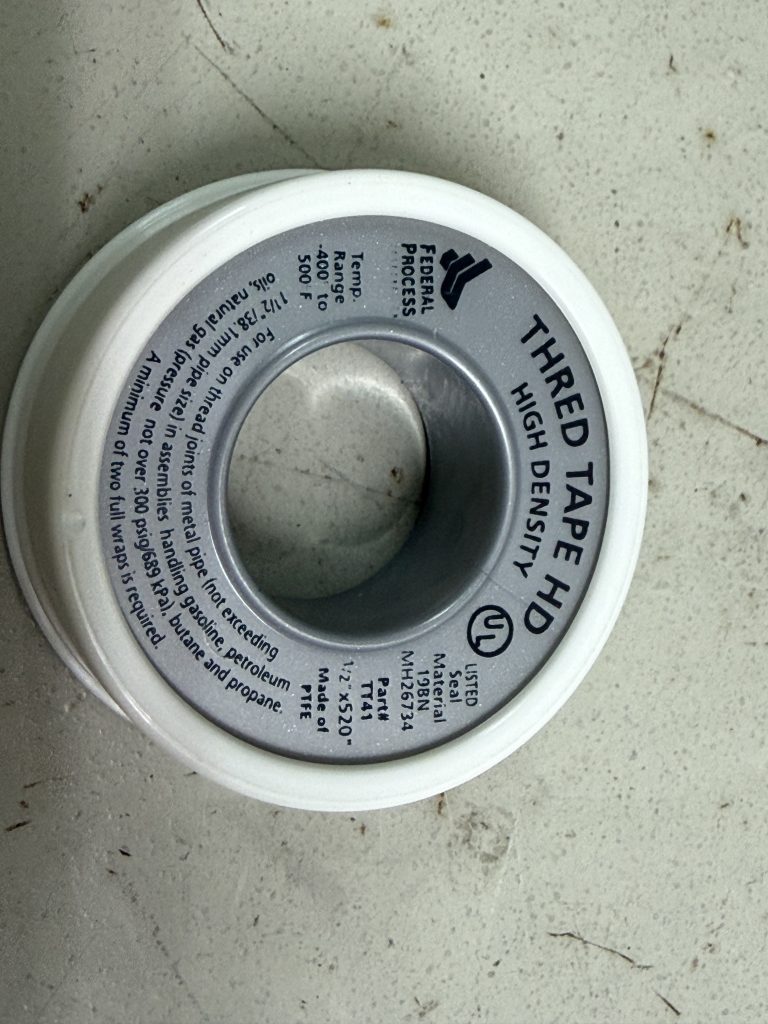
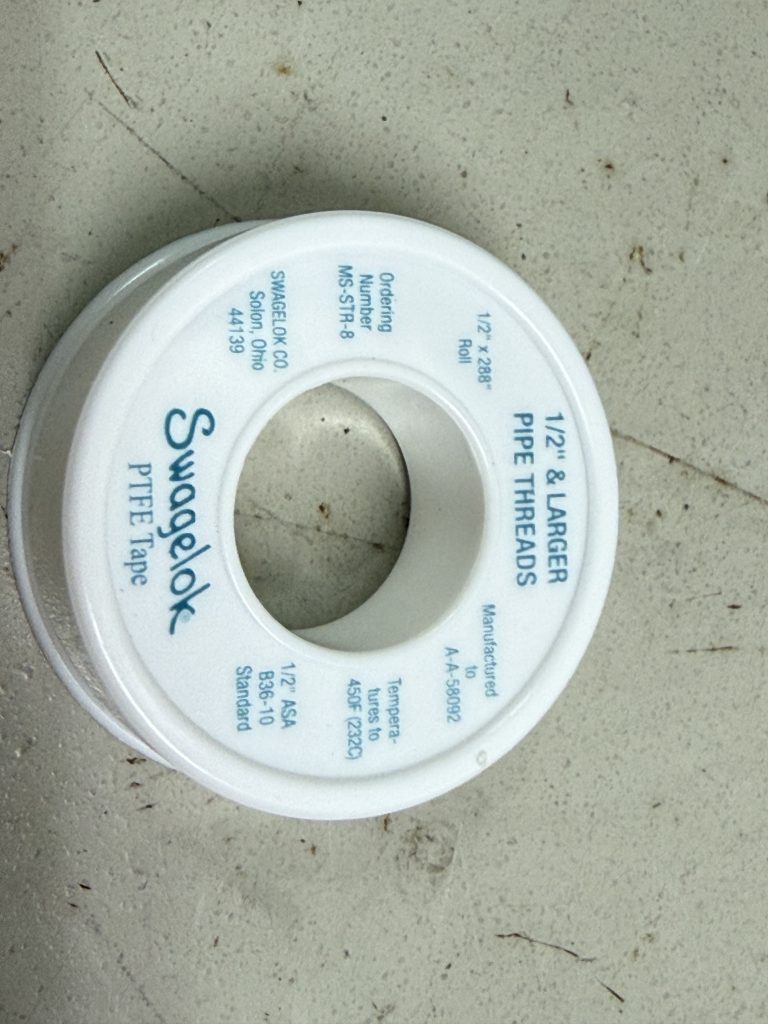
    (PTFE 止洩帶)

    目前包括:

    Federal Process Thread Tape HD

    Swagelok PTFE Tape。

    兩類材料在外觀、產品功能與現場選擇方式上並不相同。

    二、Lubricant 依 Cylinder Material 區分

    本維修現場在 Lubricant
    (潤滑材料)

    選擇上,會依:

    Cylinder Material
    (鋼瓶材質)

    進行區分。

    目前實際使用方式為:

    Carbon Steel Cylinder
    (碳鋼鋼瓶)

    → Swagelok Pure Goop
    → 綠色包裝

    Stainless Steel Cylinder
    (不鏽鋼鋼瓶)

    → Swagelok Pure Goop
    → 綠色包裝

    Aluminum Cylinder
    (鋁合金鋼瓶)

    → Formula-8
    → 紅色包裝

    這是本維修現場目前使用的:

    Material Selection Rule
    (材料選擇規則)。

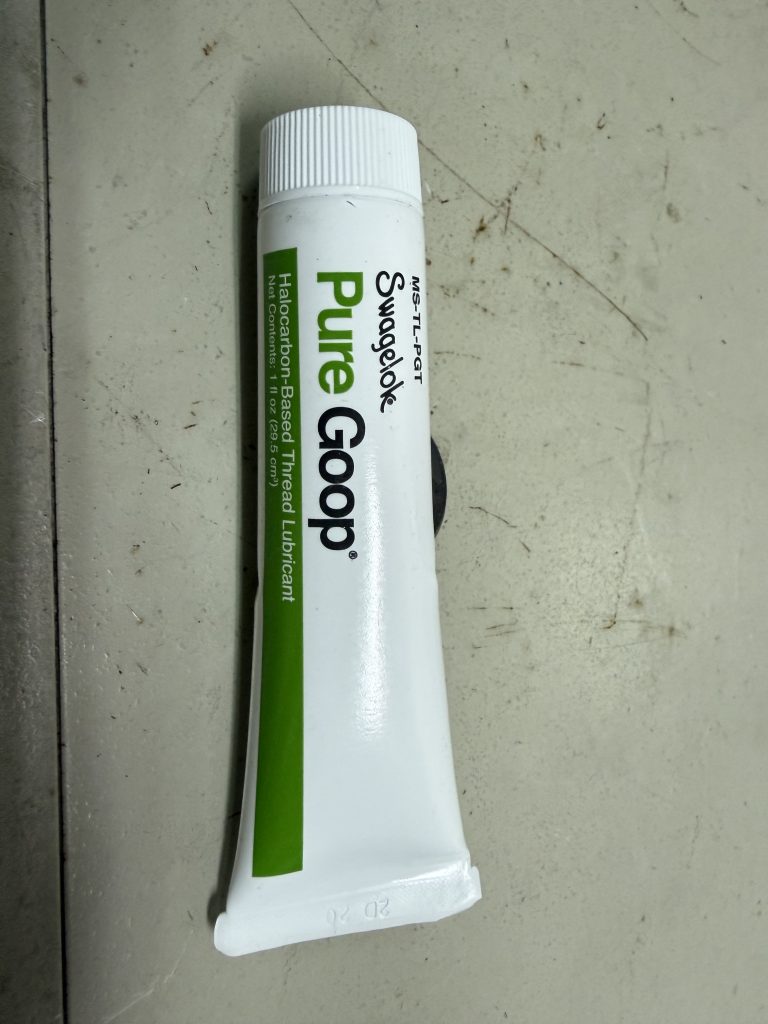
    三、Swagelok Pure Goop|碳鋼與不鏽鋼鋼瓶使用

    第一張實物照片中的產品為:

    Swagelok Pure Goop

    產品標示:

    MS-TL-PGT

    Halocarbon-Based Thread Lubricant
    (鹵碳類螺紋潤滑劑)。

    本維修現場主要使用於:

    Carbon Steel Cylinder
    (碳鋼鋼瓶)

    以及:

    Stainless Steel Cylinder
    (不鏽鋼鋼瓶)。

    因此現場可辨識為:

    Green Package
    (綠色包裝)
    ↓
    Swagelok Pure Goop
    ↓
    Carbon Steel / Stainless Steel Cylinder
    (碳鋼/不鏽鋼鋼瓶)

    但正式材料確認仍應以:

    Product Name
    (產品名稱)

    Part Number
    (產品編號)

    以及:

    Approved Application
    (核准用途)

    為準。

    照片 07-05-01|Swagelok Pure Goop

    照片說明:

    Swagelok Pure Goop

    MS-TL-PGT

    Halocarbon-Based Thread Lubricant
    (鹵碳類螺紋潤滑劑)

    本維修現場主要使用於:

    Carbon Steel Cylinder
    (碳鋼鋼瓶)

    Stainless Steel Cylinder
    (不鏽鋼鋼瓶)

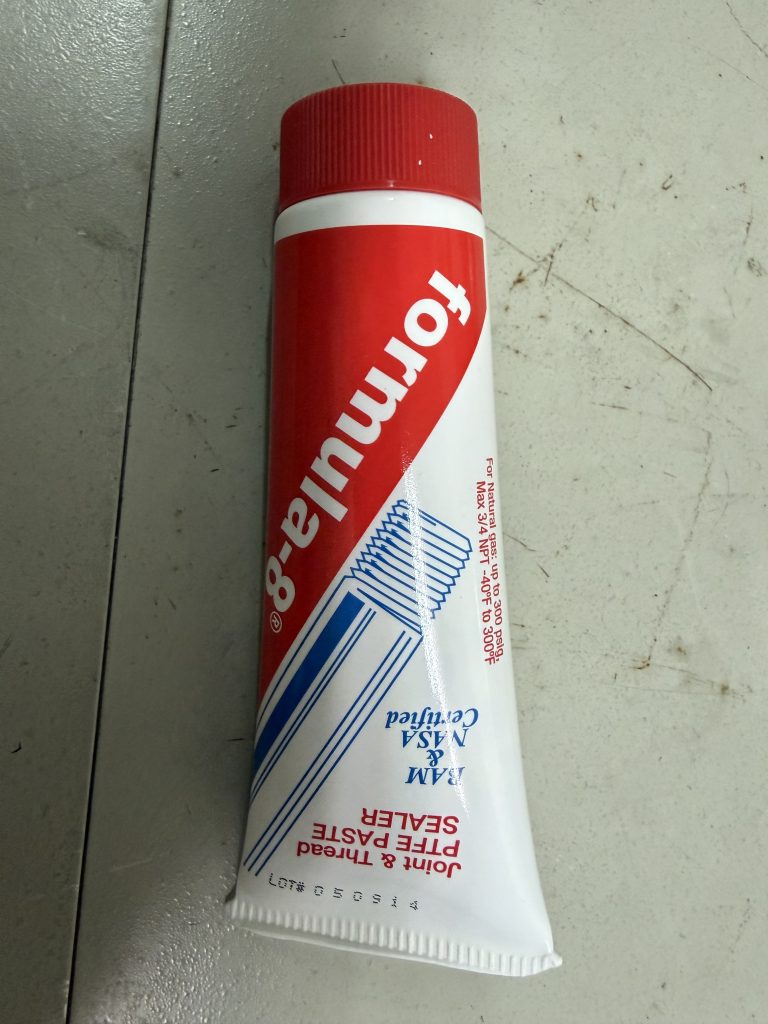
    四、Formula-8|鋁合金鋼瓶使用

    第二張實物照片中的產品為:

    Formula-8。

    產品包裝標示:

    Joint & Thread PTFE Paste Sealer。

    因此依產品本身標示,其技術分類為:

    PTFE Paste Sealer
    (PTFE 膏狀螺紋密封材料)。

    在本維修現場的實際作業分類中,

    Formula-8 是鋁合金鋼瓶使用的螺紋材料。

    目前使用於:

    Aluminum Cylinder
    (鋁合金鋼瓶)。

    因此現場可以辨識為:

    Red Package
    (紅色包裝)
    ↓
    Formula-8
    ↓
    Aluminum Cylinder
    (鋁合金鋼瓶)

    需要注意:

    Formula-8 原廠產品標示為:

    PTFE Paste Sealer

    而不是單純標示:

    Thread Lubricant。

    因此技術資料中應同時保留:

    「現場使用分類」

    與:

    「原廠產品分類」

    兩項資訊。

    照片 07-05-02|Formula-8

    照片說明:

    Formula-8

    Joint & Thread PTFE Paste Sealer
    (PTFE 膏狀螺紋密封材料)

    本維修現場主要使用於:

    Aluminum Cylinder
    (鋁合金鋼瓶)

    五、Lubricant 的選擇重點是 Cylinder Material

    這是本篇最需要釐清的地方。

    本維修現場:

    Pure Goop

    與:

    Formula-8

    之間的選擇,

    主要是依:

    Cylinder Material
    (鋼瓶材質)

    進行區分。

    也就是:

    Carbon Steel
    (碳鋼)
    ↓
    Pure Goop

    Stainless Steel
    (不鏽鋼)
    ↓
    Pure Goop

    Aluminum Alloy
    (鋁合金)
    ↓
    Formula-8

    因此這裡判斷的是:

    What Is the Cylinder Material?
    (鋼瓶是什麼材質?)

    而不是:

    What Is the Valve Material?
    (瓶閥是什麼材質?)

    這兩個判斷條件不能混在一起。

    六、PTFE Tape 不依上述鋼瓶材質分類

    第三與第四張照片為:

    PTFE Tape
    (PTFE 止洩帶)。

    目前包括:

    Federal Process Thread Tape HD

    以及:

    Swagelok PTFE Tape。

    PTFE Tape 的使用不能套用:

    綠色 → 碳鋼/不鏽鋼鋼瓶

    紅色 → 鋁合金鋼瓶

    這套 Lubricant 分類方式。

    也就是:

    Lubricant Selection Rule
    (潤滑材料選擇規則)

    ≠

    PTFE Tape Selection Rule
    (PTFE Tape 選擇規則)

    這是兩套不同的材料管理概念。

    七、目前 PTFE Tape 實際使用的 Valve Material

    依本維修現場目前的實際安裝經驗,

    目前安裝過的 Valve Material
    (瓶閥材質)

    主要為:

    Stainless Steel Valve
    (不鏽鋼瓶閥)

    以及:

    Copper / Copper-alloy Valve
    (銅/銅合金瓶閥)。

    PTFE Tape 目前具有這兩類瓶閥的實際使用經驗。

    因此目前資料可以寫成:

    PTFE Tape
    ↓
    Stainless Steel Valve
    (不鏽鋼瓶閥)

    以及:

    PTFE Tape
    ↓
    Copper / Copper-alloy Valve
    (銅/銅合金瓶閥)

    但是這裡必須注意:

    目前只有這兩類瓶閥的實際作業經驗,

    不代表:

    PTFE Tape Only Works with These Two Valve Materials
    (PTFE Tape 只能使用於這兩種瓶閥材質)。

    同樣也不能在沒有資料的情況下推論:

    PTFE Tape Is Approved for Every Valve Material
    (PTFE Tape 適用於所有瓶閥材質)。

    比較精確的說法是:

    「本維修現場目前 PTFE Tape 的實際使用經驗為不鏽鋼瓶閥與銅/銅合金瓶閥。」

    八、Federal Process Thread Tape HD

    第三張實物照片為:

    Federal Process

    THREAD TAPE HD

    產品標示:

    High Density
    (高密度)

    Thread Tape
    (螺紋止洩帶)。

    因此它屬於:

    Tape-type Thread Sealing Material
    (帶狀螺紋密封材料)。

    照片 07-05-03|Federal Process Thread Tape HD

    照片說明:

    Federal Process

    THREAD TAPE HD

    High Density Thread Tape
    (高密度螺紋止洩帶)

    本維修現場 PTFE Tape 的實際使用經驗包含:

    Stainless Steel Valve
    (不鏽鋼瓶閥)

    Copper / Copper-alloy Valve
    (銅/銅合金瓶閥)

    實際產品適用範圍仍依核准規格確認。

    九、Swagelok PTFE Tape

    第四張實物照片為:

    Swagelok PTFE Tape。

    包裝可辨識:

    Swagelok PTFE Tape

    Ordering Number:

    MS-STR-8

    以及:

    1/2″ & Larger Pipe Threads。

    因此同樣屬於:

    PTFE Thread Tape
    (PTFE 螺紋止洩帶)。

    照片 07-05-04|Swagelok PTFE Tape

    照片說明:

    Swagelok PTFE Tape

    Ordering Number:

    MS-STR-8

    PTFE Thread Tape
    (PTFE 螺紋止洩帶)

    產品實際適用 Thread Specification
    (螺紋規格)

    仍依 Manufacturer Specification
    (製造商規格)

    及公司核准用途確認。

    十、Cylinder Material 與 Valve Material 必須分開記錄

    這是本篇修正後非常重要的技術觀念。

    一套 Cylinder / Valve Assembly
    (鋼瓶/瓶閥組件)

    至少包含兩個不同的 Material Information
    (材質資訊):

    Cylinder Material
    (鋼瓶材質)

    以及:

    Valve Material
    (瓶閥材質)。

    例如:

    Cylinder
    可能是:

    Carbon Steel

    Stainless Steel

    Aluminum Alloy。

    Valve
    則可能是:

    Stainless Steel

    Copper / Copper Alloy

    或其他設計材質。

    因此:

    Cylinder Material
    ≠
    Valve Material

    不能看到:

    Stainless Steel Valve
    (不鏽鋼瓶閥)

    就直接認定:

    Cylinder
    (鋼瓶)

    也是不鏽鋼。

    同樣:

    Aluminum Cylinder
    (鋁合金鋼瓶)

    也不代表:

    Valve
    (瓶閥)

    本身就是鋁合金材質。

    十一、目前的材料選擇邏輯

    依本維修現場目前已確認的實務資料,可以分成兩條線理解。

    第一條:

    Lubricant / Paste-type Material Selection
    (潤滑/膏狀材料選擇)

    判斷依據:

    Cylinder Material
    (鋼瓶材質)

    Carbon Steel Cylinder
    → Pure Goop

    Stainless Steel Cylinder
    → Pure Goop

    Aluminum Cylinder
    → Formula-8

    第二條:

    PTFE Tape Application
    (PTFE Tape 使用)

    目前實際作業經驗:

    Stainless Steel Valve
    (不鏽鋼瓶閥)

    Copper / Copper-alloy Valve
    (銅/銅合金瓶閥)

    因此不能把兩條線合併成:

    「某種鋼瓶只能配某一種 PTFE Tape」。

    目前沒有這樣的實務資料支持。

    十二、PTFE Tape 也不是全部都相同

    目前現場至少具有:

    Federal Process Thread Tape HD

    與:

    Swagelok PTFE Tape。

    雖然兩者都是白色 PTFE Tape,

    但是:

    Same Color
    (相同顏色)
    ≠
    Same Specification
    (相同規格)。

    不同產品可能具有不同:

    Width
    (寬度)

    Thickness
    (厚度)

    Density
    (密度)

    Temperature Range
    (溫度範圍)

    Applicable Thread Size
    (適用螺紋尺寸)

    或其他:

    Manufacturer Specification
    (製造商規格)。

    因此不能因為:

    「都是白色 PTFE Tape」

    就直接認定可以任意互換。

    十三、Lubricant 會影響 Thread Friction

    Thread Lubricant
    (螺紋潤滑材料)

    會影響:

    Thread Friction
    (螺紋摩擦)

    以及:

    Assembly Behavior
    (組裝特性)。

    因此:

    Torque
    (扭力)

    不能完全脫離:

    Lubrication Condition
    (潤滑條件)

    單獨理解。

    不同:

    Surface Condition
    (表面狀態)

    Material Combination
    (材料組合)

    Lubrication Condition
    (潤滑條件)

    可能使相同 Torque Value
    (扭力值)

    產生不同的實際 Mechanical Condition
    (機械狀態)。

    因此:

    Pure Goop

    與:

    Formula-8

    不能在沒有技術確認的情況下任意互換。

    十四、PTFE Tape、Paste 與 Lubricant 都不能修復損傷螺紋

    如果:

    Cylinder Neck Internal Thread
    (鋼瓶瓶頸內螺紋)

    或:

    Valve Inlet External Thread
    (瓶閥入口外螺紋)

    已存在:

    Missing Thread
    (牙型缺損)

    Material Loss
    (材料缺失)

    Deformation
    (變形)

    Severe Wear
    (嚴重磨耗)

    或:

    Thread Damage
    (螺紋損傷),

    不能透過增加:

    Pure Goop

    Formula-8

    或:

    PTFE Tape

    來補償。

    因此:

    More Lubricant
    ≠
    Thread Repair

    More Paste Sealer
    ≠
    Thread Repair

    More PTFE Tape
    ≠
    Thread Repair

    密封材料或潤滑材料不能讓:

    Missing Metal
    (已缺失的金屬)

    重新恢復。

    十五、材料也不能修正 Cross Thread

    如果 Valve Installation
    (瓶閥安裝)

    時:

    Valve Thread Axis
    (瓶閥螺紋軸線)

    與:

    Cylinder Thread Axis
    (鋼瓶螺紋軸線)

    沒有正確:

    Alignment
    (對正),

    可能形成:

    Cross Thread
    (錯牙/斜牙咬合)。

    這時:

    More Lubricant

    More PTFE Tape

    或:

    More Paste Sealer

    都不能修正:

    Incorrect Alignment
    (錯誤對正)。

    因此:

    Unexpected Resistance
    (非預期阻力)
    ≠
    Add More Material and Continue
    (增加材料後繼續)

    十六、材料不能掩蓋原始 Thread Abnormality

    如果安裝前已經發現:

    Thread Damage
    (螺紋損傷)

    Foreign Material
    (異物)

    Material Adhesion
    (材料沾黏)

    Burr
    (毛邊)

    Missing Thread
    (牙型缺損)

    或:

    Deformation
    (變形),

    不能直接用:

    Lubricant

    Paste Sealer

    或:

    PTFE Tape

    覆蓋異常後繼續安裝。

    因為這可能使:

    Original Evidence
    (原始證據)

    變得更難判斷。

    正確的概念是:

    Thread Abnormality Found
    (發現螺紋異常)
    ↓
    STOP
    ↓
    Preserve Evidence
    (保存證據)
    ↓
    Evaluate Thread Condition
    (評估螺紋狀態)
    ↓
    Determine Disposition
    (決定處置)
    ↓
    Proceed Only If Acceptable
    (確認可接受後才繼續)

    十七、材料識別與 Traceability

    現場使用的:

    Pure Goop

    Formula-8

    Federal Process Thread Tape HD

    Swagelok PTFE Tape

    都屬於需要管理的:

    Consumable Material
    (耗材)。

    依公司品質系統,可以保留:

    Manufacturer
    (製造商)

    Product Name
    (產品名稱)

    Part Number
    (產品編號)

    Lot / Batch
    (批號,如適用)

    Cylinder Material
    (鋼瓶材質,如適用)

    Valve Material
    (瓶閥材質,如適用)

    Approved Application
    (核准用途)

    Material Condition
    (材料狀態)

    Storage Condition
    (保存狀態)

    等:

    Traceability Information
    (追溯資訊)。

    十八、與 Neck Leak 故障診斷的關係

    當發生:

    Neck Leak
    (瓶頸洩漏)

    時,

    不能只看:

    Lubricant

    或:

    PTFE Tape

    就判定根本原因。

    還需要一起確認:

    Cylinder Neck Internal Thread
    (鋼瓶瓶頸內螺紋)

    Valve Inlet External Thread
    (瓶閥入口外螺紋)

    Thread Profile
    (螺紋牙型)

    Alignment
    (對正)

    Cylinder Material
    (鋼瓶材質)

    Valve Material
    (瓶閥材質)

    Lubricant / Paste Material
    (潤滑/膏狀材料)

    PTFE Tape
    (PTFE 止洩帶)

    以及:

    Assembly Condition
    (組裝狀態)。

    因此:

    Neck Leak
    ≠
    Lubricant Problem Confirmed

    Neck Leak
    ≠
    PTFE Tape Problem Confirmed

    Leak Stops After Material Change
    (更換材料後不再洩漏)
    ≠
    Root Cause Confirmed
    (根本原因已確認)

    十九、本維修現場目前已確認的材料使用關係

    目前實際資料可以整理為:

    Lubricant / Paste-type Thread Material
    (潤滑/膏狀螺紋材料)

    依:

    Cylinder Material
    (鋼瓶材質)

    區分。

    Carbon Steel Cylinder
    (碳鋼鋼瓶)
    →
    Swagelok Pure Goop

    Stainless Steel Cylinder
    (不鏽鋼鋼瓶)
    →
    Swagelok Pure Goop

    Aluminum Cylinder
    (鋁合金鋼瓶)
    →
    Formula-8

    另一方面:

    PTFE Tape
    (PTFE 止洩帶)

    目前實際使用過的 Valve Material
    (瓶閥材質)為:

    Stainless Steel Valve
    (不鏽鋼瓶閥)

    Copper / Copper-alloy Valve
    (銅/銅合金瓶閥)

    因此:

    Lubricant Selection
    (潤滑材料選擇)
    →
    依 Cylinder Material

    PTFE Tape Application Experience
    (PTFE Tape 實際使用經驗)
    →
    目前為 Stainless Steel Valve 與 Copper / Copper-alloy Valve

    兩者不能混為同一套材料選擇規則。

    二十、本篇的重要判斷觀念

    Cylinder Material
    (鋼瓶材質)
    ≠
    Valve Material
    (瓶閥材質)

    Lubricant Selection
    (潤滑材料選擇)
    ≠
    PTFE Tape Selection
    (PTFE Tape 選擇)

    本維修現場:

    Pure Goop
    →
    Carbon Steel / Stainless Steel Cylinder

    Formula-8
    →
    Aluminum Cylinder

    PTFE Tape:

    目前實際使用經驗
    →
    Stainless Steel Valve / Copper or Copper-alloy Valve

    但:

    Current Experience
    (目前實際經驗)
    ≠
    Universal Application Limit
    (通用適用限制)

    同時:

    More Lubricant
    ≠
    Thread Repair

    More PTFE Tape
    ≠
    Thread Repair

    Correct Material
    ≠
    Damaged Thread Becomes Acceptable

    No Leak
    ≠
    Correct Material Automatically Confirmed

    二十一、相關文章

    ・04-01|瓶閥拆卸與安裝注意事項
    ・04-02|瓶閥外牙檢查
    ・05-01|Thread Damage 與 Material Adhesion
    ・05-04|Neck Leak 瓶頸洩漏故障診斷
    ・05-08|SiH4 鋼瓶 Neck Leak 與 Thread Profile 異常案例
    ・07-01|瓶閥外牙 Ring Gauge 檢查
    ・07-02|3/4-14 NGT Plug Gauge 與瓶頸內牙檢查
    ・07-03|Cut Tap 與 Form Tap
    ・09-04|異常現象、直接原因與根本原因的判斷方法

    注意事項

    本文依本維修現場目前實際使用經驗整理。

    目前已確認:

    Swagelok Pure Goop
    主要使用於 Carbon Steel Cylinder(碳鋼鋼瓶)與 Stainless Steel Cylinder(不鏽鋼鋼瓶)。

    Formula-8
    主要使用於 Aluminum Cylinder(鋁合金鋼瓶)。

    上述 Lubricant / Paste-type Material(潤滑/膏狀材料)的區分主要依 Cylinder Material(鋼瓶材質)。

    PTFE Tape(PTFE 止洩帶)則不使用上述鋼瓶材質分類方式。

    目前本維修現場 PTFE Tape 的實際使用經驗包括 Stainless Steel Valve(不鏽鋼瓶閥)與 Copper / Copper-alloy Valve(銅/銅合金瓶閥)。

    由於目前實際安裝經驗集中於上述瓶閥材質,本文不延伸推論其他 Valve Material(瓶閥材質)的適用性。

    實際材料選擇仍應依 Cylinder / Valve Specification(鋼瓶/瓶閥規格)、Gas Service(氣體用途)、Manufacturer Requirement(製造商要求)、Material Compatibility(材料相容性)及 Approved Company Procedure(公司核准程序)執行。

    本文不提供 Lubricant / Paste Sealer 使用量、PTFE Tape 纏繞圈數與方向、Valve Installation Torque(瓶閥安裝扭力)或其他實際安裝操作參數。

    最後更新:2026-09-28

  • Pressure Panel 壓力盤|為什麼拆閥前一定要確認鋼瓶壓力?

    07-04|Pressure Panel 壓力盤|拆閥前壓力確認與安全防護

    在 Cylinder Maintenance
    (鋼瓶維修)

    作業中,Valve Removal
    (瓶閥拆卸)

    是一項必須建立在正確 Cylinder Condition
    (鋼瓶狀態)

    之上的工作。

    鋼瓶被送到 Maintenance Area
    (維修區)

    並不代表:

    Cylinder Depressurized
    (鋼瓶已確認無壓)。

    同樣:

    Status Label
    (狀態標籤)

    顯示已完成前段處理,

    也不能完全取代:

    Physical Verification
    (實體狀態確認)。

    因此在進入 Valve Removal
    (拆閥)

    之前,

    Pressure Confirmation
    (壓力確認)

    是一道非常重要的 Independent Safety Barrier
    (獨立安全防護層)。

    本篇介紹:

    Pressure Panel
    (壓力盤)

    在拆閥前壓力確認中的角色,以及為什麼:

    Pressure Check
    (壓力確認)

    不能被視為單純的形式作業。

    一、Pressure Panel 是什麼?

    Pressure Panel
    (壓力盤)

    是維修現場用來進行特定壓力確認、監測或相關檢查的設備。

    依設備設計不同,可能包含:

    Pressure Gauge
    (壓力錶)

    Connection
    (連接部)

    Valve / Control Component
    (閥件/控制元件)

    Pressure Protection Device
    (壓力保護裝置)

    以及其他相關組件。

    實際設備配置應依:

    Panel Design
    (壓力盤設計)

    及:

    Approved Company Procedure
    (公司核准程序)

    確認。

    本文所稱 Pressure Panel,主要討論其在:

    Pre-removal Pressure Confirmation
    (拆閥前壓力確認)

    中的安全角色。

    【照片 07-04-01|Pressure Panel 整體】

    照片建議:

    拍攝維修廠實際使用的 Pressure Panel。

    可以標示:

    Pressure Panel
    (壓力盤)

    Pressure Gauge
    (壓力錶)

    Cylinder Connection
    (鋼瓶連接位置)

    Pressure Protection Device
    (壓力保護裝置)

    如果無法確認某一零件的正式名稱,不要自行標示成:

    Safety Valve
    (安全閥)

    Rupture Disc
    (爆破片)

    或其他特定裝置。

    應先確認設備規格。

    二、為什麼拆閥前必須確認壓力?

    Valve
    (瓶閥)

    是 Cylinder Pressure Boundary
    (鋼瓶承壓系統)

    的一部分。

    因此在拆除 Valve 前,必須先確認鋼瓶目前是否仍存在:

    Internal Pressure
    (內部壓力)。

    不能單純依靠:

    ・鋼瓶已經送到維修廠
    ・前站說已經處理完成
    ・鋼瓶貼有完成標籤
    ・系統顯示流程已完成
    ・外觀看起來正常

    就直接推論:

    Cylinder Has No Pressure
    (鋼瓶已無壓)。

    最重要的觀念是:

    Process Status
    (流程狀態)
    ≠
    Physical Condition
    (實體狀態)

    三、Pressure Confirmation 是 Independent Safety Barrier

    如果前段流程完全正常:

    鋼瓶在送入維修區之前,

    理論上應已符合後續維修所要求的狀態。

    但是安全系統不能只建立在:

    「前面的人應該已經做好了。」

    因此在拆閥前再次進行:

    Pressure Confirmation
    (壓力確認)

    就是一道:

    Independent Safety Barrier
    (獨立安全防護層)。

    它的作用是:

    即使 Upstream Process
    (上游流程)

    發生錯誤,

    後面的維修人員仍有機會在拆閥之前發現:

    Unexpected Pressure
    (非預期壓力)。

    因此:

    Pressure Confirmation

    不是對前站的不信任,

    而是:

    Defense in Depth
    (多層防護)

    的一部分。

    四、06-05 事故證明這道防護層的重要性

    在:

    06-05|未清潔滿瓶誤送維修廠事故

    案例中,

    一支未完成預期前段處理的鋼瓶被送入維修區。

    如果維修人員只依:

    Cylinder Location
    (鋼瓶所在位置)

    判斷:

    「既然已經送到維修廠,就應該可以拆閥。」

    事故後果可能更加嚴重。

    但維修人員在 Valve Removal 前依流程進行:

    Pressure Confirmation
    (壓力確認)。

    結果發現:

    Unexpected / Residual Pressure
    (非預期/殘留壓力)。

    這代表:

    Pre-removal Pressure Check
    (拆閥前壓力確認)

    成功攔截了前段流程異常。

    五、Pressure Panel 不是「處理滿瓶」的設備

    這一點非常重要。

    Pressure Panel 用於:

    Pressure Confirmation
    (壓力確認)

    並不代表:

    Pressure Panel

    就是用來處理:

    Unexpected Full Cylinder
    (非預期滿瓶)

    的設備。

    因此:

    Pressure Panel
    (壓力盤)
    ≠
    Full Cylinder Processing Equipment
    (滿瓶處理設備)

    如果在檢查時發現:

    Unexpected Pressure
    (非預期壓力)

    正確的安全概念是:

    STOP
    (停止)

    而不是:

    「既然已經接上壓力盤,就順便把它處理掉。」

    後續應依:

    Approved Abnormal Handling Procedure
    (核准異常處理程序)

    進行處置。

    本文不提供危險氣體排放、洩壓或轉移方法。

    六、發現壓力的第一個動作不是繼續拆閥

    拆閥前壓力確認的目的,就是在:

    Valve Removal

    之前建立:

    Go / No-Go Decision
    (可進行/不可進行判斷)。

    如果確認仍存在不符合後續維修條件的壓力:

    Valve Removal
    (拆閥)

    就不能繼續。

    因此概念上是:

    Pressure Confirmation
    ↓
    Expected Condition Confirmed
    (確認符合預期狀態)
    ↓
    Proceed According to Approved Procedure
    (依核准程序進行後續作業)

    如果:

    Pressure Confirmation
    ↓
    Unexpected Pressure Detected
    (發現非預期壓力)
    ↓
    STOP
    (停止)
    ↓
    Prevent Valve Removal
    (禁止繼續拆閥)
    ↓
    Abnormal Condition Handling
    (異常狀態處理)

    這就是 Pressure Check 作為 Safety Barrier 的真正意義。

    七、Pressure Gauge 是判斷工具,不是裝飾

    Pressure Gauge
    (壓力錶)

    提供的是:

    Pressure Indication
    (壓力指示)。

    因此 Gauge 本身的狀態會直接影響:

    Pressure Confirmation Reliability
    (壓力確認可靠性)。

    如果 Pressure Gauge 存在:

    Damage
    (損傷)

    Unknown Calibration Status
    (校正狀態不明)

    Abnormal Zero
    (零點異常)

    Unreadable Scale
    (刻度無法辨識)

    或其他異常,

    就不能單純相信顯示結果。

    因此:

    Gauge Shows Zero
    (壓力錶顯示零)
    ≠
    Zero Pressure Automatically Confirmed
    (自動確認零壓)

    還必須建立在:

    Gauge Is Suitable and Reliable
    (壓力錶適用且狀態可靠)

    的前提下。

    【照片 07-04-02|Pressure Gauge】

    建議拍攝:

    Pressure Panel 上的 Pressure Gauge。

    照片可以標示:

    Pressure Gauge
    (壓力錶)

    Gauge Range
    (量程)

    Gauge Identification
    (儀表識別)

    Calibration / Verification Label
    (校正/確認標籤)

    公開網站照片如包含公司內部資產編號,可視需要遮蔽。

    八、06-05 的 Pressure Gauge 為什麼會損壞?

    06-05 案例中,

    Pressure Panel 接觸到非預期的鋼瓶壓力後:

    Pressure Protection Device
    (壓力保護裝置)

    發生動作,

    同時:

    Pressure Gauge
    (壓力錶)

    受到損壞。

    這裡必須區分:

    Gauge Damage
    (壓力錶損壞)

    與:

    Root Cause
    (根本原因)。

    壓力錶損壞是:

    Equipment Consequence
    (設備後果)

    而不是事件最前端的原因。

    因此:

    Pressure Gauge Damaged
    (壓力錶損壞)
    ≠
    Pressure Gauge Caused the Event
    (壓力錶造成事故)

    真正需要往前追查的是:

    Why Did a Pressurized Cylinder Reach the Maintenance Area?
    (為什麼仍有壓力的鋼瓶會進入維修區?)

    九、Pressure Protection Device 動作不一定代表設備故障

    06-05 事故中還有另一個重要觀念。

    Pressure Panel 上的:

    Pressure Protection Device
    (壓力保護裝置)

    發生動作。

    但是:

    Protection Device Activated
    (保護裝置動作)
    ≠
    Protection Device Failed
    (保護裝置故障)

    如果設備因非預期壓力達到其設計動作條件,

    Protection Device 的動作可能代表:

    Safety Function Activated
    (安全功能發生作用)。

    因此事故調查時不能只看到:

    「裝置動作了。」

    就直接寫:

    「安全裝置故障。」

    這和 06-08 NH3 Drum 案例中的:

    PRD Activation
    ≠
    PRD Failure

    具有相同的事故分析觀念。

    十、Status Label 不能取代 Physical Verification

    鋼瓶流程中可能使用:

    Status Label
    (狀態標籤)

    表示:

    Cleaning Completed
    (清潔完成)

    Gas Removal Completed
    (氣體處理完成)

    Ready for Maintenance
    (可進入維修)

    或其他流程狀態。

    但是 Label 本質上屬於:

    Information Barrier
    (資訊防護層)。

    它不是:

    Physical Verification
    (實體確認)。

    因此:

    Correct Label
    (標籤正確)
    ≠
    Physical Condition Independently Confirmed
    (實體狀態已獨立確認)

    更不能:

    Label Says Safe
    (標籤顯示安全)
    ↓
    Skip Pressure Confirmation
    (省略壓力確認)

    十一、06-06 案例則是在更前面攔截異常

    06-06:

    Status Label / Record Mismatch
    (狀態標籤/紀錄不一致)

    案例中,

    維修人員在進一步作業之前就發現:

    Label
    (標籤)

    與:

    Work Record
    (作業紀錄)

    不一致。

    因此異常在更前面的:

    Information Verification
    (資訊確認)

    階段就被攔截。

    可以把兩個案例比較為:

    06-06:

    Label / Record Check
    (標籤/紀錄確認)
    ↓
    Abnormality Detected
    (發現異常)
    ↓
    STOP

    06-05:

    前段異常未被攔截
    ↓
    Cylinder Reached Maintenance
    (鋼瓶進入維修區)
    ↓
    Pressure Confirmation
    (壓力確認)
    ↓
    Unexpected Pressure Detected
    (發現非預期壓力)
    ↓
    STOP

    這正好說明:

    Multiple Safety Barriers
    (多層安全防護)

    的重要性。

    十二、不要只依賴單一防護層

    如果系統只有:

    Status Label

    一層防護,

    標籤一旦錯誤:

    Barrier Failed
    (防護失效)。

    如果後面還有:

    Work Record Verification
    (作業紀錄確認)

    Pressure Confirmation
    (壓力確認)

    Valve Removal Pre-check
    (拆閥前確認)

    就形成:

    Defense in Depth
    (多層防護)。

    概念上:

    Upstream Process
    (上游流程)
    ↓
    Status Identification
    (狀態識別)
    ↓
    Record Verification
    (紀錄確認)
    ↓
    Pressure Confirmation
    (壓力確認)
    ↓
    Valve Removal
    (拆閥)

    其中任何一道發現異常:

    STOP

    而不是讓錯誤一路傳遞到:

    Valve Removal。

    十三、Pressure Panel 本身也需要設備管理

    Pressure Panel 屬於 Safety-related Inspection Equipment
    (安全相關檢查設備)。

    因此設備本身也需要適當管理。

    包括:

    Pressure Gauge Condition
    (壓力錶狀態)

    Connection Condition
    (連接部狀態)

    Hose / Tubing Condition
    (軟管/管路狀態)

    Valve Condition
    (閥件狀態)

    Pressure Protection Device Condition
    (壓力保護裝置狀態)

    Equipment Identification
    (設備識別)

    Calibration / Verification Status
    (校正/確認狀態)

    以及:

    Maintenance Record
    (維護紀錄)。

    實際項目依設備設計與公司管理制度決定。

    【照片 07-04-03|Pressure Panel 主要組件】

    可以使用 Pressure Panel 整體照片製作標示版。

    只標示已確認的零件:

    Pressure Gauge
    (壓力錶)

    Connection
    (連接位置)

    Control Valve
    (控制閥,如實際確認)

    Pressure Protection Device
    (壓力保護裝置)

    如果保護裝置型式尚未確認,

    維持:

    Pressure Protection Device

    不要自行改成:

    Safety Valve

    或:

    Rupture Disc。

    十四、壓力確認不是洩壓作業

    這一點在公開網站必須特別強調。

    Pressure Confirmation
    (壓力確認)

    的目的是:

    Determine Cylinder Condition
    (確認鋼瓶狀態)。

    不是:

    Depressurization
    (洩壓)

    也不是:

    Gas Removal
    (氣體移除)。

    因此:

    Pressure Check
    ≠
    Depressurization Procedure

    Pressure Panel
    ≠
    Gas Disposal System

    Unexpected Pressure Detected
    ≠
    Continue Until Pressure Reaches Zero

    發現非預期壓力後:

    應停止後續維修流程,

    並依核准的異常處理制度進行處置。

    尤其涉及:

    Toxic Gas
    (毒性氣體)

    Flammable Gas
    (易燃氣體)

    Corrosive Gas
    (腐蝕性氣體)

    Pyrophoric Gas
    (自燃性氣體)

    或其他 Hazardous Gas
    (危險氣體)時,

    更不能把一般壓力確認設備當成氣體處理設備。

    十五、Pressure Confirmation 應視為 Stop Work Trigger

    Pressure Confirmation 如果發現:

    Unexpected Pressure
    (非預期壓力)

    本身就應視為:

    Stop Work Trigger
    (停止作業觸發條件)。

    也就是:

    「發現異常」

    不是:

    「想辦法把數值變正常再繼續。」

    而是:

    Recognize
    (辨識)
    ↓
    STOP
    (停止)
    ↓
    Preserve Condition
    (保存狀態)
    ↓
    Report / Escalate
    (回報/升級處理)
    ↓
    Approved Disposition
    (核准處置)

    這也與第九章的新進人員異常判斷原則一致。

    十六、本篇的重要判斷觀念

    本篇可以整理成:

    Cylinder in Maintenance Area
    (鋼瓶位於維修區)
    ≠
    Cylinder Depressurized
    (鋼瓶已確認無壓)

    Status Label
    (狀態標籤)
    ≠
    Physical Condition Confirmed
    (實體狀態已確認)

    Gauge Shows Zero
    (壓力錶顯示零)
    ≠
    Gauge Reliability Automatically Confirmed
    (儀表可靠性已自動確認)

    Pressure Confirmation
    (壓力確認)
    ≠
    Depressurization
    (洩壓)

    Pressure Panel
    (壓力盤)
    ≠
    Full Cylinder Processing Equipment
    (滿瓶處理設備)

    Pressure Protection Device Activation
    (壓力保護裝置動作)
    ≠
    Protection Device Failure
    (保護裝置故障)

    Unexpected Pressure
    (非預期壓力)

    STOP
    (停止後續維修作業)

    因此最重要的原則是:

    Verify Physical Condition Before Valve Removal
    (拆閥前確認鋼瓶實際物理狀態)

    而不是:

    Assume Condition from Process Status
    (依流程狀態推測鋼瓶狀態)。

    十七、相關文章

    ・04-01|瓶閥拆卸與安裝注意事項
    ・06-05|未清潔滿瓶誤送維修廠造成 Pressure Panel 異常案例
    ・06-06|標籤誤貼未清潔鋼瓶遭維修人員攔截案例
    ・06-08|NH3 Drum 過熱與安全裝置動作案例
    ・07-01|瓶閥外牙 Ring Gauge 檢查
    ・07-02|3/4-14 NGT Plug Gauge 與瓶頸內牙檢查
    ・09-01|Stop Work 與 Good Catch
    ・09-02|多層安全防護
    ・09-06|新進維修人員的異常判斷與知識傳承

    注意事項

    本文介紹 Pressure Panel(壓力盤)在 Cylinder Maintenance(鋼瓶維修)與 Valve Removal(瓶閥拆卸)前 Pressure Confirmation(壓力確認)中的基本安全角色。

    Pressure Panel 的實際設計、Pressure Rating(壓力等級)、Pressure Gauge Range(壓力錶量程)、Pressure Protection Device(壓力保護裝置)及操作方式,應依實際設備規格與公司核准程序確認。

    本文所述 Pressure Confirmation 是拆閥前的 Independent Safety Barrier(獨立安全防護層),不是危險氣體 Depressurization(洩壓)、Gas Removal(氣體移除)或 Full Cylinder Processing(滿瓶處理)程序。

    若發現 Unexpected Pressure(非預期壓力),應停止後續 Valve Removal(拆閥)作業,並依核准的異常處理程序進行處置。

    本文不提供危險氣體排放、洩壓、吹掃、轉移、回收或其他氣體處理操作程序。

    最後更新:2026-09-28

  • Cut Tap 與 Form Tap 有什麼不同?|鋼瓶瓶牙異物、毛邊與螺紋損傷判斷

    07-03|Cut Tap 與 Form Tap|鋼瓶瓶牙異物、毛邊處理與使用限制

    Cylinder Neck Internal Thread
    (鋼瓶瓶頸內螺紋)

    在 Valve Removal / Installation
    (瓶閥拆卸/安裝)

    過程中,有時可能出現:

    Foreign Material
    (異物)

    Material Adhesion
    (材料沾黏)

    Valve Thread Debris
    (瓶閥螺紋碎屑)

    Burr
    (毛邊)

    或其他 Thread Surface Abnormality
    (螺紋表面異常)。

    維修現場可能使用:

    Cut Tap
    (切削絲攻)

    以及:

    Form Tap
    (成形絲攻)

    進行特定處理。

    但是這兩種工具不能被理解為:

    「鋼瓶瓶牙壞掉以後重新攻牙修復。」

    尤其當 Cylinder Neck Thread 已經發生:

    Missing Thread
    (牙型缺損)

    Base Material Loss
    (基材缺失)

    Severe Thread Damage
    (嚴重螺紋損傷)

    時,

    Tap 無法把已經缺失的鋼瓶材料重新建立回來。

    因此本篇最重要的觀念是:

    Thread Cleaning / Burr Treatment
    (螺紋清理/毛邊處理)
    ≠
    Thread Repair
    (螺紋修復)

    一、為什麼鋼瓶瓶牙會需要使用 Tap?

    瓶閥拆除後,Cylinder Neck Internal Thread(鋼瓶瓶頸內螺紋)可能出現不同狀況。

    例如:

    Foreign Material
    (異物)

    Valve Thread Debris
    (瓶閥牙屑)

    Material Adhesion
    (材料沾黏)

    Burr
    (毛邊)

    Thread Damage
    (螺紋損傷)

    Missing Thread
    (牙型缺損)

    這些外觀看起來可能都像:

    「瓶牙有問題。」

    但實際 Failure Mode(故障模式)並不相同。

    因此在使用任何工具之前,第一個問題不是:

    「要用 Cut Tap 還是 Form Tap?」

    而是:

    What Is the Actual Thread Condition?
    (實際的螺紋狀態是什麼?)

    只有先辨識異常類型,才能判斷後續是否屬於允許處理的範圍。

    二、什麼是 Cut Tap?

    Cut Tap
    (切削絲攻)

    顧名思義具有 Cutting Action(切削作用)。

    在本維修現場的實務應用中,Cut Tap 主要用於處理:

    Foreign Material
    (異物)

    以及特定情況下附著於 Cylinder Neck Thread 上的:

    Valve Thread Debris
    (瓶閥螺紋碎屑)。

    例如瓶閥拆除後發現:

    鋼瓶瓶牙表面存在來自 Valve Thread(瓶閥螺紋)的材料碎屑或附著物。

    此時需要區分:

    Material on the Thread
    (螺紋上附著材料)

    與:

    Cylinder Base Thread Damage
    (鋼瓶基材螺紋損傷)。

    Cut Tap 的目的不是重新製造新的鋼瓶螺紋,

    而是在核准條件下處理特定的附著物/異物。

    【照片 07-03-01|Cut Tap 實體】

    照片建議:

    拍攝維修廠實際使用的 Cut Tap。

    可標示:

    Cut Tap
    (切削絲攻)

    Cutting Area
    (切削區域)

    Tool Identification
    (工具識別)

    Thread Specification
    (適用螺紋規格)

    如果工具具有公司內部編號,可依公開需要遮蔽。

    三、什麼是 Form Tap?

    Form Tap
    (成形絲攻)

    與 Cut Tap 的工作概念不同。

    在本維修現場的實務使用中,Form Tap 主要用於處理:

    Burr
    (毛邊)

    或特定允許處理的螺紋表面異常。

    重點仍然不是:

    Re-cut the Cylinder Thread
    (重新切削鋼瓶螺紋)

    而是針對可處理的局部表面狀態進行必要處理。

    因此:

    Form Tap
    (成形絲攻)
    ≠
    Cylinder Thread Rebuilding Tool
    (鋼瓶瓶牙重建工具)

    【照片 07-03-02|Form Tap 實體】

    照片建議:

    將 Form Tap 單獨拍攝。

    如果可以,與 Cut Tap 使用相同拍攝比例及角度。

    標示:

    Form Tap
    (成形絲攻)

    Forming Area
    (成形作用區域)

    Tool Identification
    (工具識別)

    Thread Specification
    (適用螺紋規格)

    四、Cut Tap 與 Form Tap 最大差異

    兩種工具最重要的差別可以從作用方式理解。

    Cut Tap
    (切削絲攻)

    主要特性:

    Cutting
    (切削)

    本維修現場主要用途:

    Foreign Material / Valve Thread Debris Treatment
    (異物/瓶閥牙屑處理)

    Form Tap
    (成形絲攻)

    主要特性:

    Forming
    (成形)

    本維修現場主要用途:

    Burr Treatment
    (毛邊處理)

    因此:

    Cut Tap
    ≠
    Form Tap

    兩者不能因為:

    「都是 Tap」

    就互相取代。

    五、最重要的是先判斷「異物」還是「瓶牙損傷」

    假設瓶閥拆除後發現:

    Cylinder Neck Thread
    (鋼瓶瓶牙)

    上有一塊異常材料。

    至少可能存在兩種完全不同的情況。

    Condition A:

    Valve Material Adhesion
    (瓶閥材料沾黏)

    也就是:

    鋼瓶瓶牙本體可能仍然存在,

    只是表面附著了來自瓶閥或其他來源的材料。

    Condition B:

    Cylinder Thread Material Loss
    (鋼瓶瓶牙材料缺失)

    也就是:

    鋼瓶本身的螺紋已經受損或缺失。

    兩者外觀看起來可能相似,

    但工程意義完全不同。

    因此:

    Abnormal Material Observed
    (看到異常材料)
    ≠
    Cylinder Thread Damage Confirmed
    (已確認鋼瓶瓶牙損傷)

    反過來也一樣:

    Material Removed
    (材料清除)
    ≠
    Cylinder Thread Confirmed Good
    (已確認鋼瓶瓶牙正常)

    清除之後仍需要重新檢查基材螺紋。

    六、什麼情況不能稱為「攻牙修復」?

    如果 Cylinder Neck Thread 已經存在:

    Missing Thread
    (牙型缺損)

    Base Material Loss
    (基材缺失)

    Severe Deformation
    (嚴重變形)

    Crack
    (裂紋)

    或其他不符合適用 Acceptance Criteria(判定標準)的實體損傷,

    不能把使用 Tap 描述成:

    Thread Repair
    (螺紋修復)。

    因為:

    Missing Material
    (已缺失材料)

    無法透過 Tap:

    Restore
    (恢復)。

    最簡單的概念是:

    Metal Missing
    (金屬已缺失)
    ↓
    Tap Applied
    (使用 Tap)
    ↓
    Missing Metal Still Missing
    (缺失金屬仍然不存在)

    因此:

    Tap Treatment
    (Tap 處理)
    ≠
    Material Restoration
    (材料恢復)

    七、Gauge Pass 不能證明攻牙後「修好了」

    這是和 07-02 非常重要的連接。

    假設一個瓶牙原本具有:

    Visible Thread Damage
    (可見螺紋損傷)。

    經過某種 Tap Treatment(Tap 處理)後:

    Plug Gauge
    (塞規)

    取得符合相應要求的結果。

    不能因此直接推論:

    Thread Damage Repaired
    (螺紋損傷已修復)。

    因為:

    Gauge
    (量規)

    檢查的是特定 Dimensional / Fit Condition
    (尺寸/配合條件)。

    它不能讓已經缺失的材料重新出現。

    因此:

    Gauge Pass After Tap
    (Tap 處理後量規通過)
    ≠
    Original Physical Damage Eliminated
    (原始實體損傷已消失)

    這也是:

    Gauge Pass
    ≠
    Cylinder Acceptable

    的重要案例。

    八、正確觀念是「處理前確認、處理後重新檢查」

    當異常被確認屬於核准程序允許處理的:

    Foreign Material
    (異物)

    Material Adhesion
    (材料沾黏)

    或:

    Burr
    (毛邊)

    時,

    處理完成並不代表工作已經結束。

    概念上應該是:

    Abnormal Condition Found
    (發現異常)
    ↓
    Identify Abnormality
    (辨識異常類型)
    ↓
    Confirm Treatment Is Permitted
    (確認屬於允許處理範圍)
    ↓
    Approved Treatment
    (依核准方式處理)
    ↓
    Re-inspection
    (重新檢查)
    ↓
    Visual Inspection
    (目視檢查)
    +
    Applicable Gauge Inspection
    (適用量規檢查)
    ↓
    Final Evaluation
    (最終判定)

    因此:

    Treatment Completed
    (處理完成)
    ≠
    Inspection Completed
    (檢查完成)

    九、處理前照片比處理後照片更重要

    如果一看到異物就立刻使用工具處理,

    處理完成後可能只剩下:

    Clean Thread
    (已清理的螺紋)。

    原本最重要的 Evidence(證據)已經消失。

    因此如果發現非正常狀況,在安全且程序允許的情況下,建議先保存:

    Before Condition
    (處理前狀態)。

    尤其是:

    ・Foreign Material Location
    (異物位置)

    ・Material Adhesion
    (材料沾黏)

    ・Thread Damage
    (螺紋損傷)

    ・Missing Thread
    (牙型缺損)

    ・Burr
    (毛邊)

    再記錄:

    After Condition
    (處理後狀態)。

    這樣才能判斷:

    What Changed?
    (什麼發生改變?)

    【照片 07-03-03|處理前後 Thread Condition 比較】

    建議製作:

    左:

    Before Treatment
    (處理前)

    右:

    After Treatment
    (處理後)

    並盡量使用:

    Same Angle
    (相同角度)

    Same Magnification
    (相近放大倍率)

    讓異常位置可以直接比較。

    如果照片中的材料來源尚未確認,標示:

    Foreign Material / Material Adhesion
    (異物/材料沾黏)

    不要直接標成:

    Valve Material

    除非已有證據確認。

    十、Tap 本身也可能造成新的損傷

    任何會與 Thread Surface(螺紋表面)直接接觸的工具,如果:

    Tool Selection Incorrect
    (工具選擇錯誤)

    Thread Specification Incorrect
    (螺紋規格錯誤)

    Alignment Incorrect
    (中心/角度不正)

    Tool Condition Abnormal
    (工具狀態異常)

    或:

    Excessive Force
    (施力異常)

    都有可能造成:

    Secondary Damage
    (次生損傷)。

    因此:

    Tool Used for Correction
    (用來處理異常的工具)

    本身也可能變成:

    Damage Source
    (損傷來源)。

    這也是為什麼不能將 Tap 視為:

    「有問題就攻一下」

    的通用工具。

    十一、Alignment 是重要風險

    Cylinder Neck Thread 與 Tap 之間如果沒有保持正確:

    Alignment
    (對正)

    就可能產生:

    Cross Engagement
    (錯誤咬合)

    或其他不正常接觸。

    因此與 Valve Installation(瓶閥安裝)相同:

    Center Alignment
    (中心對正)

    本身就是重要的機械條件。

    這也是你們使用 Valve Machine(瓶閥拆裝設備)時同樣重視的觀念:

    Tool Axis
    (工具軸線)

    與:

    Thread Axis
    (螺紋軸線)

    必須正確對應。

    本文不提供 Tap 實際操作程序,但在技術判斷上必須知道:

    Incorrect Alignment
    (錯誤對正)

    可能造成新的 Thread Damage
    (螺紋損傷)。十二、工具規格不能只靠「看起來一樣」

    不同 Thread Specification(螺紋規格)可能具有:

    不同尺寸

    不同 Pitch
    (牙距)

    不同 Taper
    (錐度)

    不同 Thread Profile
    (牙型)

    因此:

    Tool Looks Similar
    (工具看起來相似)
    ≠
    Tool Specification Correct
    (工具規格正確)

    使用前必須確認:

    Tool Identification
    (工具識別)

    Thread Specification
    (螺紋規格)

    Applicable Cylinder / Thread
    (適用鋼瓶/螺紋)

    Tool Condition
    (工具狀態)

    不能只依:

    「這支以前好像就是用這個。」

    進行判斷。

    十三、Tap 也需要工具管理

    Cut Tap 與 Form Tap 都屬於需要管理的 Maintenance Tool(維修工具)。

    應依公司制度確認:

    Tool Identification
    (工具識別)

    Tool Specification
    (工具規格)

    Tool Condition
    (工具狀態)

    Wear
    (磨耗)

    Damage
    (損傷)

    Cleanliness
    (潔淨狀態)

    Storage
    (保存)

    以及適用範圍。

    如果 Cutting Edge(切削區域)或 Forming Surface(成形表面)已經受損,

    工具本身就可能:

    降低處理效果

    或:

    造成新的 Thread Damage。

    十四、不要把 Cleaning、Deburring 與 Repair 混在一起

    網站文章與維修紀錄中建議明確區分:

    Cleaning
    (清除異物/清潔)

    Deburring
    (去除毛邊)

    Treatment
    (特定處理)

    Repair
    (修復)

    四種不同概念。

    例如:

    移除附著在瓶牙上的 Valve Thread Debris:

    較適合描述為:

    Foreign Material Removal
    (異物清除)

    而不是:

    Cylinder Thread Repair
    (鋼瓶瓶牙修復)。

    處理局部 Burr:

    較適合描述為:

    Burr Treatment / Deburring
    (毛邊處理/去毛邊)

    而不是:

    Re-threading
    (重新攻牙)。

    這種文字區分非常重要,

    因為「修復瓶牙」容易讓讀者誤以為:

    受損的 Cylinder Pressure Boundary(鋼瓶承壓結構)

    可以任意重新加工恢復。

    十五、與 07-01、07-02 的工具關係

    07-01:

    Ring Gauge
    (環規)

    用途:

    Valve External Thread Inspection
    (瓶閥外螺紋檢查)

    07-02:

    Plug Gauge
    (塞規)

    用途:

    Cylinder Internal Thread Inspection
    (鋼瓶內螺紋檢查)

    07-03:

    Cut Tap / Form Tap
    (切削絲攻/成形絲攻)

    用途:

    依核准範圍處理特定:

    Foreign Material
    (異物)

    Material Adhesion
    (材料沾黏)

    Burr
    (毛邊)

    因此:

    Ring Gauge
    +
    Plug Gauge

    主要屬於:

    Inspection Tools
    (檢查工具)

    Cut Tap
    +
    Form Tap

    則屬於:

    Treatment Tools
    (處理工具)

    兩種工具角色不能互換。

    十六、本篇的重要判斷觀念

    本篇可以整理成:

    Cut Tap
    (切削絲攻)
    ≠
    Form Tap
    (成形絲攻)

    Foreign Material
    (異物)
    ≠
    Cylinder Thread Damage
    (鋼瓶瓶牙損傷)

    Material Adhesion
    (材料沾黏)
    ≠
    Base Material Loss
    (基材缺失)

    Cleaning
    (異物清除)
    ≠
    Thread Repair
    (螺紋修復)

    Deburring
    (去除毛邊)
    ≠
    Re-threading
    (重新攻牙)

    Tap Treatment
    (Tap 處理)
    ≠
    Material Restoration
    (材料恢復)

    Gauge Pass After Tap
    (Tap 處理後量規通過)
    ≠
    Original Damage Repaired
    (原始損傷已修復)

    因此最重要的原則是:

    Identify Before Treatment
    (處理前先辨識)

    Preserve Evidence
    (保存原始證據)

    Use the Correct Tool
    (使用正確工具)

    Re-inspect After Treatment
    (處理後重新檢查)

    以及:

    Never Treat Missing Material as a Repairable Burr
    (不要把材料缺損當成可以去除的毛邊)。

    十七、相關文章

    ・04-01|瓶閥拆卸與安裝
    ・04-02|瓶閥外牙檢查
    ・05-01|Thread Damage 與 Material Adhesion 案例
    ・05-04|Neck Leak 瓶頸洩漏故障診斷
    ・05-08|SiH4 鋼瓶 Neck Leak 與 Thread Profile 異常案例
    ・07-01|瓶閥外牙 Ring Gauge 檢查
    ・07-02|3/4-14 NGT Plug Gauge 與鋼瓶瓶頸內牙檢查
    ・09-03|Gauge Pass 不代表鋼瓶一定合格
    ・09-04|異常現象、直接原因與根本原因的判斷方法

    注意事項

    本文介紹 Cut Tap(切削絲攻)與 Form Tap(成形絲攻)在鋼瓶維修現場中的基本用途與判斷觀念。

    本維修現場實務上:

    Cut Tap 主要用於特定 Foreign Material / Valve Thread Debris(異物/瓶閥牙屑)的處理。

    Form Tap 主要用於特定 Burr(毛邊)處理。

    上述用途屬於實務管理方式,不代表所有鋼瓶、螺紋規格或維修單位均可採用相同處理方式。

    實際使用必須依 Cylinder Specification(鋼瓶規格)、Thread Specification(螺紋規格)、工具製造商資料、適用技術要求及公司核准程序執行。

    如果 Cylinder Neck Thread(鋼瓶瓶頸螺紋)已存在 Missing Thread(牙型缺損)、Base Material Loss(基材缺失)或其他不符合 Acceptance Criteria(判定標準)的實體損傷,不應將 Tap Treatment(Tap 處理)視為恢復缺失材料的修復方法。

    本文不提供 Cut Tap 或 Form Tap 的實際攻牙方式、旋入深度、旋轉圈數、施力、切削量或其他加工操作參數。

    最後更新:2026-09-28

  • 3/4-14 NGT Plug Gauge 塞規|鋼瓶瓶頸內牙檢查與 Gauge Pass 判定

    07-02|3/4-14 NGT Plug Gauge 塞規|鋼瓶瓶頸內牙檢查與判定

    Cylinder Neck Internal Thread
    (鋼瓶瓶頸內螺紋)

    是 Cylinder(鋼瓶)與 Valve(瓶閥)連接的重要結構之一。

    當 Valve Inlet External Thread
    (瓶閥入口外螺紋)

    旋入:

    Cylinder Neck Internal Thread
    (鋼瓶瓶頸內螺紋)

    時,

    兩者的 Thread Profile(螺紋牙型)、尺寸與實際狀態都會影響後續安裝與密封可靠性。

    在維修檢查中:

    Valve External Thread
    (瓶閥外螺紋)

    通常使用:

    Ring Gauge
    (環規)

    進行相應檢查。

    而:

    Cylinder Neck Internal Thread
    (鋼瓶瓶頸內螺紋)

    則使用:

    Plug Gauge
    (塞規)

    進行相應的螺紋檢查。

    本篇以維修現場常見的:

    3/4-14 NGT

    鋼瓶瓶頸螺紋為例,說明 Plug Gauge(塞規)的基本用途與判斷觀念。

    最重要的原則仍然是:

    Gauge Pass
    (量規通過)
    ≠
    Cylinder Thread Completely Acceptable
    (鋼瓶螺紋完全合格)

    一、什麼是 Plug Gauge?

    Plug Gauge
    (塞規)

    是一種用於檢查 Internal Thread(內螺紋)的 Gauge(量規)。

    在鋼瓶維修中,其主要檢查對象之一為:

    Cylinder Neck Internal Thread
    (鋼瓶瓶頸內螺紋)。

    因此可以簡單記成:

    External Thread
    (外螺紋)
    →
    Ring Gauge
    (環規)

    Internal Thread
    (內螺紋)
    →
    Plug Gauge
    (塞規)

    在鋼瓶與瓶閥的配合關係中:

    Valve Inlet External Thread
    (瓶閥入口外螺紋)
    →
    Ring Gauge

    Cylinder Neck Internal Thread
    (鋼瓶瓶頸內螺紋)
    →
    Plug Gauge

    兩者分別檢查不同零件。

    【照片 07-02-01|3/4-14 NGT Plug Gauge 實體】

    照片建議:

    拍攝維修廠目前實際使用的 Plug Gauge(塞規)。

    如果現場具有:

    B
    BT
    Mn
    MXT

    等不同 Gauge Identification(量規識別),可以排列拍攝。

    照片標示:

    ・Plug Gauge(塞規)
    ・Gauge Identification(量規識別)
    ・3/4-14 NGT
    ・其他製造商標示

    但網站文章不要自行解釋各代號的精確 Acceptance Function(判定功能),除非已取得該量規的 Manufacturer Specification(製造商規格)。

    二、什麼是 3/4-14 NGT?

    3/4-14 NGT 是鋼瓶瓶頸與瓶閥連接中可見的一種 Thread Designation(螺紋標示)。

    其中:

    3/4
    =
    Nominal Thread Size
    (公稱螺紋尺寸)

    14
    =
    Threads Per Inch
    (每英吋牙數)

    NGT
    =
    National Gas Taper Thread
    (氣體用錐形螺紋)

    NGT 屬於 Tapered Thread
    (錐形螺紋)。

    也就是螺紋不是單純沿著完全相同的直徑延伸,而具有設計的 Taper(錐度)。

    因此它的配合與檢查概念不能直接套用一般 Parallel Thread(平行螺紋)的理解。

    三、Plug Gauge 檢查的是哪個位置?

    鋼瓶上端可以簡化理解成:

    Cylinder Body
    (鋼瓶本體)
    │
    Cylinder Shoulder
    (鋼瓶肩部)
    │
    Cylinder Neck
    (鋼瓶瓶頸)
    │
    Cylinder Neck Internal Thread
    (鋼瓶瓶頸內螺紋)
    ↑
    Valve Inlet External Thread
    (瓶閥入口外螺紋)

    Plug Gauge 的檢查位置是:

    Cylinder Neck Internal Thread
    (鋼瓶瓶頸內螺紋)。

    也就是瓶閥拆除後,鋼瓶瓶口內部可以看到的 Thread(螺紋)。

    【照片 07-02-02|Cylinder Neck Internal Thread 位置】

    照片建議:

    使用已拆除 Valve(瓶閥)的鋼瓶瓶頸照片。

    箭頭標示:

    Cylinder Neck
    (鋼瓶瓶頸)

    Cylinder Neck Internal Thread
    (鋼瓶瓶頸內螺紋)

    Plug Gauge Inspection Area
    (塞規檢查區域)

    這張照片很適合作為本篇主要結構說明圖。

    四、為什麼 Cylinder Neck Thread 特別重要?

    Cylinder Neck Internal Thread 是:

    Pressure-containing Cylinder
    (承壓鋼瓶)

    與:

    Valve
    (瓶閥)

    之間的重要 Mechanical Connection
    (機械連接)。

    如果瓶頸螺紋存在:

    Missing Thread
    (牙型缺損)

    Thread Damage
    (螺紋損傷)

    Deformation
    (變形)

    Foreign Material
    (異物)

    Material Adhesion
    (材料沾黏)

    Corrosion
    (腐蝕)

    或其他 Thread Profile Abnormality
    (螺紋牙型異常),

    就需要進一步判定其狀態。

    不能因為:

    Valve Can Be Installed
    (瓶閥可以裝入)

    就直接判斷:

    Cylinder Thread Acceptable
    (鋼瓶螺紋合格)。

    五、Gauge Pass 不代表瓶牙沒有缺損

    這是本篇最重要的實務觀念之一。

    Plug Gauge 可以提供特定:

    Dimensional / Fit Information
    (尺寸/配合資訊)。

    但是:

    Gauge Pass
    (量規通過)

    不能自動證明:

    No Missing Thread
    (沒有牙型缺損)

    No Local Damage
    (沒有局部損傷)

    No Corrosion
    (沒有腐蝕)

    No Deformation
    (沒有變形)

    No Foreign Material
    (沒有異物)。

    因此如果 Visual Inspection(目視檢查)已經發現明顯 Thread Damage(螺紋損傷),不能只因為 Plug Gauge 結果看起來正常,就忽略已經觀察到的實體損傷。

    也就是:

    Gauge Pass
    ≠
    Visual Damage Disappears
    (目視損傷不存在)

    六、瓶牙缺損與 Gauge Result 必須分開判斷

    例如:

    Visual Inspection
    (目視檢查)

    發現某一區域具有:

    Missing Thread
    (牙型缺損)。

    同時:

    Plug Gauge
    (塞規)

    仍能取得某種符合要求的量規結果。

    這兩項資訊並不互相抵消。

    正確紀錄應該是:

    Gauge Result:
    符合相應量規檢查結果

    Visual Result:
    Thread Damage / Missing Thread Observed
    (發現螺紋損傷/牙型缺損)

    最後再依:

    Applicable Acceptance Criteria
    (適用判定標準)

    進行整體判定。

    不能寫成:

    Gauge Passed
    ↓
    Therefore Thread Damage Is Acceptable

    也就是:

    量規通過
    ≠
    已經看到的瓶牙缺損可以忽略。

    【照片 07-02-03|正常瓶牙與缺損瓶牙比較】

    建議未來使用實際案例照片:

    左側:

    Normal Cylinder Neck Thread
    (正常鋼瓶瓶頸螺紋)

    右側:

    Missing / Damaged Thread
    (缺損/受損瓶牙)

    使用箭頭指出:

    Thread Crest
    (牙頂)

    Thread Flank
    (牙側)

    Damaged Area
    (損傷區域)

    如果無法從照片明確判定損傷類型,只標示:

    Abnormal Area
    (異常區域)

    不要自行推測損傷原因。

    七、Foreign Material 與真正的 Thread Damage 要分開

    Cylinder Neck Thread 中有時可能看到:

    Foreign Material
    (異物)

    Material Adhesion
    (材料沾黏)

    或其他附著物。

    這種情況不能第一時間全部分類成:

    Cylinder Thread Damage
    (鋼瓶瓶牙損傷)。

    例如:

    Valve Thread Material
    (瓶閥螺紋材料)

    在拆裝過程中產生的 Material Adhesion,

    可能附著於 Cylinder Thread Surface
    (鋼瓶螺紋表面)。

    此時看到的是:

    Material on Thread
    (螺紋上有附著材料)

    但仍需要進一步確認:

    Base Cylinder Thread
    (鋼瓶基材螺紋)

    本身是否真正受損。

    因此:

    Material Adhesion
    (材料沾黏)
    ≠
    Cylinder Thread Damage Confirmed
    (已確認鋼瓶瓶牙損傷)

    八、清除異物後必須重新檢查

    如果確認異常屬於可依核准程序處理的:

    Foreign Material
    (異物)

    或:

    Material Adhesion
    (材料沾黏),

    處理完成後不能直接判定:

    PASS
    (合格)。

    因為異物清除後,原本被覆蓋的 Thread Surface(螺紋表面)才真正顯露。

    因此後續仍需要重新進行:

    Visual Inspection
    (目視檢查)

    以及適用的:

    Gauge Inspection
    (量規檢查)。

    核心概念是:

    Foreign Material Removed
    (異物已清除)
    ≠
    Thread Acceptable
    (螺紋已確認合格)

    而是:

    Foreign Material Removed
    ↓
    Base Thread Exposed
    (基材螺紋顯露)
    ↓
    Re-inspection
    (重新檢查)
    ↓
    Final Evaluation
    (最終判定)

    九、Cut Tap 與 Form Tap 不能和 Plug Gauge 混為一談

    維修現場可能同時存在:

    Plug Gauge
    (塞規)

    Cut Tap
    (切削式 Tap)

    Form Tap
    (成形式 Tap)。

    三者的用途完全不同。

    Plug Gauge:

    Inspection Tool
    (檢查工具)

    主要用途是檢查。

    Cut Tap:

    依核准用途可能用於特定螺紋處理。

    Form Tap:

    依核准用途可能用於特定表面/螺紋處理。

    因此:

    Plug Gauge
    ≠
    Cut Tap

    Plug Gauge
    ≠
    Form Tap

    Gauge
    ≠
    Thread Repair Tool

    下一篇 07-03 將專門整理 Cut Tap 與 Form Tap 的用途與限制。

    十、不能用 Tap 把真正缺掉的瓶牙「修回來」

    這是非常重要的判斷原則。

    如果 Cylinder Neck Thread 已經存在真正的:

    Missing Thread
    (牙型缺損)

    或:

    Base Material Loss
    (基材缺失),

    使用 Tap 並不能把已經不存在的金屬材料重新建立回來。

    因此:

    Tap
    ≠
    Material Restoration
    (材料恢復)

    也就是:

    Missing Metal
    (材料已缺失)
    ↓
    Tap
    ↓
    Metal Does Not Come Back
    (金屬不會重新長回來)

    所以如果真正的 Cylinder Thread 已經損傷,不能因為經過 Tap 處理後:

    Gauge Can Pass
    (量規可以通過)

    就直接認定:

    Original Damage Repaired
    (原始損傷已被修復)。

    這也是:

    Gauge Pass
    ≠
    Cylinder Acceptable

    的重要例子。

    十一、Plug Gauge 本身也需要正確識別

    現場可能同時存在多支外觀相似的 Plug Gauge。

    例如依使用系統不同,可能看到:

    B

    BT

    Mn

    MXT

    或其他 Gauge Identification(量規識別)。

    這些代號不能只靠外觀看起來相似就互換使用。

    使用前應確認:

    Gauge Identification
    (量規識別)

    Thread Specification
    (螺紋規格)

    Gauge Manufacturer
    (量規製造商)

    Applicable Inspection Purpose
    (適用檢查用途)

    以及:

    Calibration / Verification Status
    (校正/確認狀態)。

    如果沒有 Manufacturer Documentation(製造商文件)支持,不應自行替某個 Gauge Code 定義通用判定方式。

    【照片 07-02-04|不同 Plug Gauge 比較】

    如果現場具有 B、BT、Mn、MXT 等量規,可排列拍攝。

    照片可以標示:

    Gauge A
    Gauge B
    Gauge C
    Gauge D

    並保留原廠刻印。

    網站文字可說明:

    「維修現場依不同檢查目的使用不同 Plug Gauge,實際功能與判定依各 Gauge Specification 為準。」

    避免自行把代號翻譯成沒有文件支持的功能名稱。

    十二、Gauge 本身的狀態會影響檢查可靠性

    Plug Gauge 也是 Precision Inspection Tool
    (精密檢查工具)。

    因此 Gauge 本身如果存在:

    Wear
    (磨耗)

    Damage
    (損傷)

    Corrosion
    (腐蝕)

    Foreign Material
    (異物)

    Incorrect Identification
    (識別錯誤)

    或:

    Unknown Calibration Status
    (校正狀態不明)

    檢查結果的 Reliability(可靠性)就可能受到影響。

    因此 Gauge Management(量規管理)也是檢驗系統的一部分。

    不能只有:

    「鋼瓶要檢查。」

    還要確認:

    「用來檢查鋼瓶的工具本身是否可信。」

    十三、不要強制旋入 Plug Gauge

    Plug Gauge 是:

    Inspection Tool
    (檢查工具)。

    不是:

    Thread Cutting Tool
    (螺紋切削工具)。

    如果檢查過程出現非預期:

    Resistance
    (阻力)

    或:

    Interference
    (干涉),

    不能直接使用更大的力量讓 Gauge 繼續進入。

    因為這樣可能:

    ・改變原本螺紋狀態
    ・損傷 Gauge
    ・損傷被檢查的 Thread
    ・破壞原始 Evidence(證據)
    ・使後續判斷更加困難

    因此:

    Unexpected Resistance
    (非預期阻力)
    ≠
    Apply More Force
    (增加力量)

    而應先:

    STOP
    (停止)

    並確認異常來源。

    十四、Plug Gauge 與 Visual Inspection 應共同使用

    Cylinder Neck Thread Inspection
    (鋼瓶瓶頸螺紋檢查)

    不能只有一個結果。

    比較完整的概念是:

    Step 1:

    Visual Condition
    (目視狀態)

    確認是否存在:

    ・Missing Thread
    ・Damage
    ・Foreign Material
    ・Material Adhesion
    ・Corrosion
    ・Deformation

    Step 2:

    Applicable Gauge Inspection
    (適用量規檢查)

    取得相應的:

    Gauge Result
    (量規結果)

    Step 3:

    Combined Evaluation
    (綜合判定)

    將:

    Visual Evidence
    (目視證據)

    與:

    Gauge Evidence
    (量規證據)

    一起評估。

    因此:

    Visual Inspection
    +
    Gauge Inspection
    ≠
    二選一

    而是兩種不同 Evidence Source
    (證據來源)。

    十五、與 07-01 Ring Gauge 的關係

    07-01:

    Ring Gauge
    (環規)

    檢查:

    Valve Inlet External Thread
    (瓶閥入口外螺紋)

    07-02:

    Plug Gauge
    (塞規)

    檢查:

    Cylinder Neck Internal Thread
    (鋼瓶瓶頸內螺紋)

    因此當發生:

    Neck Leak
    (瓶頸洩漏)

    時,

    不能只看:

    Cylinder Thread
    (鋼瓶瓶牙)

    也不能只看:

    Valve Thread
    (瓶閥外牙)。

    應該分別確認:

    Cylinder Side
    (鋼瓶側)

    以及:

    Valve Side
    (瓶閥側)。

    因為 Neck Connection(瓶頸連接)是兩個零件共同形成的連接系統。

    十六、本篇的重要判斷觀念

    本篇可以整理成:

    Cylinder Internal Thread
    (鋼瓶內牙)
    →
    Plug Gauge
    (塞規)

    Valve External Thread
    (瓶閥外牙)
    →
    Ring Gauge
    (環規)

    Gauge Pass
    (量規通過)
    ≠
    No Thread Damage
    (沒有瓶牙損傷)

    Gauge Pass
    ≠
    No Missing Thread
    (沒有牙型缺損)

    Foreign Material
    (異物)
    ≠
    Cylinder Thread Damage Confirmed
    (已確認瓶牙損傷)

    Foreign Material Removed
    (異物清除)
    ≠
    Cylinder Thread Automatically Acceptable
    (瓶牙自動合格)

    Tap
    ≠
    Material Restoration
    (材料恢復)

    Gauge
    ≠
    Thread Repair Tool
    (螺紋修復工具)

    因此最重要的原則是:

    Gauge Result Must Be Evaluated Together with Actual Thread Condition
    (量規結果必須與實際螺紋狀態一起判定)。

    十七、相關文章

    ・03-02|TE、PE、EE、REE 基本概念
    ・04-01|瓶閥拆卸與安裝
    ・04-02|瓶閥外牙檢查
    ・05-01|Thread Damage 與 Material Adhesion 案例
    ・05-04|Neck Leak 瓶頸洩漏故障診斷
    ・05-08|SiH4 鋼瓶 Neck Leak 與 Thread Profile 異常案例
    ・07-01|瓶閥外牙 Ring Gauge 檢查
    ・07-03|Cut Tap 與 Form Tap 的用途與差異
    ・09-03|Gauge Pass 不代表鋼瓶一定合格

    注意事項

    本文介紹 3/4-14 NGT Plug Gauge(塞規)在 Cylinder Neck Internal Thread(鋼瓶瓶頸內螺紋)檢查中的基本技術概念。

    不同 Cylinder Specification(鋼瓶規格)、Thread Specification(螺紋規格)與 Gauge System(量規系統),可能具有不同的量規種類與 Acceptance Criteria(判定標準)。

    本文提及的 B、BT、Mn、MXT 等名稱僅作為維修現場 Gauge Identification(量規識別)的例子,其實際功能與判定方式應以對應的 Manufacturer Specification(製造商規格)及核准程序為準。

    Gauge Pass(量規通過)不應單獨取代 Visual Inspection(目視檢查)與實際 Thread Condition Evaluation(螺紋狀態評估)。

    若已確認 Cylinder Neck Thread 存在實體牙型缺損或材料缺失,不應僅因量規結果符合要求,就忽略已存在的 Physical Damage(實體損傷)。

    本文不提供 Plug Gauge 的特定旋入圈數、判定位置、公差值、強制旋入方法或 Cylinder Thread Repair(鋼瓶瓶牙修復)操作程序。

    最後更新:2026-09-28

  • 瓶閥外牙 Ring Gauge 環規檢查|Gauge Pass 不代表 Thread 完全正常

    07-01|瓶閥外牙 Ring Gauge 檢查|Valve Inlet External Thread 判定

    在鋼瓶維修作業中,Valve Thread(瓶閥螺紋)是影響瓶閥安裝、密封與連接可靠性的重要部位。

    瓶閥安裝到鋼瓶時:

    Valve Inlet External Thread
    (瓶閥入口外螺紋)

    會與:

    Cylinder Neck Internal Thread
    (鋼瓶瓶頸內螺紋)

    互相配合。

    因此在瓶閥重複使用、檢查或維修判定時,Valve Inlet External Thread 的狀態非常重要。

    本篇介紹:

    Ring Gauge
    (環規)

    在瓶閥外螺紋檢查中的基本用途,以及 Gauge Result(量規結果)與 Visual Inspection(目視檢查)之間的關係。

    最重要的觀念是:

    Gauge Pass
    (量規通過)
    ≠
    Thread Condition Completely Acceptable
    (螺紋狀態完全合格)

    Ring Gauge 是判斷工具之一,但不能取代完整的螺紋狀態檢查。

    一、Ring Gauge 是什麼?

    Ring Gauge
    (環規)

    是一種用於檢查 External Thread(外螺紋)尺寸與配合狀態的 Gauge(量規)。

    在鋼瓶瓶閥維修中,主要檢查:

    Valve Inlet External Thread
    (瓶閥入口外螺紋)。

    簡單來說:

    External Thread
    (外螺紋)
    →
    Ring Gauge
    (環規)

    Internal Thread
    (內螺紋)
    →
    Plug Gauge
    (塞規)

    因此:

    Valve Inlet External Thread
    (瓶閥入口外螺紋)
    →
    Ring Gauge

    Cylinder Neck Internal Thread
    (鋼瓶瓶頸內螺紋)
    →
    Plug Gauge

    這兩種量規的檢查對象不能混淆。

    【照片 07-01-01|Ring Gauge 實體】

    照片建議:

    拍攝目前維修廠實際使用的 Ring Gauge(環規)。

    照片可以標示:

    ・Ring Gauge(環規)
    ・Gauge Identification(量規識別)
    ・Thread Specification(螺紋規格)

    如果量規上具有:

    ・公司資產編號
    ・校正標籤
    ・內部管理編號

    公開網站使用時,可依實際需要遮蔽。

    二、Ring Gauge 檢查哪一個位置?

    瓶閥可以簡化理解為:

    Valve Outlet
    (瓶閥出口)
    │
    Valve Body
    (閥體)
    │
    Valve Inlet External Thread
    (瓶閥入口外螺紋)
    ↓
    Cylinder Neck Internal Thread
    (鋼瓶瓶頸內螺紋)

    Ring Gauge 的主要檢查位置是:

    Valve Inlet External Thread
    (瓶閥入口外螺紋)。

    也就是瓶閥安裝進 Cylinder Neck(鋼瓶瓶頸)的外牙部分。

    因此不要把:

    Valve Outlet Thread
    (瓶閥出口螺紋)

    與:

    Valve Inlet Thread
    (瓶閥入口螺紋)

    混為一談。

    兩者的位置、功能與規格可能完全不同。

    【照片 07-01-02|Valve Inlet External Thread】

    建議使用實際瓶閥照片。

    標示:

    Valve Body
    (閥體)

    Valve Inlet External Thread
    (瓶閥入口外螺紋)

    箭頭清楚指出 Ring Gauge 的檢查位置。

    這張照片很適合作為本篇的主要結構圖。

    三、為什麼瓶閥外牙需要檢查?

    Valve Inlet External Thread 在拆裝與使用過程中可能出現:

    Thread Damage
    (螺紋損傷)

    Material Adhesion
    (材料沾黏)

    Foreign Material
    (異物)

    Deformation
    (變形)

    Burr
    (毛邊)

    Abnormal Wear
    (異常磨耗)

    或其他 Thread Profile Abnormality
    (螺紋牙型異常)。

    如果異常沒有被發現,就可能影響:

    Thread Engagement
    (螺紋咬合)

    Valve Installation
    (瓶閥安裝)

    以及後續的:

    Leak Tightness
    (氣密性)。

    因此量規檢查是 Thread Inspection(螺紋檢查)的一部分。

    四、Gauge Inspection 與 Visual Inspection 必須分開理解

    這是本篇非常重要的觀念。

    Ring Gauge 可以提供:

    Dimensional / Fit Information
    (尺寸/配合資訊)。

    但是它不能完整回答:

    「這組螺紋是否完全沒有損傷?」

    例如某些局部異常可能包含:

    ・局部牙型缺損
    ・表面刮傷
    ・材料沾黏
    ・異物
    ・局部變形
    ・不正常磨耗

    因此:

    Gauge Inspection
    (量規檢查)

    與:

    Visual Inspection
    (目視檢查)

    應該視為不同的 Inspection Method(檢查方法)。

    不能只做其中一項,就假設另一項一定正常。

    五、Gauge Pass 不等於 Thread 完全正常

    這是鋼瓶維修中非常容易產生的誤解。

    如果 Ring Gauge 的結果符合要求,只能代表:

    在該 Gauge 所檢查的條件下,沒有發現相應的尺寸/配合異常。

    但:

    Gauge Pass
    (量規通過)

    不能自動證明:

    No Thread Damage
    (沒有螺紋損傷)

    No Material Adhesion
    (沒有材料沾黏)

    No Foreign Material
    (沒有異物)

    No Local Deformation
    (沒有局部變形)

    No Surface Damage
    (沒有表面損傷)。

    因此:

    Gauge Pass
    ≠
    Visual Pass

    同樣:

    Gauge Pass
    ≠
    Thread Profile Completely Normal

    六、為什麼 05-08 SiH4 Neck Leak 案例很重要?

    在前面的:

    05-08|SiH4 鋼瓶 Neck Leak 案例

    就出現過非常重要的經驗:

    Gauge Result
    (量規結果)

    沒有顯示明顯異常,

    但進一步 Visual Inspection(目視檢查)仍發現 Thread Profile Abnormality(螺紋牙型異常)。

    因此這個案例證明:

    Gauge Pass
    ≠
    Thread Profile Normal

    而且進一步還要注意:

    Thread Profile Normal
    ≠
    Leak Tightness Confirmed

    也就是:

    Gauge
    ↓
    Thread Profile
    ↓
    Assembly
    ↓
    Leak Tightness

    是不同層次的判斷。

    不能把其中一個結果直接代替其他結果。

    七、Material Adhesion 可能影響判斷

    Valve Thread(瓶閥螺紋)使用後,有時可能看到:

    Material Adhesion
    (材料沾黏)

    或:

    Foreign Material
    (異物)。

    兩者需要分開。

    Material Adhesion:

    表示其他材料可能附著在螺紋表面。

    Foreign Material:

    表示螺紋區域存在不屬於正常螺紋表面的外來物質。

    但看到附著物時不能立刻判定:

    Cylinder Thread Damage
    (鋼瓶螺紋損傷)

    或:

    Valve Thread Damage
    (瓶閥螺紋損傷)。

    應先確認:

    What Is the Material?
    (這是什麼材料?)

    Where Did It Come From?
    (來源是哪裡?)

    Is the Base Thread Damaged?
    (基材螺紋是否受損?)

    【照片 07-01-03|正常與異常 Valve Thread 比較】

    建議未來使用實際照片製作:

    左:
    Normal Valve Thread
    (正常瓶閥螺紋)

    右:
    Abnormal Valve Thread
    (異常瓶閥螺紋)

    可標示:

    Material Adhesion
    (材料沾黏)

    Thread Damage
    (螺紋損傷)

    Foreign Material
    (異物)

    但標示內容必須依照片實際證據判定,不要只靠外觀猜測材料來源。

    八、Ring Gauge 本身也需要管理

    Gauge(量規)本身也是 Measurement / Inspection Tool(量測/檢查工具)。

    因此不能只注意被檢查的瓶閥,而忽略 Gauge 本身。

    需要依公司量具管理制度確認:

    Gauge Identification
    (量規識別)

    Gauge Condition
    (量規狀態)

    Calibration / Verification Status
    (校正/確認狀態)

    Storage Condition
    (保存狀態)

    Cleanliness
    (潔淨狀態)

    如果 Gauge 本身:

    ・受損
    ・磨耗
    ・污染
    ・規格錯誤
    ・狀態不明

    其檢查結果的 Reliability(可靠性)就可能受到影響。

    因此:

    Valve Inspection
    (瓶閥檢查)

    與:

    Gauge Control
    (量規管理)

    是兩個同樣重要的部分。

    九、使用錯誤規格的 Gauge 可能造成錯誤判斷

    外觀看起來相似的 Thread(螺紋),不代表:

    Thread Specification
    (螺紋規格)

    一定相同。

    因此使用 Ring Gauge 前,應先確認:

    Valve Thread Specification
    (瓶閥螺紋規格)

    與:

    Gauge Specification
    (量規規格)

    是否相符。

    如果:

    Wrong Gauge
    (錯誤量規)

    拿來檢查:

    Different Thread Specification
    (不同螺紋規格)

    即使得到某種「可以進入」或「無法進入」的結果,也不代表具有正確的判定意義。

    因此:

    Gauge Result
    (量規結果)

    必須建立在:

    Correct Gauge Selection
    (正確量規選擇)

    的前提上。

    十、量規不應被當成修牙工具

    Ring Gauge 的用途是:

    Inspection
    (檢查)

    而不是:

    Thread Repair
    (螺紋修復)。

    因此不能把:

    Gauge Resistance
    (量規阻力)

    理解成:

    「再用力轉一下就可以把牙修順。」

    Gauge 不應被當作:

    Cutting Tool
    (切削工具)

    Forming Tool
    (成形工具)

    Thread Cleaning Tool
    (螺紋清理工具)。

    如果量規檢查出現異常阻力或其他非預期狀況,應停止並確認原因,而不是利用 Gauge 強制改變螺紋狀態。

    十一、Gauge Result 應該留下 Traceability

    如果 Ring Gauge 是正式 Inspection Process(檢查流程)的一部分,建議紀錄至少能追溯:

    ・Inspection Item
    (檢查項目)

    ・Gauge Identification
    (量規識別)

    ・Thread Specification
    (螺紋規格)

    ・Inspection Result
    (檢查結果)

    ・Visual Condition
    (目視狀態)

    ・Abnormal Finding
    (異常發現)

    實際紀錄欄位仍依公司 Quality System(品質系統)決定。

    重點不是增加文件量,

    而是當未來發生:

    Neck Leak
    (瓶頸洩漏)

    Thread Damage
    (螺紋損傷)

    或其他異常時,

    能夠回頭確認:

    What Was Checked?
    (當時檢查了什麼?)

    十二、Ring Gauge 與 Plug Gauge 的差異

    兩者可以簡單整理為:

    Ring Gauge
    (環規)

    主要對象:

    External Thread
    (外螺紋)

    鋼瓶維修常見用途:

    Valve Inlet External Thread
    (瓶閥入口外螺紋)

    Plug Gauge
    (塞規)

    主要對象:

    Internal Thread
    (內螺紋)

    鋼瓶維修常見用途:

    Cylinder Neck Internal Thread
    (鋼瓶瓶頸內螺紋)

    因此可以記成:

    Valve External Thread
    → Ring Gauge

    Cylinder Internal Thread
    → Plug Gauge

    下一篇 07-02 將進一步介紹:

    3/4-14 NGT Plug Gauge
    (3/4-14 NGT 塞規)

    以及鋼瓶瓶頸內牙的檢查概念。

    十三、本篇的重要判斷觀念

    Ring Gauge 的檢查可以整理成:

    Gauge Pass
    (量規通過)
    ≠
    No Thread Damage
    (沒有螺紋損傷)

    Gauge Pass
    ≠
    Visual Inspection Pass
    (目視檢查合格)

    Gauge Pass
    ≠
    Thread Profile Completely Normal
    (牙型完全正常)

    Thread Profile Normal
    ≠
    Leak Tightness Confirmed
    (已確認氣密)

    Gauge Resistance
    (量規出現阻力)
    ≠
    Use More Force
    (應該增加力量)

    Ring Gauge
    (環規)
    ≠
    Thread Repair Tool
    (修牙工具)

    因此正確觀念應該是:

    Gauge Inspection
    (量規檢查)
    +
    Visual Inspection
    (目視檢查)
    +
    Thread Condition Evaluation
    (螺紋狀態評估)

    共同形成完整的 Valve Thread Inspection(瓶閥螺紋檢查)。

    十四、相關文章

    ・03-02|TE、PE、EE、REE 基本概念
    ・04-01|瓶閥拆卸與安裝
    ・04-02|瓶閥外牙檢查
    ・05-01|Thread Damage 與 Material Adhesion 案例
    ・05-04|Neck Leak 瓶頸洩漏故障診斷
    ・05-08|SiH4 鋼瓶 Neck Leak 與 Thread Profile 異常案例
    ・07-02|3/4-14 NGT Plug Gauge 與鋼瓶瓶頸內牙檢查
    ・07-03|Cut Tap 與 Form Tap 的用途與差異
    ・09-03|Gauge Pass 不代表鋼瓶一定合格

    注意事項

    本文介紹 Ring Gauge(環規)在 Valve Inlet External Thread(瓶閥入口外螺紋)檢查中的基本技術概念。

    不同 Valve(瓶閥)、Cylinder(鋼瓶)與 Thread Specification(螺紋規格)可能使用不同的 Gauge(量規)及 Acceptance Criteria(判定標準)。

    實際檢查應依適用的 Manufacturer Specification(製造商規格)、Gauge Specification(量規規格)、技術標準及公司核准程序執行。

    本文不提供特定 Gauge 的強制旋入方式、判定圈數、尺寸公差或螺紋修復操作程序。

    Gauge Pass(量規通過)只能代表相應量規檢查結果,不應單獨取代 Visual Inspection(目視檢查)、Thread Condition Evaluation(螺紋狀態評估)或 Leak Tightness Verification(氣密性確認)。

    最後更新:2026-09-28

  • NH3 Drum 溫度偵測器異常造成過熱|PRD Fuse Metal 動作事故案例

    06-08|NH3 Drum 溫度偵測器異常造成過熱與 PRD Fuse Metal 動作事故案例

    NH3(Ammonia,氨)Drum 的加熱系統通常需要依靠 Temperature Sensor(溫度偵測器)提供溫度資訊,讓控制系統判斷目前實際加熱狀態。

    但是:

    Temperature Signal
    (溫度訊號)

    不一定永遠等於:

    Actual Temperature
    (實際溫度)。

    本案例中,客戶端 NH3 Drum 加熱系統的 Temperature Sensor(溫度偵測器)發生異常。

    偵測器傳回控制系統的溫度數值並非 Drum 當時的真實溫度。

    因此控制系統依據錯誤的 Temperature Feedback(溫度回授)持續進行加熱,使 NH3 Drum 的 Actual Temperature(實際溫度)持續升高。

    最終造成:

    Overheating
    (過度加熱)

    並使 PRD(Pressure Relief Device,壓力釋放裝置)的 Fuse Metal(熔融式安全元件)達到動作條件而熔化/動作,形成氣體釋放路徑。

    本案例最終確認的 Root Cause(根本原因)為:

    Temperature Sensor Malfunction
    (溫度偵測器異常)

    而不是:

    PRD Failure
    (PRD 故障)。

    一、案例概要

    氣體:

    NH3
    (Ammonia,氨)

    容器:

    NH3 Drum

    事件類型:

    Temperature Sensor Malfunction
    (溫度偵測器異常)

    Drum Overheating
    (Drum 過度加熱)

    PRD Fuse Metal Activation
    (PRD 熔融式安全元件動作)

    NH3 Gas Release
    (NH3 氣體釋放)

    最終確認的事件原因鏈:

    Temperature Sensor Malfunction
    (溫度偵測器異常)
    ↓
    Incorrect Temperature Feedback
    (回傳錯誤溫度)
    ↓
    Control System Received Incorrect Temperature Information
    (控制系統接收到錯誤溫度資訊)
    ↓
    Heating Continued
    (持續加熱)
    ↓
    Actual Drum Temperature Continued to Rise
    (Drum 實際溫度持續升高)
    ↓
    Drum Overheating
    (Drum 過度加熱)
    ↓
    PRD Fuse Metal Reached Activation Condition
    (PRD Fuse Metal 達到動作條件)
    ↓
    Fuse Metal Melted / Activated
    (Fuse Metal 熔化/動作)
    ↓
    NH3 Gas Release
    (NH3 氣體釋放)

    Confirmed Root Cause:

    Temperature Sensor Malfunction
    (溫度偵測器異常)

    Cause Status:

    CONFIRMED
    (已確認)

    二、控制系統看到的溫度不等於真實溫度

    這是本案例最重要的技術觀念。

    正常情況下:

    Actual Temperature
    (實際溫度)
    ↓
    Temperature Sensor
    (溫度偵測器)
    ↓
    Temperature Signal
    (溫度訊號)
    ↓
    Control System
    (控制系統)
    ↓
    Heating Control
    (加熱控制)

    控制系統本身並不是直接感受到 Drum 的實際溫度。

    它實際取得的是:

    Temperature Sensor Signal
    (溫度偵測器訊號)。

    因此如果 Sensor(偵測器)發生異常:

    Actual Temperature
    (實際溫度)

    與:

    Displayed / Feedback Temperature
    (顯示/回授溫度)

    就可能產生差異。

    也就是:

    Temperature Reading
    (溫度讀值)
    ≠
    Actual Temperature Guaranteed
    (保證等於實際溫度)

    三、本案例真正危險的是「看起來溫度正常」

    Temperature Sensor 完全失去訊號時,系統可能比較容易察覺:

    Sensor Failure
    (偵測器故障)。

    但本案例更值得注意的是:

    Sensor 仍然提供 Temperature Feedback
    (溫度回授),

    只是:

    Feedback Value
    (回授數值)

    並不代表真實溫度。

    因此控制系統可能仍認為:

    Temperature Below Target
    (溫度尚未達到設定條件)

    而持續進行 Heating(加熱)。

    實際上:

    Actual Drum Temperature
    (Drum 實際溫度)

    已經持續升高。

    因此:

    Signal Present
    (有訊號)
    ≠
    Signal Correct
    (訊號正確)

    Reading Available
    (有讀值)
    ≠
    Measurement Valid
    (量測有效)

    這也是本案例非常重要的 Failure Mode(故障模式)。

    【H2】四、為什麼會造成 Overheating?

    正常 Closed-loop Temperature Control
    (閉迴路溫度控制)的基本概念是:

    Sensor
    ↓
    Measure Temperature
    (量測溫度)
    ↓
    Controller
    (控制器)
    ↓
    Determine Heating Requirement
    (判斷是否需要繼續加熱)
    ↓
    Heater
    (加熱器)
    ↓
    Temperature Changes
    (溫度改變)
    ↓
    Sensor Feedback
    (偵測器再次回授)

    但是當 Sensor Feedback(偵測器回授)錯誤時:

    Actual Temperature Rising
    (實際溫度升高)
    ↓
    Sensor Reports Incorrect Temperature
    (Sensor 回報錯誤溫度)
    ↓
    Controller Believes More Heating Is Required
    (控制器判斷仍需要加熱)
    ↓
    Heating Continues
    (持續加熱)
    ↓
    Actual Temperature Rises Further
    (實際溫度進一步升高)

    最後形成:

    Overheating
    (過度加熱)。

    因此本案例不是單純:

    Heater Failure
    (加熱器故障)

    而是:

    Temperature Feedback Failure
    (溫度回授失效)

    造成錯誤的 Heating Control(加熱控制)。

    五、PRD Fuse Metal 在事件中的角色

    當 NH3 Drum 因為錯誤的溫度回授而持續受熱後:

    Actual Temperature
    (實際溫度)

    逐漸升高。

    最後 PRD 中的:

    Fuse Metal
    (熔融式安全元件)

    受到 Thermal Exposure(熱暴露),並達到其動作條件。

    之後:

    Fuse Metal Melted / Activated
    (Fuse Metal 熔化/動作)

    形成 Pressure Relief Path
    (壓力釋放路徑)。

    因此本案例中的 PRD 不應直接分類成:

    Failed Component
    (故障零件)。

    比較正確的事件角色是:

    Safety Device Activated Following Overheating
    (過熱後安全裝置發生動作)。

    六、PRD Activation 不等於 PRD Failure

    本案例已經可以非常清楚地區分:

    Root Cause:

    Temperature Sensor Malfunction
    (溫度偵測器異常)

    Intermediate Event:

    Drum Overheating
    (Drum 過度加熱)

    Safety Device Response:

    PRD Fuse Metal Activation
    (PRD Fuse Metal 動作)

    Final Event:

    NH3 Gas Release
    (NH3 氣體釋放)

    因此:

    PRD Activation
    (PRD 動作)
    ≠
    PRD Failure
    (PRD 故障)

    Fuse Metal Melted
    (Fuse Metal 熔化)
    ≠
    Material Defect
    (材料缺陷)

    NH3 Released through PRD
    (NH3 經 PRD 釋放)
    ≠
    PRD Root Cause
    (PRD 是根本原因)

    這也是本案例最值得保留的事故分析觀念。

    七、Root Cause 與 Event Mechanism 必須分開

    如果只從事故最後看到:

    Fuse Metal Melted
    (Fuse Metal 熔化)

    很容易把原因寫成:

    「Fuse Metal 熔化造成 NH3 洩漏。」

    這句話只能描述部分 Event Mechanism(事件機制)。

    它沒有回答:

    「為什麼 Fuse Metal 會熔化?」

    繼續往前追查後:

    Fuse Metal Melted
    ↓
    Because Drum Overheated
    (因為 Drum 過熱)
    ↓
    Why did Drum Overheat?
    (為什麼 Drum 過熱?)
    ↓
    Heating Continued
    (持續加熱)
    ↓
    Why did Heating Continue?
    (為什麼持續加熱?)
    ↓
    Incorrect Temperature Feedback
    (錯誤溫度回授)
    ↓
    Why was Feedback Incorrect?
    (為什麼回授錯誤?)
    ↓
    Temperature Sensor Malfunction
    (溫度偵測器異常)

    因此最終確認:

    Root Cause:
    Temperature Sensor Malfunction
    (溫度偵測器異常)

    八、本案例揭露的是 Sensor Plausibility 問題

    如果控制系統只有單一 Temperature Sensor(溫度偵測器)提供溫度資訊:

    Sensor Failure
    (偵測器異常)

    可能同時影響:

    Monitoring
    (監控)

    以及:

    Control
    (控制)。

    也就是:

    同一個錯誤訊號,

    可能既被用來顯示溫度,

    又被用來決定是否繼續加熱。

    因此本案例值得進一步思考:

    Sensor Plausibility
    (偵測器合理性)

    也就是:

    「這個溫度數值是否合理?」

    而不只是:

    「系統有沒有收到溫度數值?」

    安全管理上應依實際設備設計評估是否需要:

    Independent Temperature Verification
    (獨立溫度確認)

    Sensor Diagnostic
    (偵測器診斷)

    Alarm Logic
    (警報邏輯)

    Interlock
    (連鎖保護)

    或其他適當的 Independent Safety Barrier
    (獨立安全防護層)。

    實際控制方式仍應由設備設計與工程安全評估決定。

    九、Signal Present 不代表 Sensor 正常

    設備維護中很容易把:

    No Signal
    (沒有訊號)

    視為 Sensor Failure。

    但本案例說明另一種更需要注意的情況:

    Wrong Signal
    (錯誤訊號)。

    例如:

    Sensor 有輸出
    ↓
    Controller 有收到數值
    ↓
    Display 有顯示溫度
    ↓
    但數值不代表實際溫度

    因此:

    Signal Present
    (存在訊號)
    ≠
    Sensor Healthy
    (偵測器正常)

    Display Normal
    (畫面顯示正常)
    ≠
    Process Condition Normal
    (實際製程狀態正常)

    這也是 Process Safety(製程安全)中非常重要的概念。

    十、事故後不能只更換 PRD

    事故發生後:

    PRD Fuse Metal 已經動作,

    因此相關 PRD 組件需要依適用要求處理。

    但是:

    Replace PRD
    (更換 PRD)

    並沒有解決:

    Temperature Sensor Malfunction
    (溫度偵測器異常)。

    如果只更換 PRD 而沒有處理真正的 Root Cause:

    新的 PRD 仍可能再次面對相同的 Overheating Condition(過熱條件)。

    因此 Corrective Action(矯正措施)必須至少區分:

    Event Recovery
    (事件後恢復)

    與:

    Root Cause Correction
    (根本原因矯正)。

    PRD Replacement:

    屬於事件後設備恢復的一部分。

    Temperature Detection / Control Correction:

    才是針對事故原因的重要改善方向。

    十一、Drum 本體沒有發現損傷應如何理解?

    依本案例實際結果:

    事故後對 NH3 Drum Body(NH3 Drum 本體)進行相關確認,未發現已知損傷。

    可以記錄為:

    No Damage Detected During Post-event Inspection
    (事故後檢查未發現損傷)。

    但不能因此建立:

    「過熱後只要外觀看起來正常,換 PRD 就可以繼續使用。」

    這種通用結論。

    因為:

    No Visible Damage
    (沒有可見損傷)
    ≠
    Return-to-Service Approved
    (已核准恢復使用)

    受到 Abnormal Thermal Exposure(異常熱暴露)的容器,仍應依其規格、受熱狀態及適用要求完成必要的 Inspection / Test / Evaluation(檢查/測試/評估)。

    最後才能進行:

    Return-to-Service Decision
    (恢復使用判定)。

    本案例最終確實恢復使用的結果,應理解為:

    經事故後相關確認與必要處置後作出的個案判定,

    而不是所有相似事故都可以直接套用。

    十二、Safety Barrier 分析

    本案例可以重新整理成以下 Safety Barrier(安全防護層):

    Barrier 1:

    Temperature Sensor
    (溫度偵測器)

    功能:

    量測 Drum 溫度並提供控制系統 Temperature Feedback(溫度回授)。

    本案例:

    FAILED
    (失效)

    Barrier 2:

    Temperature Control
    (溫度控制)

    功能:

    依溫度回授控制加熱。

    本案例中:

    控制系統取得的輸入資訊不正確,因此持續加熱。

    Barrier 3:

    Temperature Monitoring / Alarm
    (溫度監控/警報)

    應檢查:

    是否能獨立發現 Actual Temperature(實際溫度)與 Sensor Feedback(偵測器回授)之間的異常。

    Barrier 4:

    Independent Protection / Interlock
    (獨立保護/連鎖)

    應檢查:

    是否存在不依賴同一個錯誤溫度訊號的獨立保護。

    Barrier 5:

    PRD Fuse Metal
    (PRD 熔融式安全元件)

    本案例:

    ACTIVATED
    (發生動作)

    因此:

    Temperature Sensor Failure
    ↓
    Control Barrier Compromised
    ↓
    Drum Overheated
    ↓
    PRD Safety Barrier Activated

    這比單純記錄:

    「PRD Fuse Metal 熔化」

    更能呈現完整事故機制。

    十三、Failure Mode Database(故障模式資料庫)建議紀錄

    Failure Mode ID:

    FM-013

    Failure Mode:

    PRD Fuse Metal Activation Following Drum Overheating
    (Drum 過熱後 PRD Fuse Metal 動作)

    Gas Service:

    NH3
    (Ammonia,氨)

    Container:

    NH3 Drum

    Initiating Failure:

    Temperature Sensor Malfunction
    (溫度偵測器異常)

    Cause Status:

    CONFIRMED
    (已確認)

    Failure Mechanism:

    Incorrect Temperature Feedback
    (錯誤溫度回授)
    ↓
    Continued Heating
    (持續加熱)
    ↓
    Drum Overheating
    (Drum 過熱)
    ↓
    PRD Fuse Metal Activation
    (PRD Fuse Metal 動作)

    Observed Condition:

    Fuse Metal Melted / Activated
    (Fuse Metal 熔化/動作)

    Event Result:

    NH3 Gas Release
    (NH3 氣體釋放)

    Root Cause:

    Temperature Sensor Malfunction
    (溫度偵測器異常)

    Relevant Evidence:

    ・Temperature Sensor Condition
    (溫度偵測器狀態)

    ・Temperature Feedback Record
    (溫度回授紀錄)

    ・Actual Thermal Condition
    (實際受熱狀態)

    ・Heating System Record
    (加熱系統紀錄)

    ・PRD Condition
    (PRD 狀態)

    ・Drum Body Inspection
    (Drum 本體檢查)

    ・Event Timeline
    (事件時間線)

    十四、本案例的重要判斷觀念

    本案例可以整理成:

    Temperature Reading
    (溫度讀值)
    ≠
    Actual Temperature Guaranteed
    (保證等於實際溫度)

    Signal Present
    (有訊號)
    ≠
    Sensor Healthy
    (偵測器正常)

    Display Normal
    (顯示正常)
    ≠
    Actual Process Normal
    (實際製程正常)

    Fuse Metal Melted
    (Fuse Metal 熔化)
    ≠
    PRD Defect
    (PRD 缺陷)

    PRD Activation
    (PRD 動作)
    ≠
    Root Cause
    (根本原因)

    Replace PRD
    (更換 PRD)
    ≠
    Root Cause Corrected
    (根本原因已改善)

    本案例最重要的安全經驗是:

    Do Not Only Verify That a Sensor Has a Signal
    (不能只確認偵測器有訊號)

    還需要考慮:

    Is the Signal Plausible?
    (這個訊號是否合理?)

    以及:

    Does an Independent Barrier Exist if the Sensor Is Wrong?
    (當偵測器提供錯誤訊號時,是否還有獨立的安全防護層?)

    十五、與其他 PRD 案例的差異

    06-01:

    Tool-related PRD Event
    (工具相關 PRD 事件)

    06-02:

    Missing PRD Component
    (PRD 零件缺失)

    06-07:

    PRD Loose / Position Abnormality
    (PRD 鬆動/位置異常)

    06-08:

    Temperature Sensor Malfunction
    (溫度偵測器異常)
    ↓
    Drum Overheating
    (Drum 過熱)
    ↓
    PRD Fuse Metal Activation
    (PRD Fuse Metal 動作)

    因此 06-08 與其他 PRD 案例最大的差異是:

    PRD 本身不是已確認的事故 Root Cause。

    真正已確認的 Root Cause 位於:

    Temperature Detection System
    (溫度偵測系統)。

    十六、相關文章

    ・02-02|瓶閥 PRD 種類與基本原理
    ・05-03|鋼瓶瓶閥常見故障模式總覽
    ・06-01|誤拆 PRD 造成大量氣體洩漏事故案例
    ・06-02|PRD Burst Disc 遺漏造成大量氣體洩漏事故案例
    ・06-07|瓶閥安裝後 PRD 鬆動案例
    ・09-02|多層安全防護
    ・09-04|異常現象、直接原因與根本原因的判斷方法
    ・09-05|鋼瓶維修經驗如何轉化為 Failure Mode Database

    注意事項

    本文為 NH3 Drum 因 Temperature Sensor Malfunction(溫度偵測器異常),造成 Incorrect Temperature Feedback(錯誤溫度回授)、持續加熱、Drum 過熱,最終導致 PRD Fuse Metal(PRD 熔融式安全元件)動作及 NH3 氣體釋放的實際事故案例整理。

    本案例事故調查確認的 Root Cause(根本原因)為 Temperature Sensor Malfunction,而不是 PRD Failure(PRD 故障)。

    不同 NH3 Drum、Heating System(加熱系統)、Temperature Control System(溫度控制系統)與 PRD Design(PRD 設計)可能不同,因此本文事故原因與改善觀念不應直接套用為所有設備的通用設計要求。

    受到 Abnormal Thermal Exposure(異常熱暴露)的 Drum,仍應依實際狀態、容器規格及適用要求完成必要 Inspection / Test / Evaluation(檢查/測試/評估),再由具適當資格或權限的單位進行 Return-to-Service Decision(恢復使用判定)。

    本文不提供 NH3 排放、PRD 更換、Fuse Metal 維修、Temperature Sensor 調校、控制系統修改或加熱設備操作程序。

    最後更新:2026-09-28