06-04|C2H2 鋼瓶焊縫洩漏事故案例
C2H2(Acetylene,乙炔)鋼瓶除了 Valve(瓶閥)、PRD(Pressure Relief Device,壓力釋放裝置)及 Neck Area(瓶頸區域)之外,Cylinder Body(鋼瓶本體)本身也是重要的檢查區域。
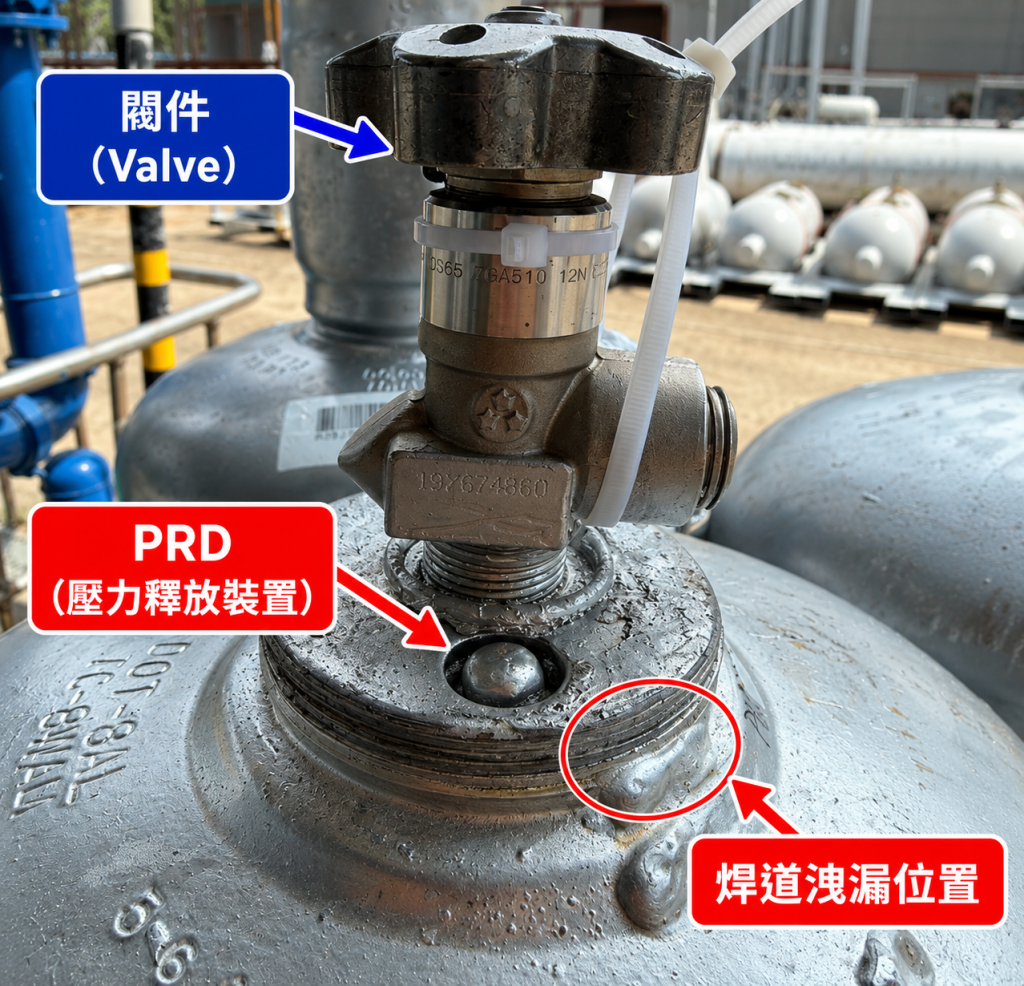
本案例中,一支 C2H2 鋼瓶發生 Gas Leak(氣體洩漏)。
經過 Leak Location Identification(洩漏位置確認)後,發現洩漏並不是來自:
・Valve(瓶閥)
・PRD(壓力釋放裝置)
・Neck Area(瓶頸區域)
・Outlet Connection(出口連接部)
而是位於:
Cylinder Body Weld Area
(鋼瓶本體焊接區域)
這類異常與一般瓶閥洩漏具有完全不同的技術意義。
最重要的第一步不是立即判斷:
「焊接不良。」
而是先確認:
Leak Location
(洩漏位置)
以及:
Cylinder Body Integrity
(鋼瓶本體完整性)
是否已受到影響。
一、案例概要
氣體:
C2H2(Acetylene,乙炔)
鋼瓶類型:
Welded Steel Cylinder
(焊接式鋼製鋼瓶)
異常類型:
Cylinder Body Leak
(鋼瓶本體洩漏)
洩漏位置:
Cylinder Body Weld Area
(鋼瓶本體焊接區域)
主要已知事實:
・鋼瓶發生氣體洩漏
・洩漏位置經確認位於鋼瓶本體焊接區域
・不是一般 Valve Leak(瓶閥洩漏)
・不是 Neck Leak(瓶頸洩漏)
・不是 PRD Leak(PRD 洩漏)
因此,本案例首先可以確認的是:
Failure Mode
(故障模式)
屬於:
Cylinder Body Weld Area Leak
(鋼瓶本體焊接區域洩漏)
但:
Leak at Weld Area
(焊接區域發生洩漏)
並不能單獨證明:
Original Welding Defect
(原始焊接缺陷)
就是 Root Cause(根本原因)。
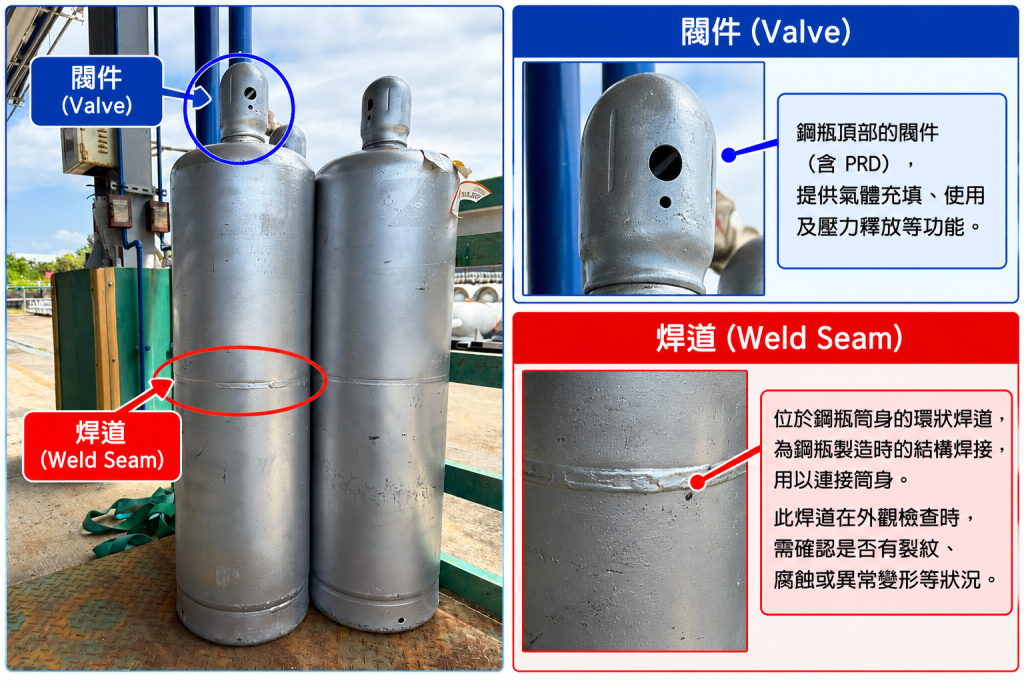
二、什麼是 Welded Cylinder(焊接式鋼瓶)?
部分 C2H2 鋼瓶採用 Welded Steel Cylinder(焊接式鋼製鋼瓶)結構。
這類鋼瓶的 Cylinder Body(鋼瓶本體)製造過程中存在 Welding Joint(焊接接合部)。
因此在進行 Cylinder Body Inspection(鋼瓶本體檢查)時:
Weld Area
(焊接區域)
也是重要的檢查位置之一。
但需要注意:
「鋼瓶具有焊縫」
本身不是異常。
真正需要關注的是:
Weld Area 是否存在:
・Leak(洩漏)
・Crack-like Indication(疑似裂紋跡象)
・Corrosion(腐蝕)
・Abnormal Deformation(異常變形)
・Mechanical Damage(機械損傷)
・其他異常狀況
因此:
Weld Present
(存在焊縫)
≠
Weld Defect
(焊接缺陷)
三、第一步應先確認 Leak Location(洩漏位置)
當鋼瓶發生 Leak(洩漏)時,不能只記錄:
「Cylinder Leak」
因為不同洩漏位置代表不同的 Failure Mode(故障模式)。
例如:
Neck Leak
(瓶頸洩漏)
可能涉及:
Cylinder Neck Thread
(鋼瓶瓶牙)
或:
Valve Inlet Thread
(瓶閥入口螺紋)
等相關部位。
Cross Port Leak
(閥內串漏)
主要涉及:
Valve Internal Sealing
(瓶閥內部密封)
Outlet Connection Leak
(出口連接洩漏)
主要涉及:
Outlet Thread / Sealing Interface
(出口螺紋/密封介面)
PRD Leak
(PRD 洩漏)
主要涉及:
Pressure Relief Device
(壓力釋放裝置)
Cylinder Body Leak
(鋼瓶本體洩漏)
則代表:
異常已經出現在 Pressure-containing Body
(承壓本體)
相關區域。
因此:
Leak Location Identification
(洩漏位置確認)
是後續判斷非常重要的第一層資訊。
四、焊縫位置洩漏不等於已確認 Welding Defect
本案例已確認:
Leak Location
(洩漏位置)
位於:
Cylinder Body Weld Area
(鋼瓶本體焊接區域)
但是:
Leak at Weld Area
(焊接區域洩漏)
只是在描述 Observed Condition(觀察到的異常)。
不能直接改寫成:
Root Cause:
Poor Welding
(焊接不良)
因為造成焊接區域失去完整性的因素可能不只一種。
例如可能需要調查:
・Original Manufacturing Condition
(原始製造狀態)
・Weld Quality
(焊接品質)
・Corrosion
(腐蝕)
・Material Degradation
(材料劣化)
・Mechanical Damage
(機械損傷)
・Fatigue-related Damage
(疲勞相關損傷)
・Thermal History
(熱歷史)
・Service History
(使用歷史)
・其他可能因素
因此:
Failure Location
(故障位置)
≠
Root Cause
(根本原因)
五、Observed Condition、Failure Mode 與 Root Cause 要分開
這個案例非常適合說明三個不同層級。
第一層:
Observed Condition
(觀察到的異常)
Gas Leak Detected
(檢測到氣體洩漏)
第二層:
Failure Mode
(故障模式)
Cylinder Body Weld Area Leak
(鋼瓶本體焊接區域洩漏)
第三層:
Root Cause
(根本原因)
必須依實際調查證據確認。
因此不能寫成:
「因為焊接不良,所以鋼瓶漏氣。」
除非已經有足夠 Evidence(證據)支持。
比較正確的紀錄方式是:
Gas Leak Detected
↓
Leak Location Confirmed
↓
Cylinder Body Weld Area
↓
Failure Mode Identified
↓
Evidence Collection
↓
Cause Investigation
↓
Root Cause Confirmed / Unconfirmed
六、為什麼 Cylinder Body Leak 的意義不同?
Valve、PRD 或 Connection(連接部)發生洩漏時,異常主要位於附屬零組件或連接介面。
但:
Cylinder Body Leak
(鋼瓶本體洩漏)
涉及的是:
Pressure-containing Body
(承壓本體)
本身的完整性。
因此不能把它當成一般:
Valve Maintenance Issue
(瓶閥維修問題)
處理。
尤其當洩漏位於:
Weld Area
(焊接區域)
時,更需要保留原始狀態與相關資料,進行適當的技術判定。
七、不要以現場研磨或補焊方式直接處理
如果在 Cylinder Body Weld Area(鋼瓶本體焊接區域)發現洩漏,不應因為洩漏點很小,就把它視為一般表面缺陷。
例如不應自行採取:
Grinding
(研磨)
Welding
(補焊)
Adhesive Repair
(黏著劑修補)
Surface Filling
(表面填補)
等方式,企圖讓洩漏暫時消失後繼續使用。
原因是:
Leak Disappeared
(洩漏消失)
≠
Pressure Boundary Integrity Restored
(承壓邊界完整性已恢復)
而且未經適當評估的加工,可能破壞原始 Evidence(證據),使後續原因調查更加困難。
因此這類異常的核心原則是:
Preserve Evidence
(保存證據)
以及:
Qualified Evaluation
(由適當資格/權限進行評估)
而不是:
Field Repair
(現場自行修補)。
八、案例調查時應保留哪些 Evidence?
如果發現 Cylinder Body Weld Area Leak,建議保留的調查資料包括:
Cylinder Identification
(鋼瓶識別資料)
Cylinder Specification
(鋼瓶規格)
Manufacturing Information
(製造資訊)
Requalification History
(再檢驗歷史)
Service History
(使用歷史)
Gas Service
(使用氣體)
Leak Location
(洩漏位置)
Weld Area Condition
(焊接區域狀態)
Corrosion Condition
(腐蝕狀態)
Mechanical Damage
(機械損傷)
Original Photos
(原始照片)
以及其他與事故相關的紀錄。
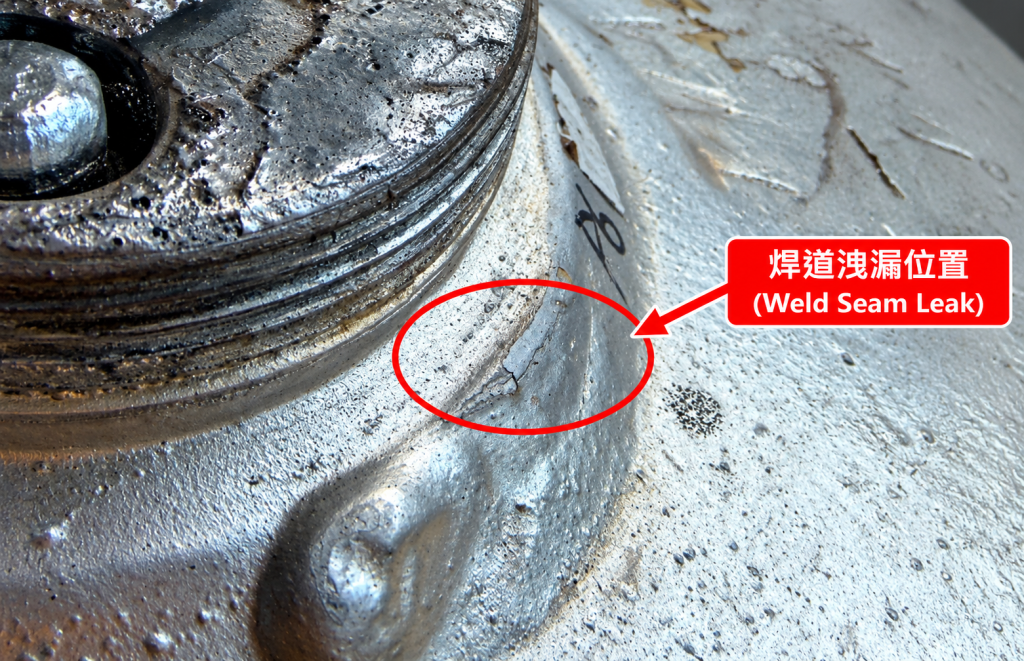
尤其照片應優先保存:
Original Condition
(原始狀態)
不要先進行:
Cleaning
Grinding
Polishing
Painting
Repair
(清潔、研磨、拋光、重新塗裝或修補)
之後才拍攝。
【照片 06-04-03|Weld Area 局部放大】
九、Corrosion(腐蝕)也是需要調查的方向
如果洩漏位置位於 Weld Area(焊接區域),Corrosion(腐蝕)也是可能需要調查的因素之一。
但同樣需要避免反向推論。
例如:
看到 Rust
(鏽蝕)
不代表:
Rust Caused Leak
(鏽蝕就是洩漏原因)
必須進一步確認:
・腐蝕位置
・腐蝕程度
・是否與洩漏位置一致
・材料是否存在減薄
・周圍是否有其他損傷
・使用環境與歷史
因此:
Corrosion Present
(存在腐蝕)
≠
Corrosion Confirmed as Root Cause
(腐蝕已確認為根本原因)
十、Age(鋼瓶年齡)也不能直接當成原因
另一個常見錯誤是:
看到較舊的鋼瓶發生洩漏,就直接寫:
「因為鋼瓶太老。」
Cylinder Age(鋼瓶年齡)可以是調查資訊之一,但不能單獨證明:
Age
↓
caused
↓
Weld Leak
應進一步查看:
・Manufacturing Date(製造日期)
・Requalification History(再檢驗歷史)
・Service Condition(使用條件)
・Corrosion Condition(腐蝕狀態)
・Mechanical History(機械損傷歷史)
・Material Condition(材料狀態)
因此:
Old Cylinder
(舊鋼瓶)
≠
Age-related Failure Confirmed
(已確認為老化造成故障)
十一、Failure Mode Database(故障模式資料庫)建議紀錄
Failure Mode ID:
FM-010
Failure Mode:
Cylinder Body Weld Area Leak
(鋼瓶本體焊接區域洩漏)
Component:
Cylinder Body
(鋼瓶本體)
Location:
Weld Area
(焊接區域)
Gas Service:
C2H2
(Acetylene,乙炔)
Observed Condition:
Gas Leak Detected at Weld Area
(焊接區域檢測到氣體洩漏)
Detection Method:
Leak Detection / Visual Inspection
(洩漏檢測/目視檢查)
Possible Causes:
・Manufacturing-related Condition
(製造相關因素)
・Weld-related Condition
(焊接相關因素)
・Corrosion
(腐蝕)
・Material Degradation
(材料劣化)
・Mechanical Damage
(機械損傷)
・Fatigue-related Damage
(疲勞相關損傷)
・Thermal History
(熱歷史)
・Other Factors
(其他因素)
Confirmed Root Cause:
依實際事故調查結果填寫
Cause Status:
CONFIRMED(已確認)
PROBABLE(高度可能)
POSSIBLE(可能)
UNCONFIRMED(尚未確認)
十二、本案例的重要判斷觀念
本案例可以整理成:
Gas Leak
(氣體洩漏)
≠
Valve Leak
(瓶閥洩漏)
Weld Area Leak
(焊接區域洩漏)
≠
Welding Defect Confirmed
(已確認焊接缺陷)
Corrosion Present
(存在腐蝕)
≠
Corrosion Root Cause Confirmed
(已確認腐蝕為根本原因)
Old Cylinder
(舊鋼瓶)
≠
Age-related Failure Confirmed
(已確認老化故障)
Leak Stopped After Repair
(修補後不再洩漏)
≠
Cylinder Integrity Restored
(鋼瓶本體完整性已恢復)
因此這類事故的正確思考順序應該是:
Where is the Leak?
(洩漏在哪裡?)
↓
What Component Failed?
(哪一個部位發生異常?)
↓
What Evidence Exists?
(有哪些證據?)
↓
What are the Possible Causes?
(有哪些可能原因?)
↓
Which Cause is Supported by Evidence?
(哪個原因有證據支持?)
↓
Confirmed / Unconfirmed
(確認/尚未確認)
十三、與 06-03 案例的差異
06-03:
C2H2 Cylinder Pressure Abnormality and PRD Leak
(C2H2 鋼瓶壓力異常與 PRD 洩漏)
主要調查:
・Pressure
・Temperature
・DMF
・Filling Weight
・Filling Record
・PRD Condition
06-04:
Cylinder Body Weld Area Leak
(鋼瓶本體焊接區域洩漏)
主要調查:
・Leak Location
・Cylinder Body
・Weld Area
・Corrosion
・Material Condition
・Manufacturing / Service History
因此即使兩起事故使用的都是:
C2H2 Cylinder
(乙炔鋼瓶)
Failure Mode(故障模式)與調查方向仍完全不同。
十四、相關文章
・02-04|C2H2 乙炔鋼瓶構造與特殊性
・05-03|鋼瓶瓶閥常見故障模式總覽
・06-03|C2H2 鋼瓶壓力異常與 PRD 洩漏事故案例
・08-02|DOT 鋼瓶再檢驗與判定
・08-04|Repair、Rebuild、Requalification 與 Maintenance 的差異
・09-04|異常現象、直接原因與根本原因的判斷方法
・09-05|鋼瓶維修經驗如何轉化為 Failure Mode Database
注意事項
本文為 C2H2(Acetylene,乙炔)鋼瓶 Cylinder Body Weld Area Leak(鋼瓶本體焊接區域洩漏)的事故案例整理。
本文所稱 Weld Area Leak(焊接區域洩漏)是 Failure Location / Failure Mode(故障位置/故障模式)的描述,不代表已確認原始製造焊接缺陷為 Root Cause(根本原因)。
實際 Cylinder Body(鋼瓶本體)異常的判定、再檢驗、維修、報廢或其他處置,應依鋼瓶規格、實際狀態、適用法規/標準及具適當資格或權限的單位判定。
本文不提供承壓鋼瓶本體的現場焊接、研磨、補漏或其他修補操作程序。
最後更新:2026-09-28
發佈留言
很抱歉,必須登入網站才能發佈留言。